


If you’re trying to figure out how to dress over 50 and overweight, you may have noticed that some of your old outfit formulas don’t feel quite right anymore.
A top fits your shoulders but pulls across your bust. Jeans look good standing up, then dig into your tummy when you sit down. I’d start by fixing those problems, one piece at a time.
You don’t need to wear black every day or hide under loose clothes. You need pieces that fit comfortably and work together.
Sometimes that means changing your top length. Other times, a different pants rise, or a jacket that ends in the right place makes the whole outfit feel better.
Start With Fit, Not a Clothing Size
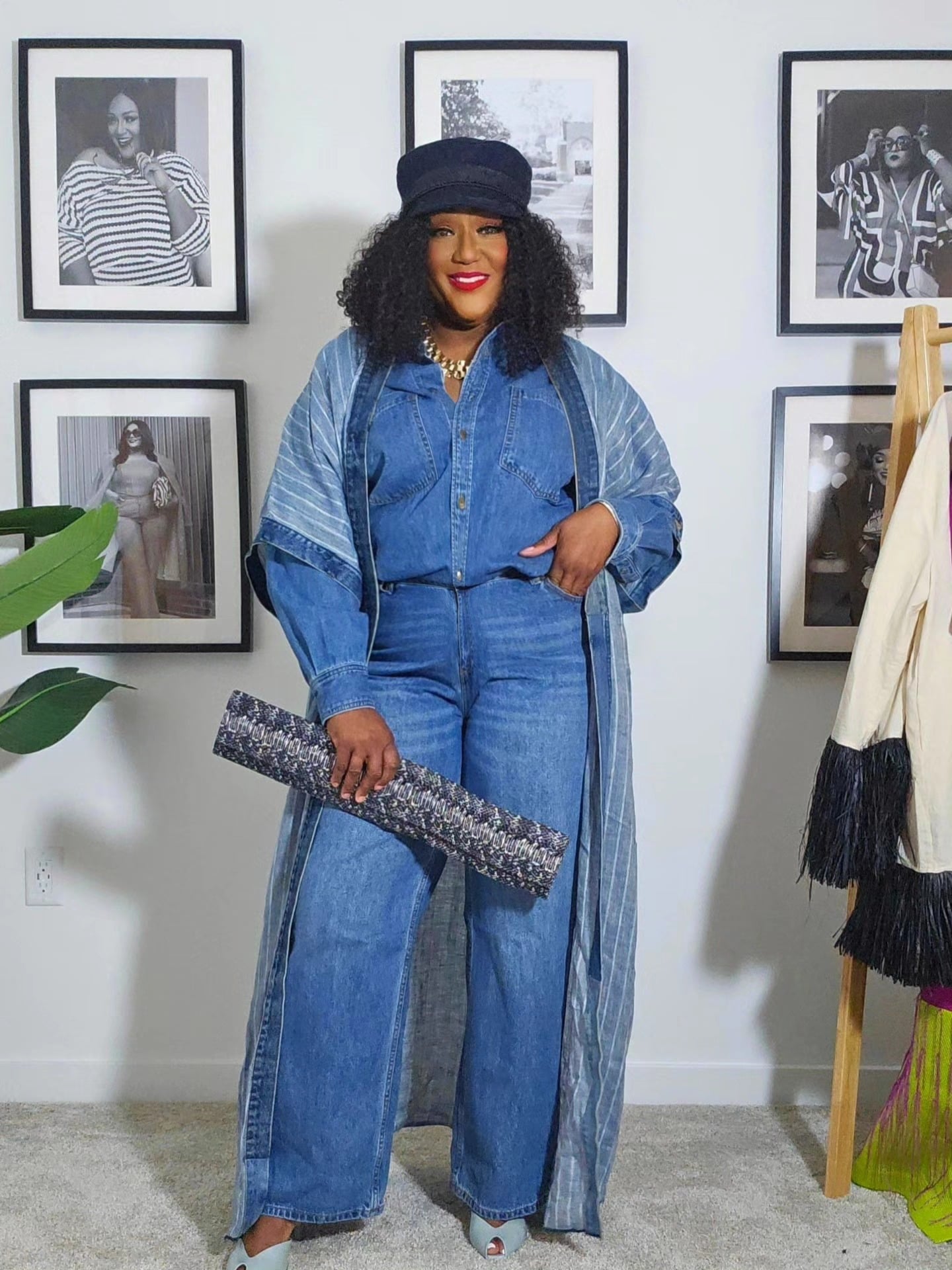
Have you ever sized up in a top because it pulled across your bust, then found that the shoulders were too wide and the sleeves were too long? I am not overweight, but I’ve done this. The larger size gives you more room in one place, but the rest of the top stops fitting properly.
When you try on a top with regular shoulder seams, check where they sit first. Reach forward and move your arms a little. If the fabric pulls across your back or bust, try a cut with more room through the chest.
If the buttons gape, I’d look for a different style instead of hoping they’ll stay closed all day. And if a top keeps catching on your tummy, notice where it ends. A slightly shorter or longer length might solve that problem.
I’d do a sit-down test with pants every time. A waistband can feel perfectly fine while you’re standing in front of the mirror, then dig in the moment you sit in the car. Check the hips and thighs too. If the waist fits but the fabric pulls there, try a roomier cut through the leg. If the hips fit and the waistband gaps at the back, a curvy fit may work better.
Some fit problems are easy to fix after you buy a piece. Pants can be hemmed, and a jacket that fits your shoulders and bust may be worth taking in at the waist. I wouldn’t buy pants I can’t sit in comfortably or a jacket with tight armholes and count on alterations to rescue them.
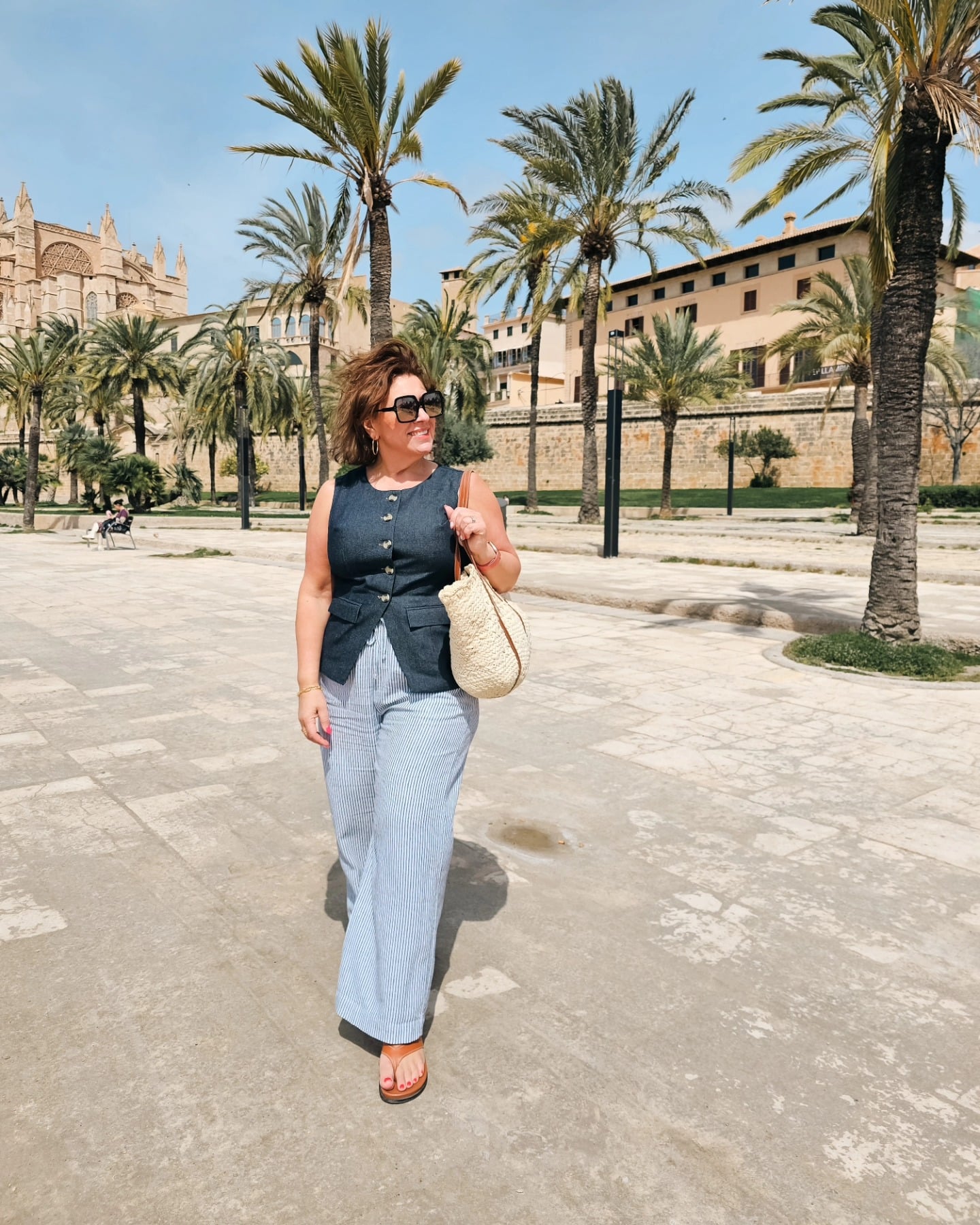
Try everything on with the bra and shoes you’d actually wear. A different bra can change the way a top sits across your bust, and your shoes can change where your pants hem falls. I know it sounds like a small detail, but it saves you from getting home and wondering why the outfit looks different.
Once the individual pieces fit, take a look at the whole outfit. When I wear wider pants, I usually like a top with a little more shape. With a loose shirt, I’d try a straighter, cleaner-fitting pair of pants. That’s my Balance Formula, and it’s often the fix when you like both pieces separately, but something feels off when you put them together.
You might wear one size in jeans and another in a blazer. I’d pay more attention to how each one fits than to the number on the tag.


Dress for Where You Need More Room
Two women can wear the same size and need room in completely different places.
Your jeans might feel tight around your tummy, while someone else can’t find a pair that fits her hips without gaping at the waist. The details that help one of you won’t always help the other, so let’s start with where your clothes give you trouble.
If you carry more weight through your tummy
If tops keep catching on your stomach, look at where the hem ends before you buy a bigger size.
A top that stops at the fullest part of your tummy can get caught there every time you move. Try one that ends a little higher, near the top of your pants, or one that falls past your tummy without narrowing at the hem.
Take a few steps in it.
If you have to pull it down again, the length or cut isn’t working for you.
Fabric makes a difference too.
Try the top on and turn sideways. Thin, stretchy fabric may show every line of your waistband, while a heavier knit or a soft woven fabric can fall more smoothly across the front. You still want room to move.
If the top stands away from your body like a tent, try a different shape rather than adding more fabric everywhere.
With pants, I’d spend less time worrying about whether the label says mid-rise or high-rise and more time checking where the waistband sits on you.
Sit down and lean forward as if you’re putting on your shoes.
Does it dig in, fold over, or slide below your tummy? Try another rise or a waistband with some give.
Pants with a flat front and elastic at the back can be a good option when you want comfort without a gathered waistband across the front.
You can define your waist if you like how it looks.
A short jacket over a longer top, a small front tuck, or a dress that comes in slightly under the bust can give the outfit shape.
But you don’t have to tuck or belt anything.
An open shirt over a simple top works too, especially when the pants fit well, and you can see the shape of the outfit underneath.
If you have an hourglass figure with a tummy, I go into more detail about top lengths, tucking, and waistbands in this guide. You may find that you like a shorter top much more than the long ones you’ve been wearing for coverage.
If your hips or thighs need more room
I have a pear shape, so I know how frustrating it is when pants fit at the waist but feel tight the moment you walk or sit down.
When you try on a pair, check the fabric across your hips and upper thighs. If the pockets pull open or you see horizontal lines across the front, try a cut with more room there. A straight or wide leg can give your thighs space without making the waistband bigger too.
For skirts, fit the fullest part of your hips first.
You should be able to sit and take a normal step without the skirt riding up.
If a straight skirt fits your waist but pulls across your hips, try another cut rather than sizing up until the waist is loose. A skirt that hangs away from the hips may feel better, but it doesn’t have to be a full A-line skirt.
Look at how the actual fabric falls on you.
Now put your top or jacket back on and check where it ends.
A shirt that narrows at the hem can fit everywhere else, then bunch up on your hips.
Try a shorter top that ends above the fullest part, or a longer one that falls past it.
The same goes for jackets: you might love one that stops at your waist, while another outfit looks better with a jacket that falls below your hips. I’d take a photo of both lengths before deciding, because this is much easier to see in the whole outfit than on a hanger.
If your hips are wider than your shoulders and you’d like more outfit examples, I share the combinations I wear in my pear-shaped outfit guide. You can use the fit advice here even if you don’t identify with a particular body shape.
If you have a fuller bust or prefer more arm coverage
A shirt may fit through your waist and still pull across your chest. If the buttons gape or the fabric stretches between them, try a cut made with more room for your bust.
Check the side view too.
Sometimes a top hangs nicely in front but lifts several inches higher at the hem because the bust takes up more of its length.
If sleeves are important to you, move your arms while you’re trying the top on. You should be able to reach forward without the armholes pinching or the whole shirt coming up with you. A sleeve can give you coverage and still feel comfortable around your upper arm.
For a sleeveless top you otherwise love, try an open shirt, lightweight cardigan, or blazer over it.
Keep the layer underneath closer to your shape so you’re not adding loose fabric from your shoulders to your hips. I share more details on sleeve fit and necklines in my guide to flattering tops.
The Pieces That Make Outfits Easier
A top can fit your bust but end at an awkward place with your pants. Jeans can fit through the leg but dig into your waist.
Let’s look at those details piece by piece.
Tops That Work With Your Pants and Jeans

The top you wear can change how your favorite jeans look.
I’d try a few lengths with the same pair before deciding the jeans are the problem.
A waist-length top works especially well with higher-rise, wide-leg jeans. It stops near the waistband, so you can see the shape of the pants instead of covering it with another layer of fabric. It can be a soft sweater or a relaxed T-shirt. You don’t have to wear anything tight.
For casual plus-size outfits with straight-leg jeans, a top that ends around the hip can feel easy to wear. Pay attention to the hem, though. If it catches on your hips and keeps riding up, a slightly shorter length or a top with more room at the bottom may work better. I’d change the top before giving up on jeans that otherwise fit well.
A longer top can look good with a narrower pant leg, particularly when you want more coverage. You could also leave a long button-down open over a shorter top.
With wide-leg pants, try it on and look from the side. If you like that loose shape, wear it. If it feels like too much fabric, let the shorter top underneath show or try a small front tuck.
There isn’t one top length you need to stick to. The useful question is whether that top works with the rise and leg shape of the pants you’re wearing that day.
Jeans and pants that fit through the middle
The best rise is the one that stays comfortable on your body.
A high rise may sit nicely above your tummy, but on someone with a shorter torso it can come up too far and fold when she sits. A mid-rise may feel better, as long as it stays in place when she bends over.
I’d try both rather than buying high-rise jeans just because someone says they’re more flattering.
Pay attention to the waistband after you’ve worn the pants for a few minutes.
If it rolls down, you may need a different rise or a waistband with more support. If it digs in while the rest of the pants fits, look for a pair with some stretch at the waist rather than sizing up and ending up with loose hips and legs.
For trousers, a flat front with elastic at the back can give you a little more room when you sit.
Straight-leg jeans are a good place to start if you want a pair that works with most of your tops and shoes.
They give your legs room without adding much width at the hem.
Wide-leg jeans or trousers give you more space through the thighs and can look lovely with a shorter top or one that you tuck in slightly. Check their length with the shoes you’d actually wear. If the hems drag on the floor, they’ll change the shape of the whole outfit.
If you’re petite as well as curvy, I have a separate guide to the best pants for petite curvy women. It goes further into finding room for your hips without ending up with extra fabric everywhere else.
Dresses you can adjust to your shape
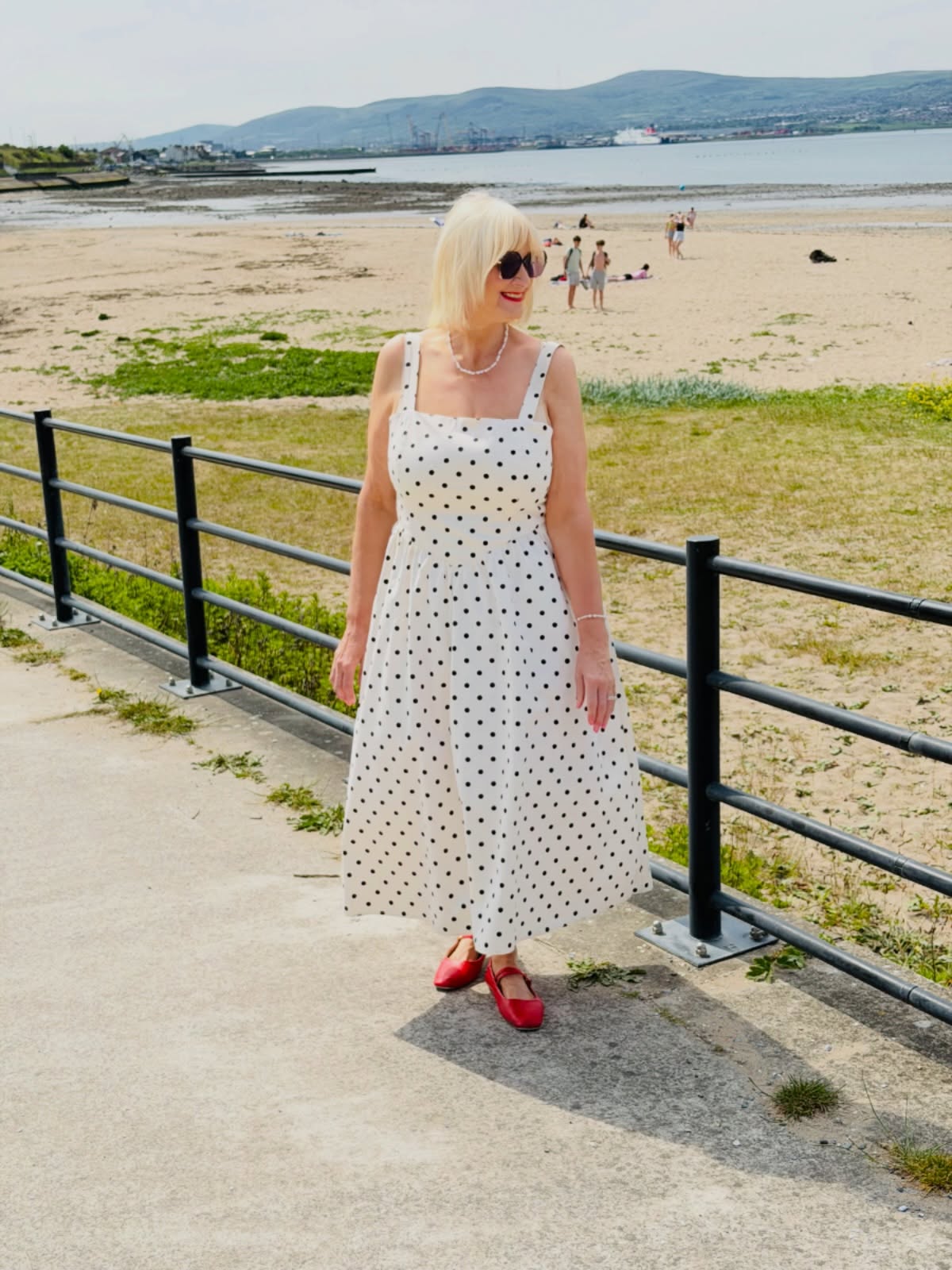
A wrap dress sounds like an easy answer until you try one on.
The tie may land too high, the neckline may open when you move, or the skirt may separate when you sit. I’d check all three before buying it.
A true wrap lets you adjust the waist, which is useful if your bust and hips need different amounts of room. But if you spend the whole fitting-room visit fixing the neckline, you probably won’t enjoy wearing it. A small snap can help with a neckline you otherwise like; it won’t fix a bodice that’s too tight.
I like shirt dresses for a different reason. You can wear the belt loosely, tie it behind you, or leave it off, depending on where you want the dress to have shape.
Check the buttons across your bust and hips before deciding how to style it. If they pull when you sit, leaving the dress unbuttoned over a top and pants may work better than wearing it as a dress.
You still get to use a piece you love, just in a way that feels comfortable.
You may prefer a dress that already has some shape through the bust or waist and then falls more freely below. Try it on without a belt first. If it fits your shoulders and bust and gives you room to walk, you might not need to change a thing.
If you want a little more definition, try a belt or a short jacket and see which one you actually like.
Jackets and layers that finish an outfit
Imagine your favorite jeans and a plain top.
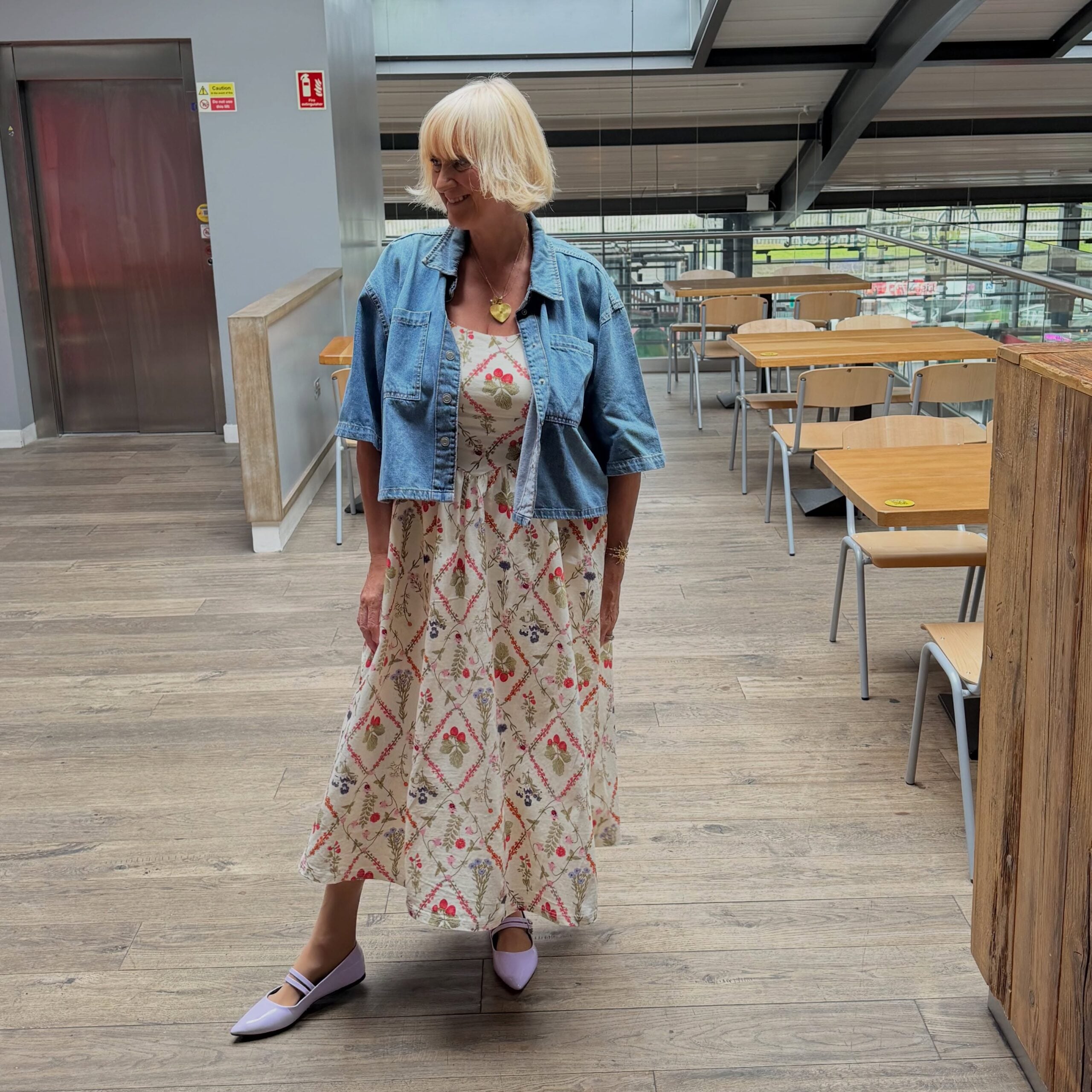
Add a denim jacket and the outfit feels ready for a casual day out.
Swap it for a blazer and you could wear the same jeans to dinner. A cardigan makes the outfit softer and more comfortable, while a coat can bring the whole look together when the weather turns cold.
You don’t need a different outfit for every plan. Sometimes you only need to change the layer.
Start with the shoulders when you try on a jacket. They should sit comfortably when you move your arms forward, even with the top you’d normally wear underneath. If the shoulders and armholes feel tight, leaving the jacket open won’t solve that.
I’d look for another cut before sizing up so much that the sleeves become too long.
Then check where it ends.
A cropped denim jacket can work beautifully with a dress or wide-leg pants because it lets you see the shape below it.
A blazer that ends around your hips may look great with jeans, but if it catches at your widest point and won’t hang straight, try one that ends a little higher or falls past your hips.
I’d make that decision with the jacket open, since that’s how many of us wear it most of the time.
Cardigans need the same check.
A long one can give you the coverage you want, but if it stretches across your hips or bunches behind you, it won’t feel good by lunchtime. And with a coat, leave enough room for your usual sweater or blazer underneath.
Try sitting in it, especially if you’re choosing a longer style.
If a denim jacket is the layer you wear most, I have more denim jacket outfits for women over 50 you can try with pieces already in your closet.
And in case you’re ready to look for a few pieces, you can browse the wardrobe staples I’ve saved in my Amazon Storefront. Keep the fit checks above in mind while you shop. You don’t need to replace your whole closet.
Plus Size Outfit Ideas for Women Over 50
Now let’s put those pieces together. These outfits show a few ways to wear jeans, dresses, and trousers, but you can change the lengths and layers to suit what feels good on you.
Relaxed Jeans + Trench Coat
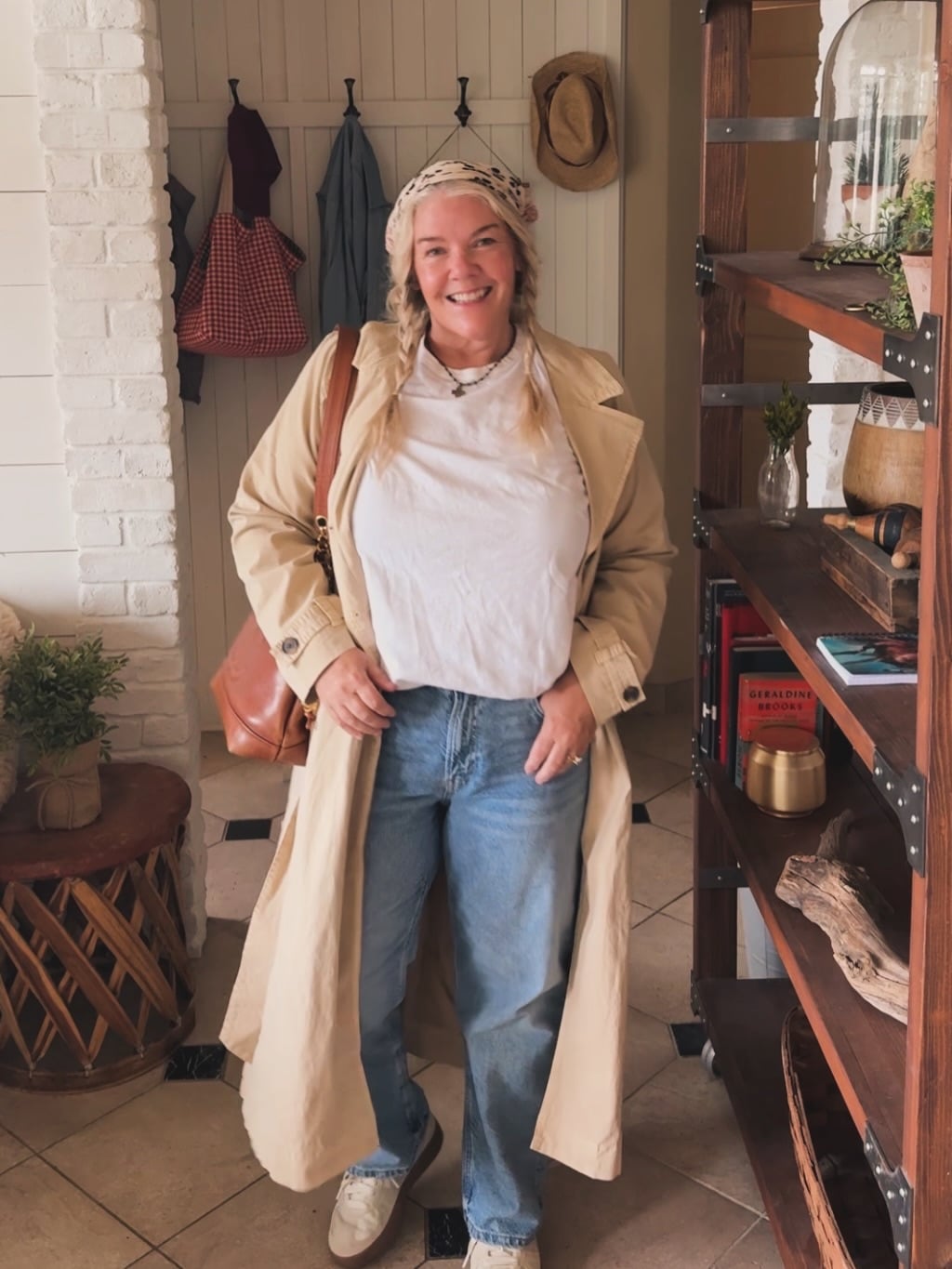
A white tee and relaxed jeans are easy to wear on their own, but the open trench makes this outfit feel a little more finished. I like that you can still see the shape of the jeans underneath the coat.
If you’re putting together a casual plus-size outfit for a day out, this is one you can copy with pieces you may already have.
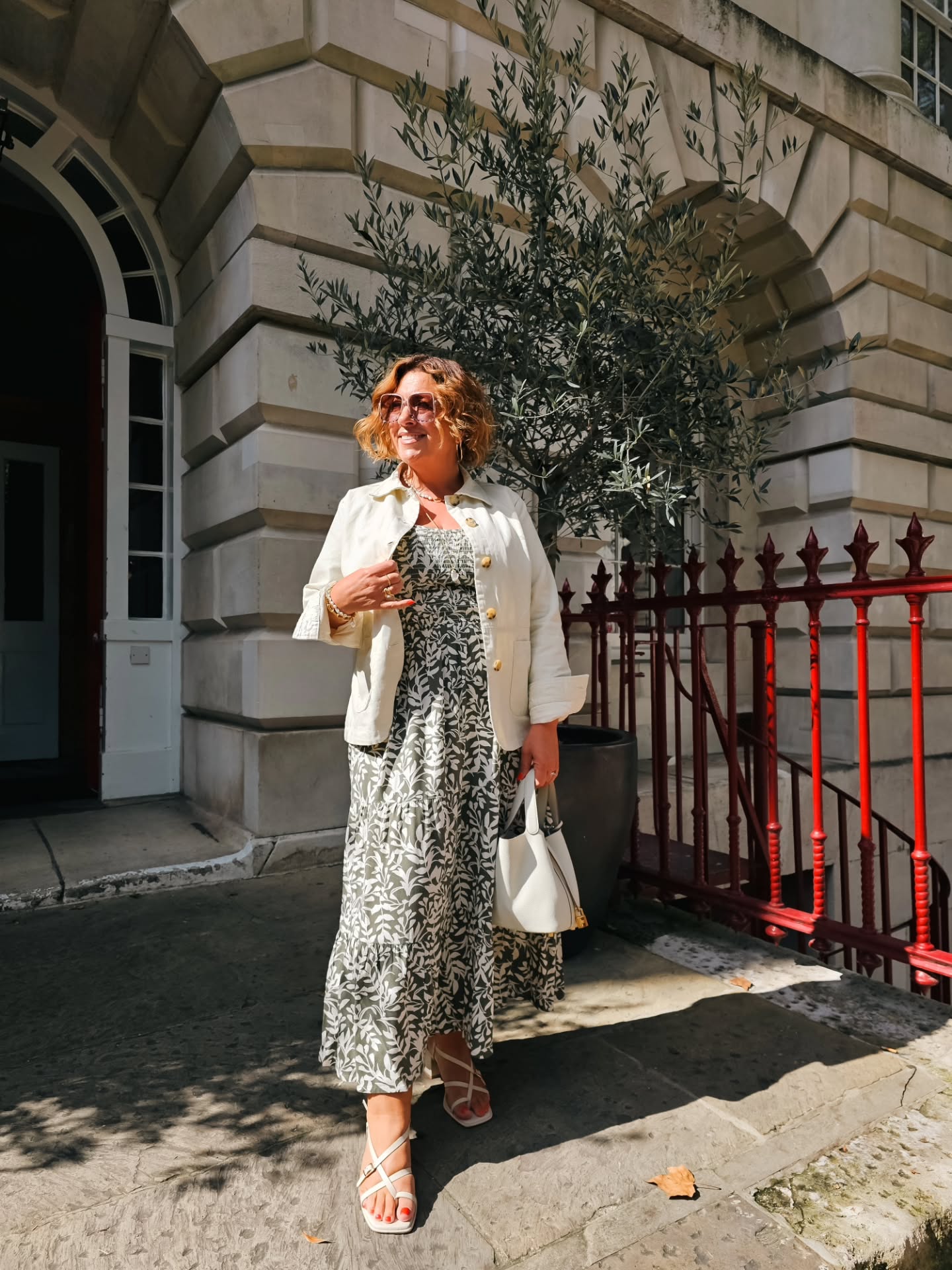
A Printed Dress + Light Jacket
Have a printed dress you love but rarely wear because it’s sleeveless? Try a light jacket in one of the colors from the print. That’s why the cream jacket works so well with this green dress.
You don’t have to find a perfect color match.
Leave the jacket open so you can still enjoy the dress. If yours ends right where the skirt gets fuller and the outfit feels bulky, try a shorter jacket or a longer one. You may already have the right layer in your closet.
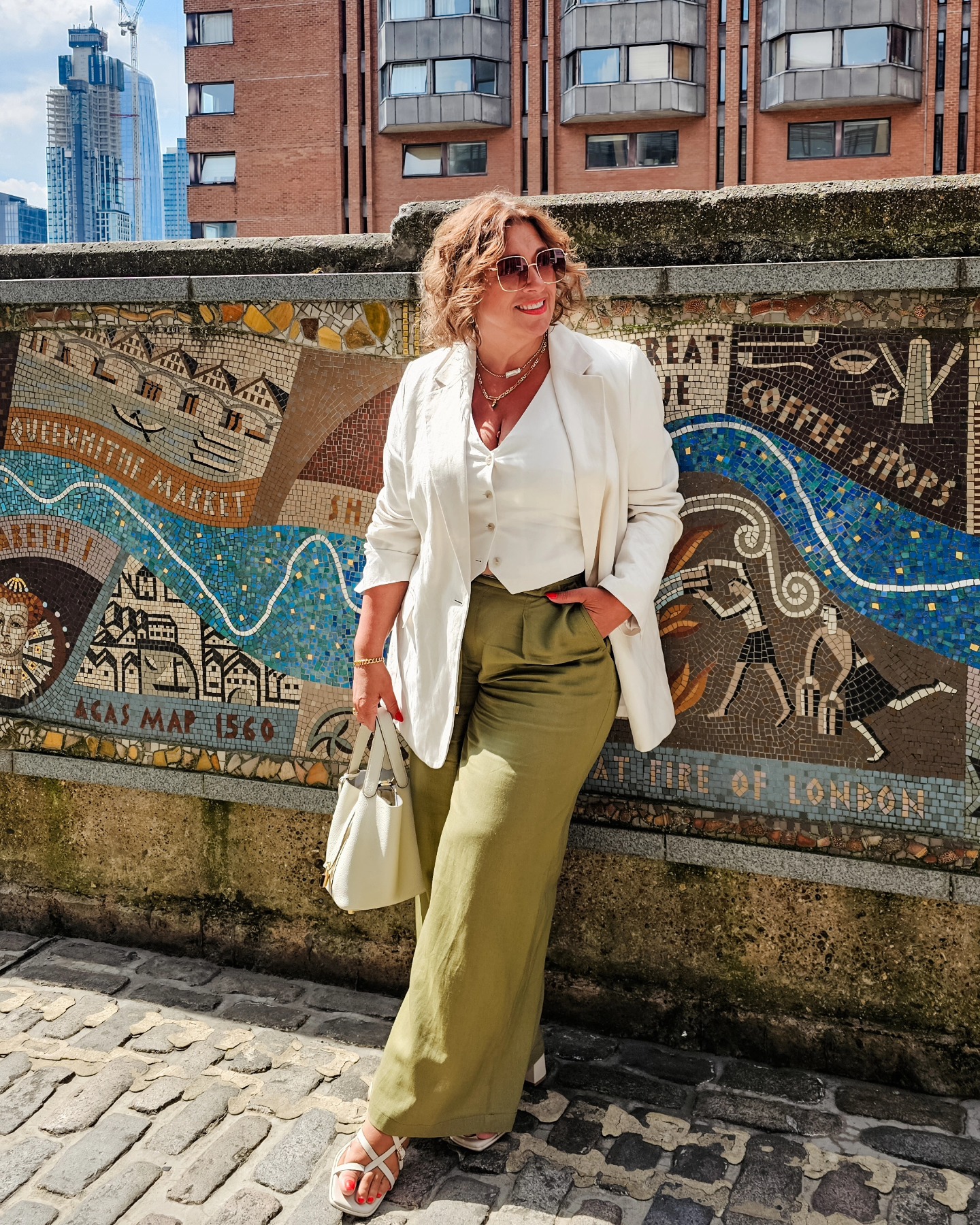
A Blazer + Relaxed Trousers
You don’t need narrow trousers to make a blazer look polished. I like the cream and olive together here, and I’d keep the top underneath simple so those two pieces can do the work.
For an everyday version, I’d wear this with flat shoes and leave the blazer open. Swap to loafers or a dressier shoe when you want to wear the same outfit to dinner. The trousers don’t have to change.
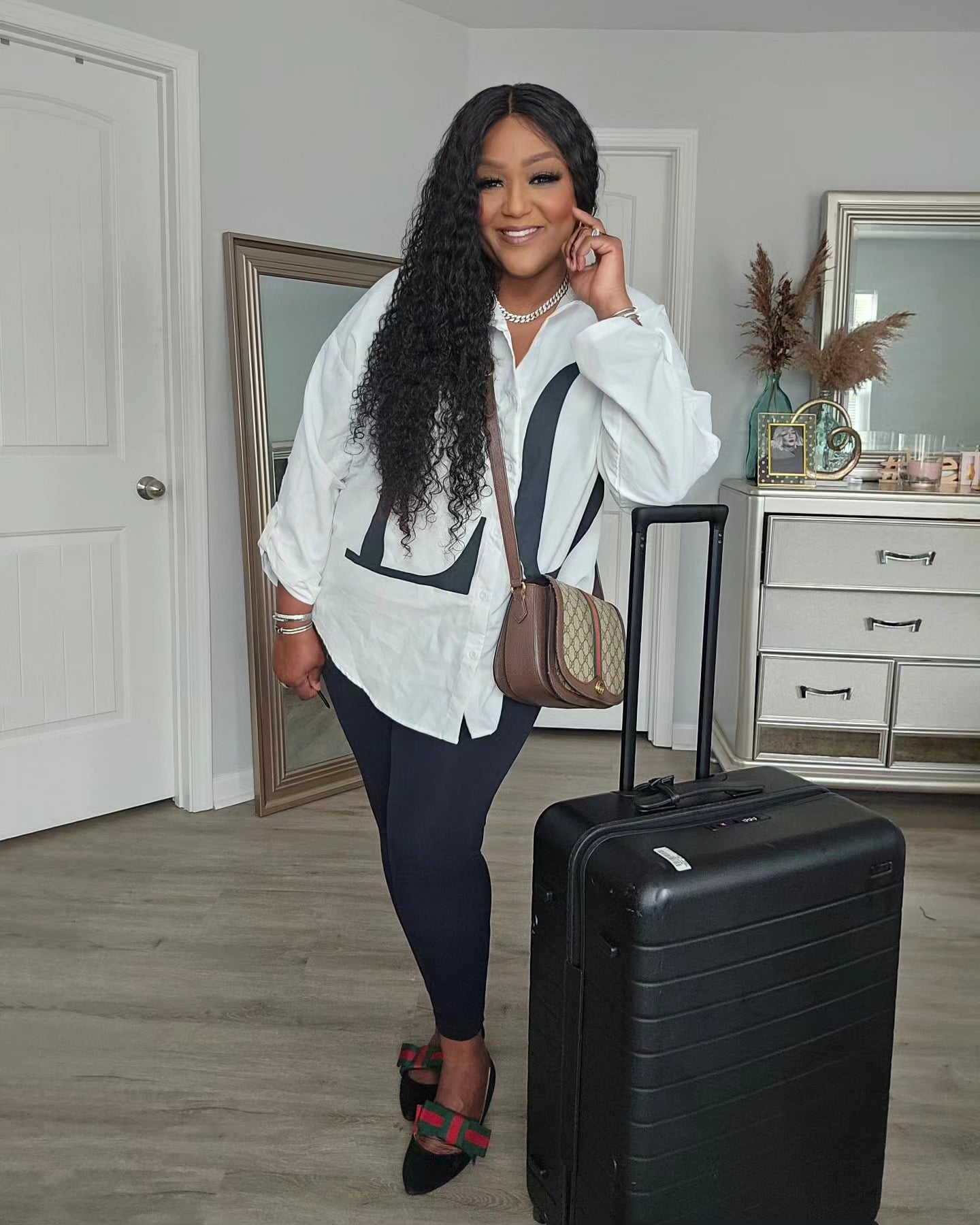
A Long Shirt + Slimmer Pants
This is an easy outfit to put together when you want a little more room up top.
The long graphic shirt feels relaxed, and the narrower black pants give it some balance. That’s my Balance Formula, but you don’t need skin-tight pants to make it work. A pair that fits comfortably through your hips and thighs and has a straighter, narrower leg would do the same job.
I’d pay attention to the shirt length, too. It should hang easily when you walk, without catching on your hips or making you pull it down every time you stand up. If your favorite long shirt does that, try one with side slits or a little more room through the hem.
For a travel day, test the outfit before you pack it. Sit for a while, get up, walk around, and pick up your bag. You’ll find out quickly whether the waistband digs in or the shirt gets in your way. Then wear the walking shoes you’ll actually take with you.
If you’re planning a trip, I have more ideas for flights, sightseeing, and days with lots of walking in my travel outfits for women over 50 guide.
Next time an outfit makes you keep tugging at your clothes, start with the piece causing the problem. Try another cut or length before changing everything else. You may find the rest of your outfit already works.
If you want more outfit ideas and pieces to try with what you own, I share my latest finds on LTK
