
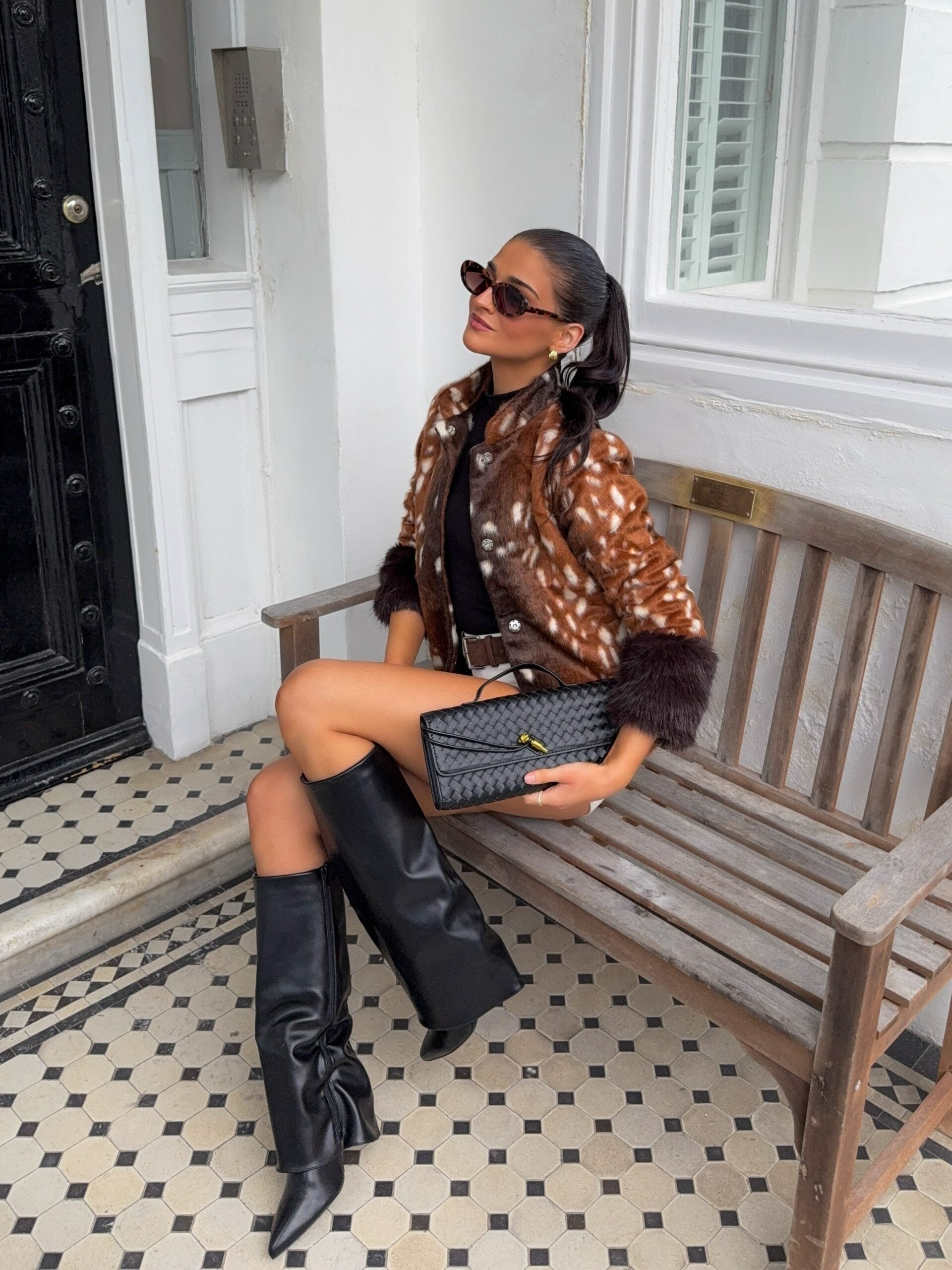
If you wonder how to look taller and slimmer in your clothes, start with three things: where your waistline sits, the length of your trousers, and how your top fits with your bottoms. These small changes can make your legs look longer and give your outfit better proportions, even when you’re wearing flats.
And you don’t have to be petite to use these tricks. They can help at any height or size. The important thing is knowing which ones work for your body, because the same styling trick won’t always give everyone the same result.
I’ve put together my favorite tips, from choosing the right jeans and tops to using colors, layers, and accessories. You’ll also find plenty of little adjustments you can try with clothes you already have.
1. Get the Fit and Proportions Right
Choose Clothes That Fit Your Body Properly
Clothes that pull across your bust, tummy, or hips can create wrinkles and make those areas look wider. Check that your tops fall smoothly and your trousers don’t dig into your waist.
Sometimes going up a size gives you a much better shape, especially if you can have the waist taken in later.
Pay Attention to Your Shoulder Seams
For fitted jackets and blazers, the shoulder seams should sit close to your natural shoulders.
If the shoulder seams sit too far down your arms on a fitted blazer, the jacket may look too big through the shoulders. Check the fit from the front and side, especially if the sleeves also bunch around your arms.
Oversized blazers are different, but look for some structure so they don’t hang like a box.
Find the Right Waist Rise
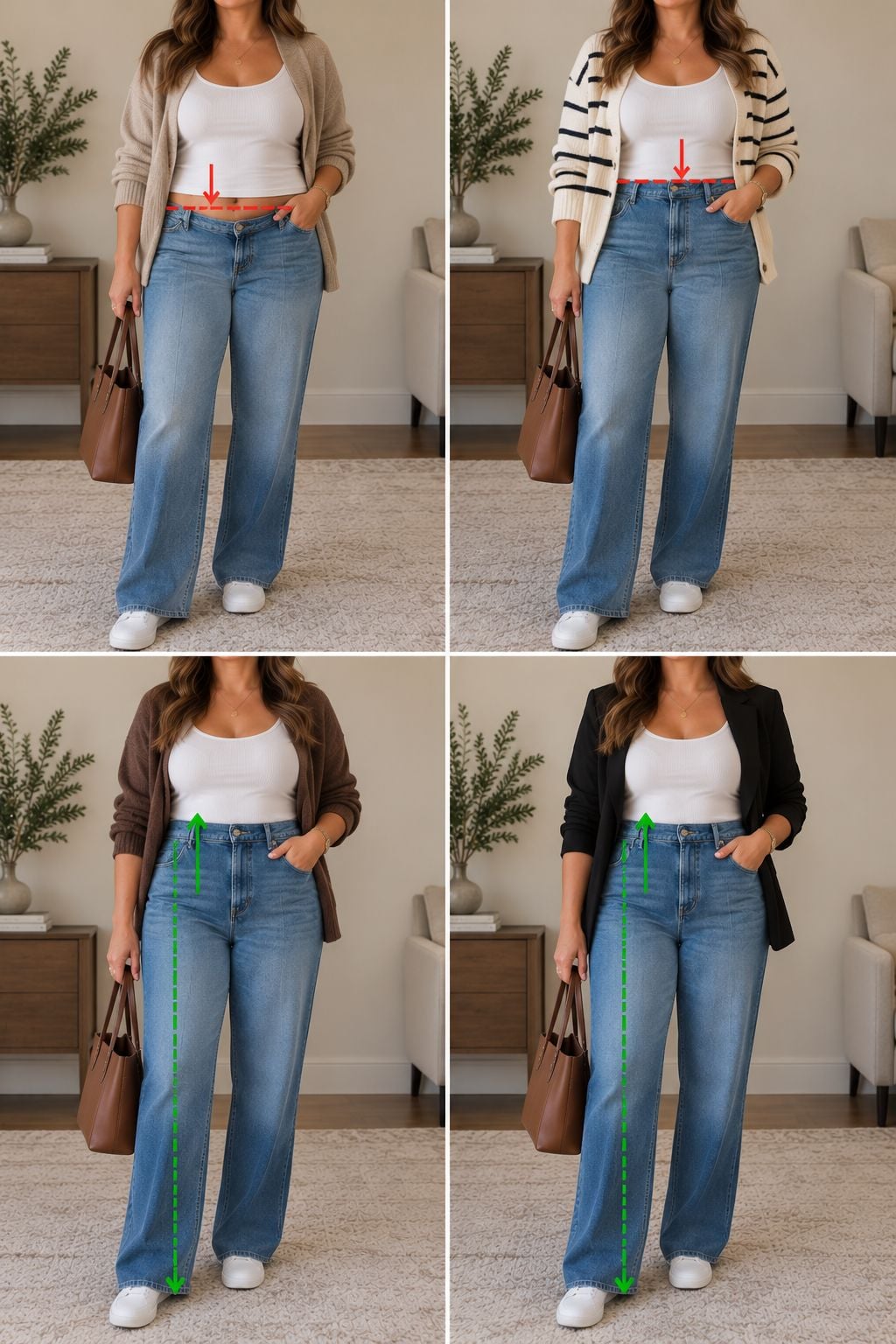
High-waisted jeans and trousers can make your legs look longer, especially if you have short legs.
If you have a short torso or fuller bust, try a mid-rise instead. A very high waistband can make your upper body look shorter.
Try Different Ways to Tuck Your Tops
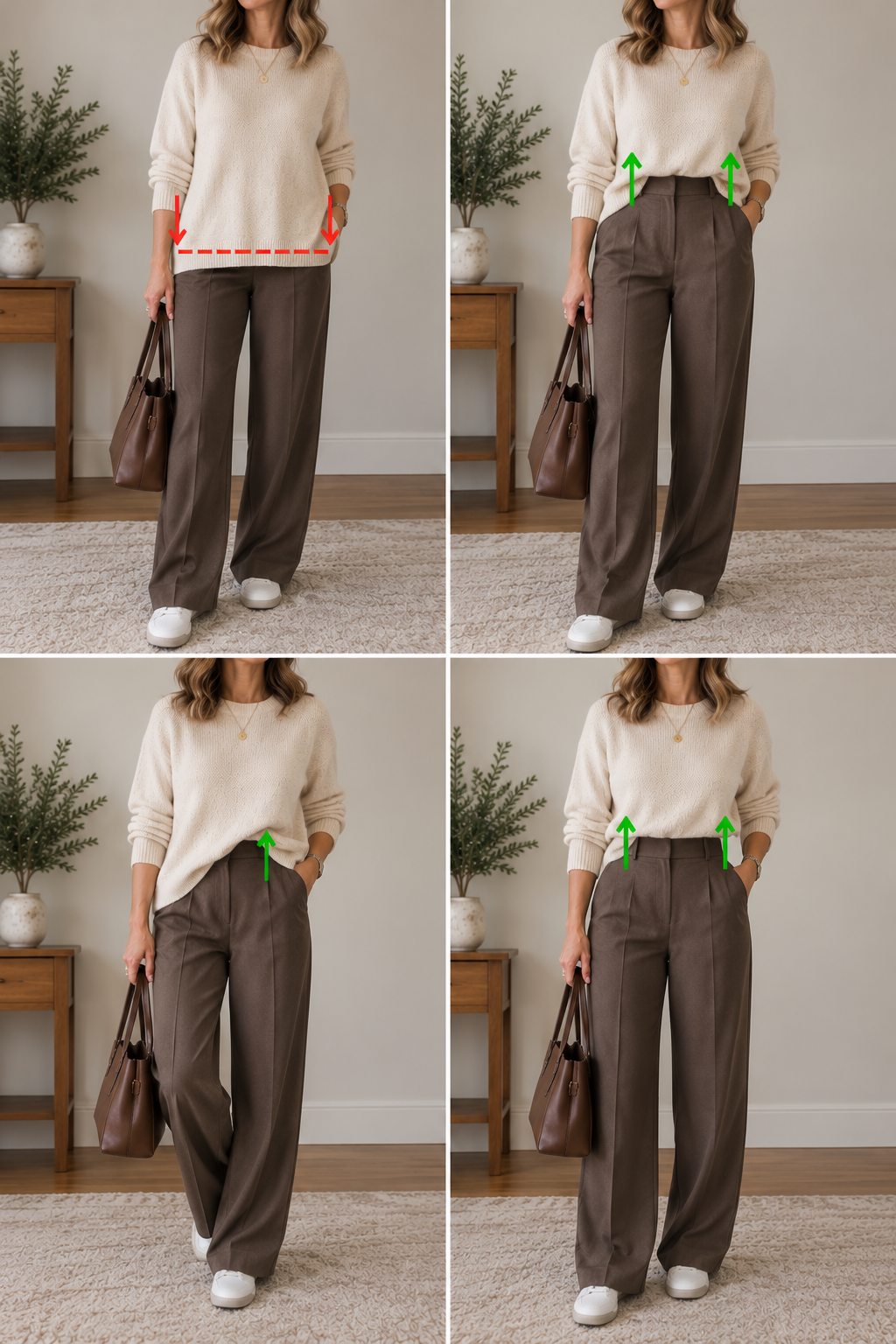
A full tuck works well with thinner tops and high-waisted trousers. For chunky sweaters, try a small front tuck so you don’t add bulk around your waist.
If you carry weight around your tummy, a loose side tuck or leaving your top untucked might feel more comfortable. See which option gives your outfit the best proportions.
If you love oversized sweaters but struggle with the extra fabric around your waist, I have more outfit ideas in my oversized sweater guide.
Choose Where to Define Your Waist
A dress that gently narrows at the waist can give you more shape without a belt. You can also try a belted cardigan or a fitted jacket.
If you prefer a belt, try one close to the color of your outfit so it doesn’t create a strong line across your middle. You can also move it slightly higher or lower to find a position that feels comfortable. A wide, contrasting belt will draw more attention to your waist, which may be exactly what you want.
If you have an hourglass figure with a fuller tummy, I’ve also written about how to dress an hourglass shape with a big tummy.
Balance Loose and Fitted Clothes
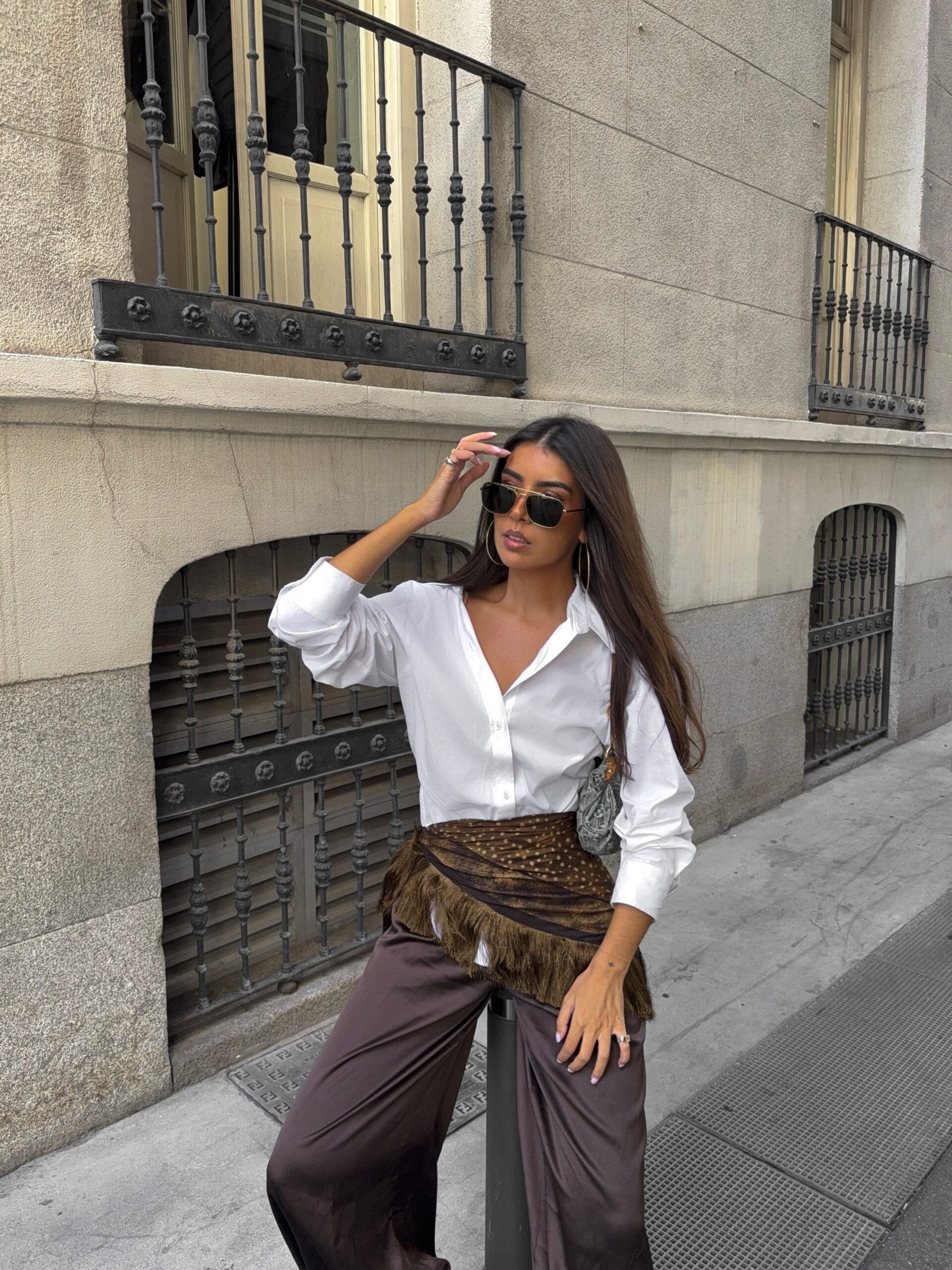
An oversized sweater often looks great with straight-leg jeans. If you’re wearing wide-leg trousers, try a more fitted top to balance the extra volume.
You can wear two relaxed pieces together, too. Just choose fabrics that drape nicely so the outfit doesn’t look unnecessarily bulky.
Check Where Your Tops and Jackets End
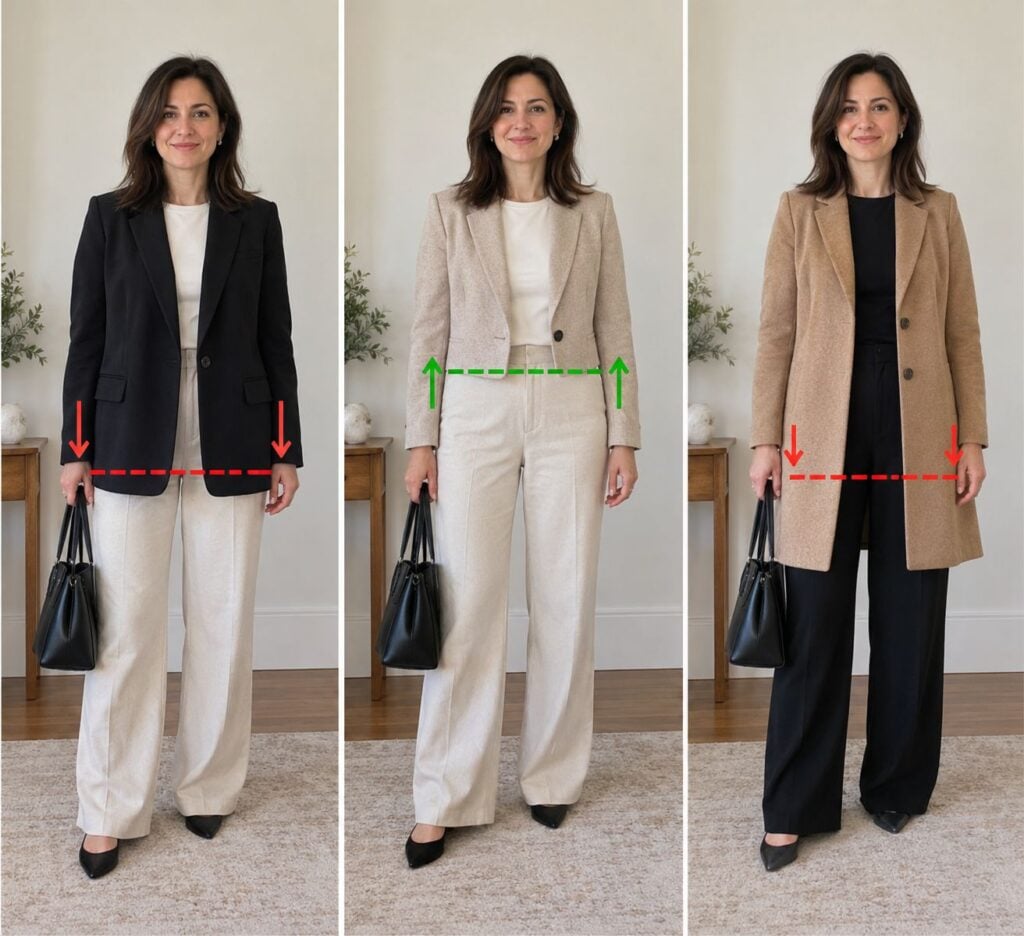
If a jacket seems to make your hips look wider, check where the hem ends. Try a waist-length jacket or one that falls below your hips and compare them with the same trousers. The difference is often easier to see when you keep the rest of the outfit unchanged.
Try one that finishes just above or below your hips and compare.
Long, untucked tops can also make your legs look shorter. Try folding the hem under before deciding whether a shorter length would work better.
Make Small Alterations
Trousers that bunch around your shoes can make your legs look shorter. Have them hemmed to the right length for the shoes you wear.
Shortening jacket sleeves or taking in a loose waist can also make clothes look much better on you without buying anything new.
2. Make Your Legs Look Longer
Wear Cropped Jackets With Longer Bottoms
A cropped jacket can make your legs appear longer, especially with full-length trousers or jeans.
Try a jacket that ends around your waist with straight-leg or wide-leg trousers. You’ll show more of your trousers, which can make your lower body look longer.
If you don’t own a cropped jacket, try a shorter cardigan or a waist-length denim jacket.
A denim jacket works well for this, too. You can see more ideas for how to wear a denim jacket over 50, although the outfits work at any age.
Get the Length of Your Trousers Right
The hem can make a big difference when you’re choosing pants that make you look taller.
Wide-leg trousers usually look best when they fall close to the floor without dragging. For straight-leg pants, try a hem that just touches the top of your shoes.
If the fabric gathers around your ankles, have the trousers shortened. Even a small alteration can give your legs a longer, cleaner line.
Choose Straight-Leg Trousers
Straight-leg trousers are a good option when you want your legs to look longer without wearing heels.
Look for a pair that falls smoothly from your hips to your shoes. Too much extra fabric around the thighs and knees can make the trousers look bulky.
A dark pair with matching ankle boots is an easy combination to try.
Choose the Right Wide-Leg Pants for Your Height
Wide-leg pants can look great on short women, including petites. You just need to pay attention to how wide they are.
If you’re petite, start with a pair that falls gently from your hips. Very stiff, extra-wide trousers can add more volume than you want, especially if the fabric sticks out at the sides.
A softer fabric that hangs nicely often gives you a longer-looking silhouette.
Wear Bootcut or Flared Jeans With the Right Shoes

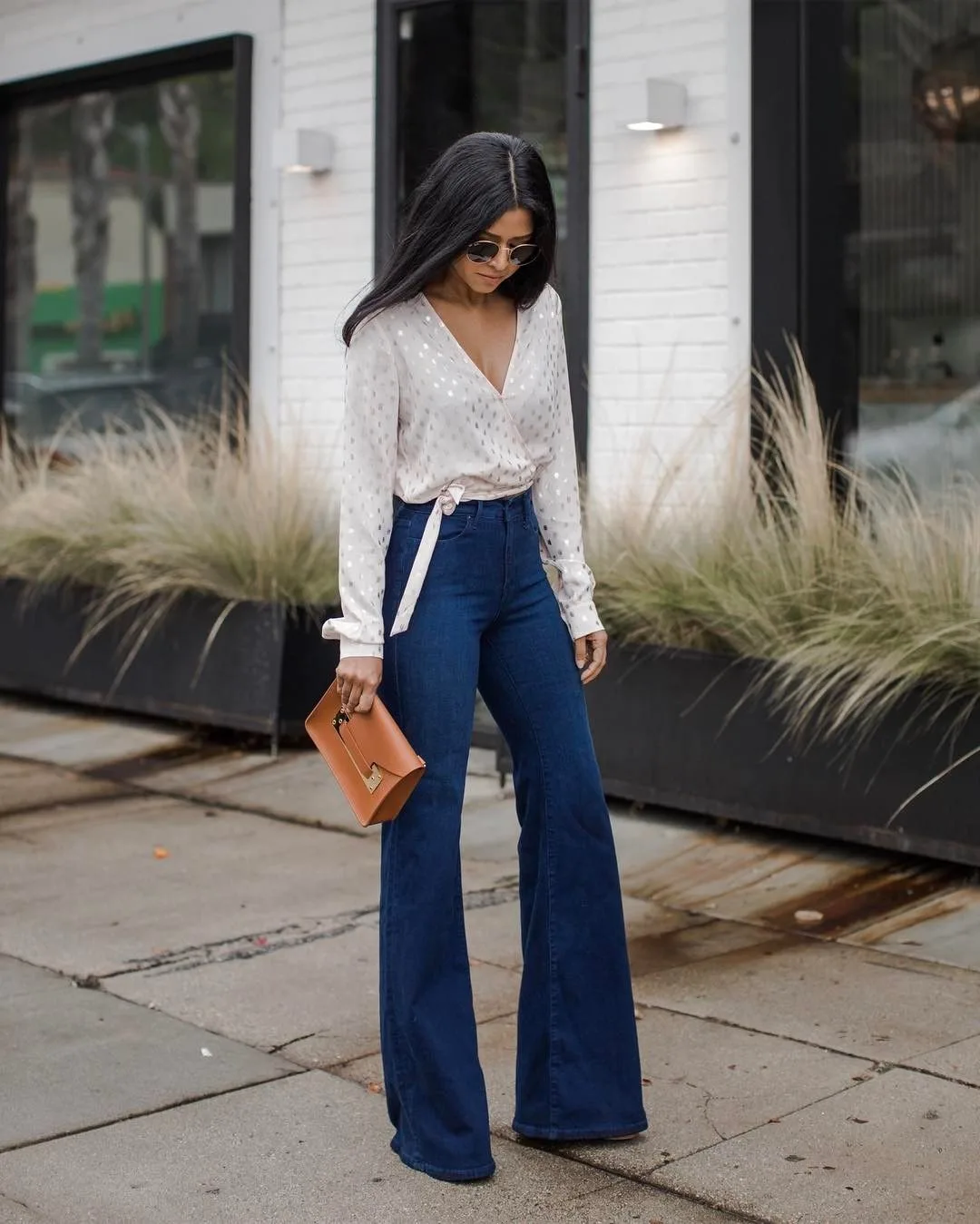
Bootcut and flared jeans are another good choice if you want to look taller. Their longer hems can cover part of your shoes and make your legs appear longer.
Try them with ankle boots or a low block heel. If you wear flats, choose the right inseam so the jeans don’t drag on the floor.
If you’re choosing between straight, bootcut, and wide-leg jeans, try each style with the shoes you wear most often. A straight leg is easy to wear with flats, while bootcut and flared jeans can look especially long with a hem that covers part of your shoes. The inseam matters just as much as the cut.
Be Careful With Cropped Trousers
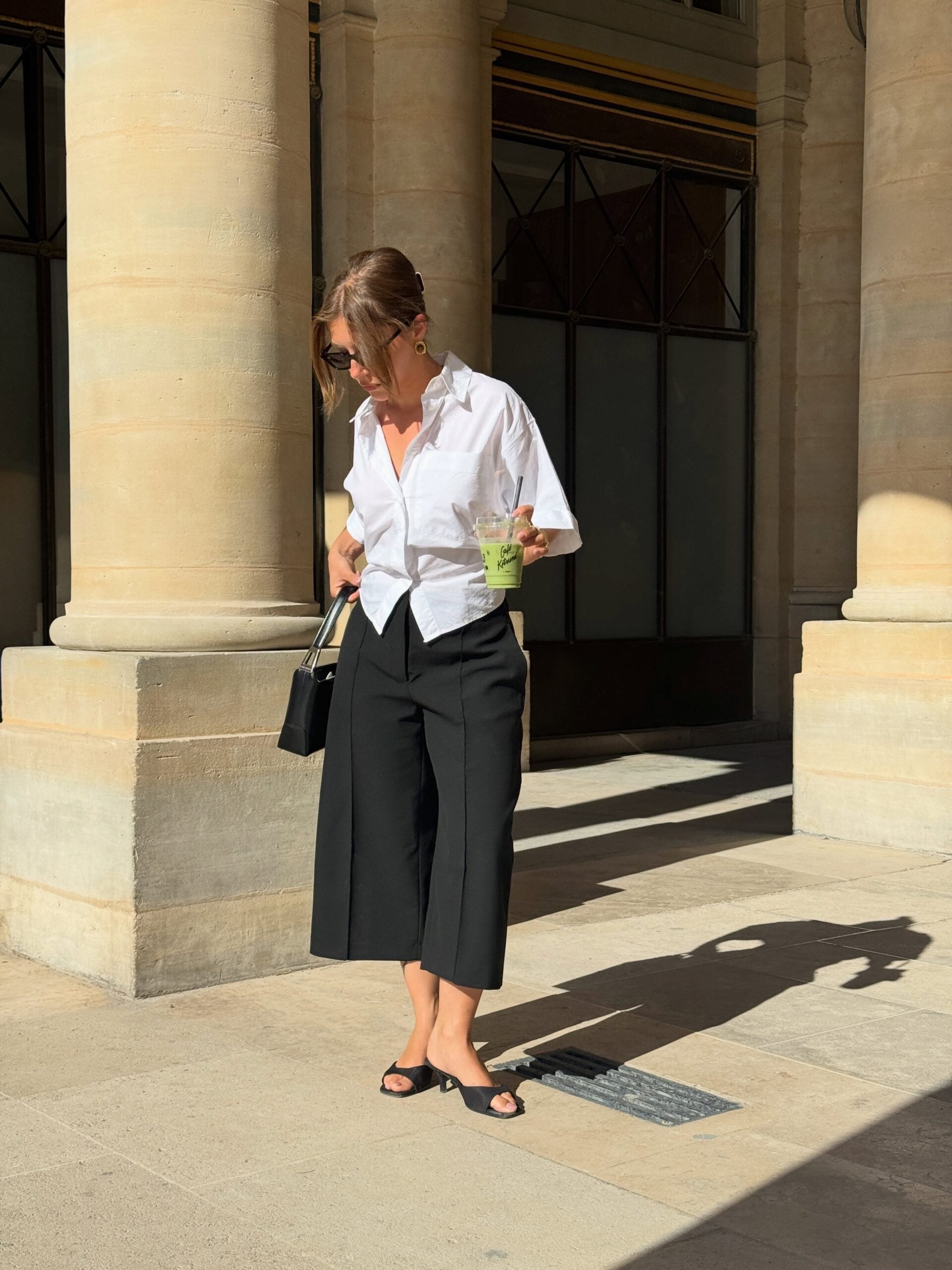
If cropped trousers seem to shorten your legs, try a pair that finishes a little closer to your ankle. Then compare the look with your usual shoes. Sometimes changing the hem by just an inch or two makes more difference than changing the trousers themselves.
An ankle-length pair is often easier to style, especially with pointed flats or shoes close to your skin tone.
You don’t have to avoid cropped jeans if you’re short. Just check where the hem falls and how it works with your shoes.
Look for Vertical Details on Your Trousers
If you want to look taller and slimmer, trousers with a pressed front crease are worth trying. The crease creates a vertical line down each leg, especially on tailored pants.
Subtle pinstripes and vertical seams can have a similar effect. You can even add a front crease to trousers you already own, as long as the fabric and style suit pressing.
3. Choose Tops and Layers That Create a Slimmer Silhouette
Try V-Necks and Open Necklines
If you’re looking for tops that make you look slimmer, start with the neckline. A V-neck creates an open shape around your chest and can make your neck appear longer.
You don’t need a deep V-neck to get this effect. A scoop neck or a shirt with the top two buttons undone can work just as well, especially if you have a fuller bust.
Don’t Avoid Turtlenecks
Turtlenecks can look lovely when you want a longer, slimmer silhouette, especially under a blazer or an open coat.
Try a fine-knit turtleneck that sits close to your neck without bunching up. Thick, chunky turtlenecks add more volume around your chest and shoulders, so pay attention to the fabric.
Choose Sleeves That Fit Your Arms
If your sleeves pull tightly around your upper arms, they can make that area look larger. Look for tops with enough room to move comfortably.
A straight sleeve or a softly relaxed shape often works well. Be careful with puff sleeves if you don’t want extra volume around your shoulders.
Roll Up Your Sleeves
Try pushing your blazer or shirt sleeves up to show a little of your wrists. It can make a loose jacket feel less heavy, especially when you’re wearing several layers.
You can also fold long shirt cuffs back once or twice. Just avoid creating a thick roll around your forearms.
Wear Blazers With Some Structure
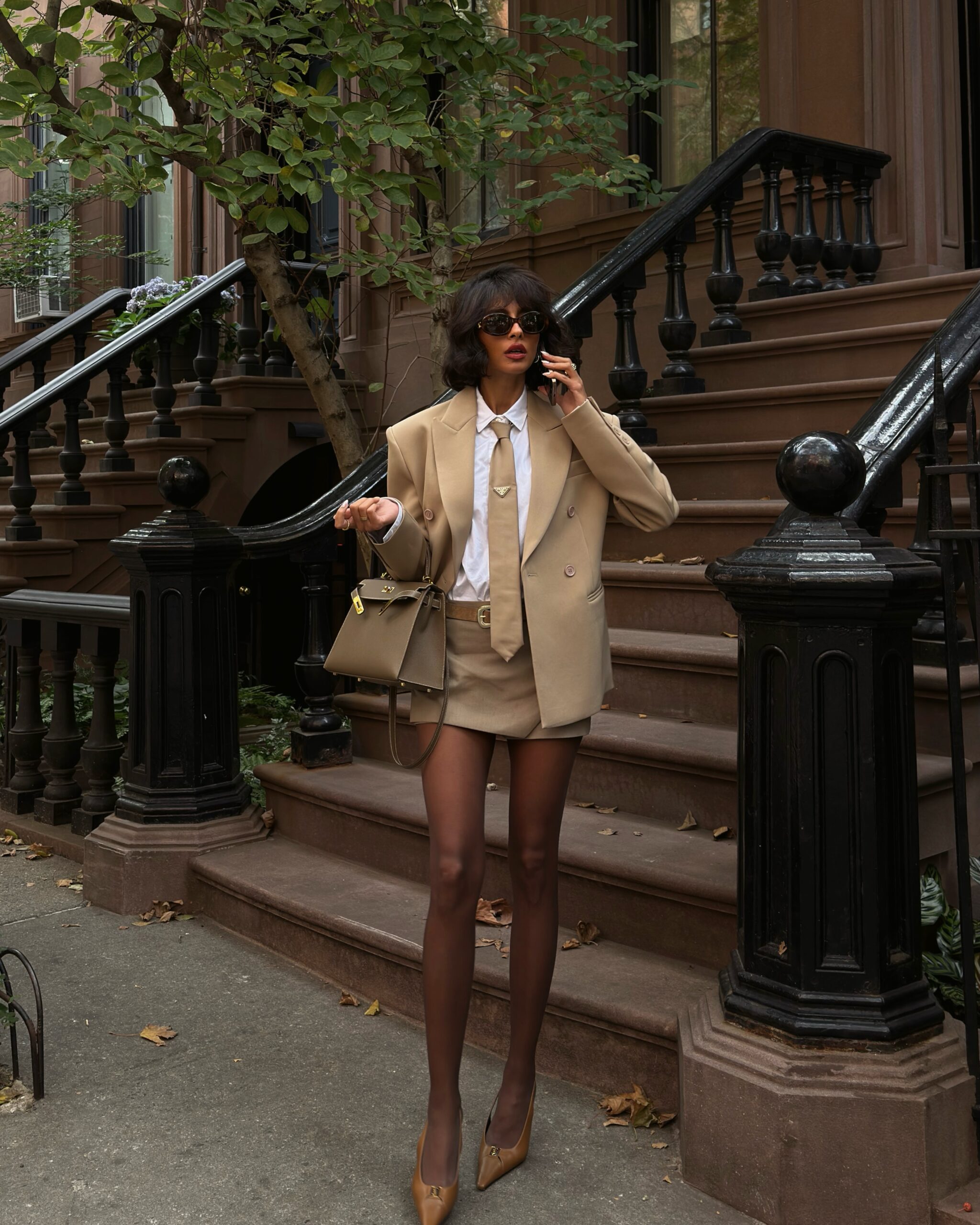
A blazer can be one of the most flattering pieces in your wardrobe when you want to look slimmer in clothes.
Look for one that follows your waist slightly and sits smoothly across your bust. If the buttons pull when you close it, try a different size or cut.
A single-breasted blazer with narrow lapels is a good option if you want a clean, simple shape.
Leave Your Cardigans and Jackets Open
An open cardigan or blazer creates two long lines down the front of your outfit. This can make your upper body appear narrower, particularly if the layer has a little structure.
Try a long cardigan over a simple top and jeans. Choose one that hangs smoothly instead of gathering around your hips.
You can use the same trick with a coat during colder months.
Choose Fabrics That Fall Nicely
Fabric makes a big difference when choosing flattering clothes for women with a fuller tummy or bust.
A soft blouse that falls gently over your stomach can look smoother than a thin, stretchy top that clings to every curve.
Very stiff fabrics can also add unwanted width if they stick out from your body. Look for something with enough weight to hang nicely without feeling heavy.
Watch the Details Around Your Bust and Tummy
Large chest pockets, ruffles, and bulky decorations can add volume exactly where you may want a smoother shape.
If you have a large bust, try a blouse with a simple front and a neckline that leaves some space around your neck. For a fuller tummy, pay attention to where gathers and pleats begin. Fabric that gathers heavily just below the bust can sometimes make your stomach look larger.
You can still wear interesting details. Just choose where you want them to draw attention.
4. Use Colors and Prints to Look Taller and Slimmer
Try Monochromatic Outfits
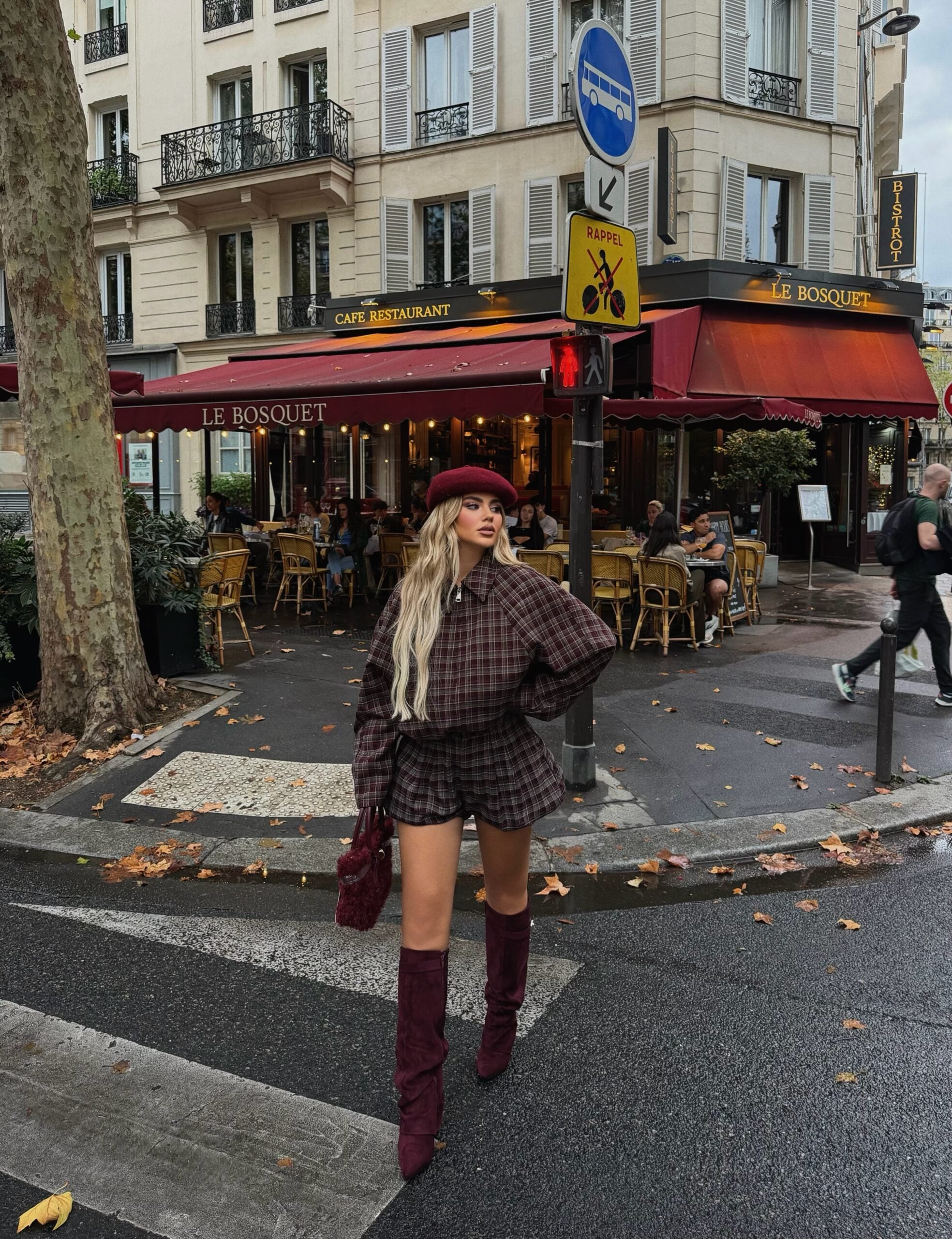
Wearing one color from head to toe is one of the easiest ways to look taller and slimmer. Your outfit has fewer color breaks, so the eye follows a longer line.
Try black trousers with a black sweater, or cream jeans with a cream top. You can add a different-colored bag or jacket without losing the effect.
You don’t have to match every piece exactly. Tonal outfits work beautifully, too.
For example, wear chocolate brown trousers with a lighter brown knit, or navy jeans with a pale blue shirt. Keeping the colors close gives your outfit a more continuous appearance.
This is especially useful when you want to wear lighter colors without drawing too much attention to where your top ends and your trousers begin.
Match Your Shoes to Your Trousers
Black trousers with black ankle boots are a simple combination that can make your legs look longer.
The same idea works with beige trousers and beige shoes, or dark blue jeans and navy footwear. You don’t need an exact color match. Similar shades usually work well enough.
Pay Attention to Strong Color Breaks
A white top with black trousers creates a noticeable line where the two colors meet. That isn’t necessarily a problem, but it does draw attention to that part of your outfit.
If you’re short-waisted, for example, a contrasting top tucked into very high-waisted trousers may make your torso appear even shorter.
Try changing the tuck or choosing a slightly lower rise before replacing either piece.
Use Vertical Stripes and Patterns
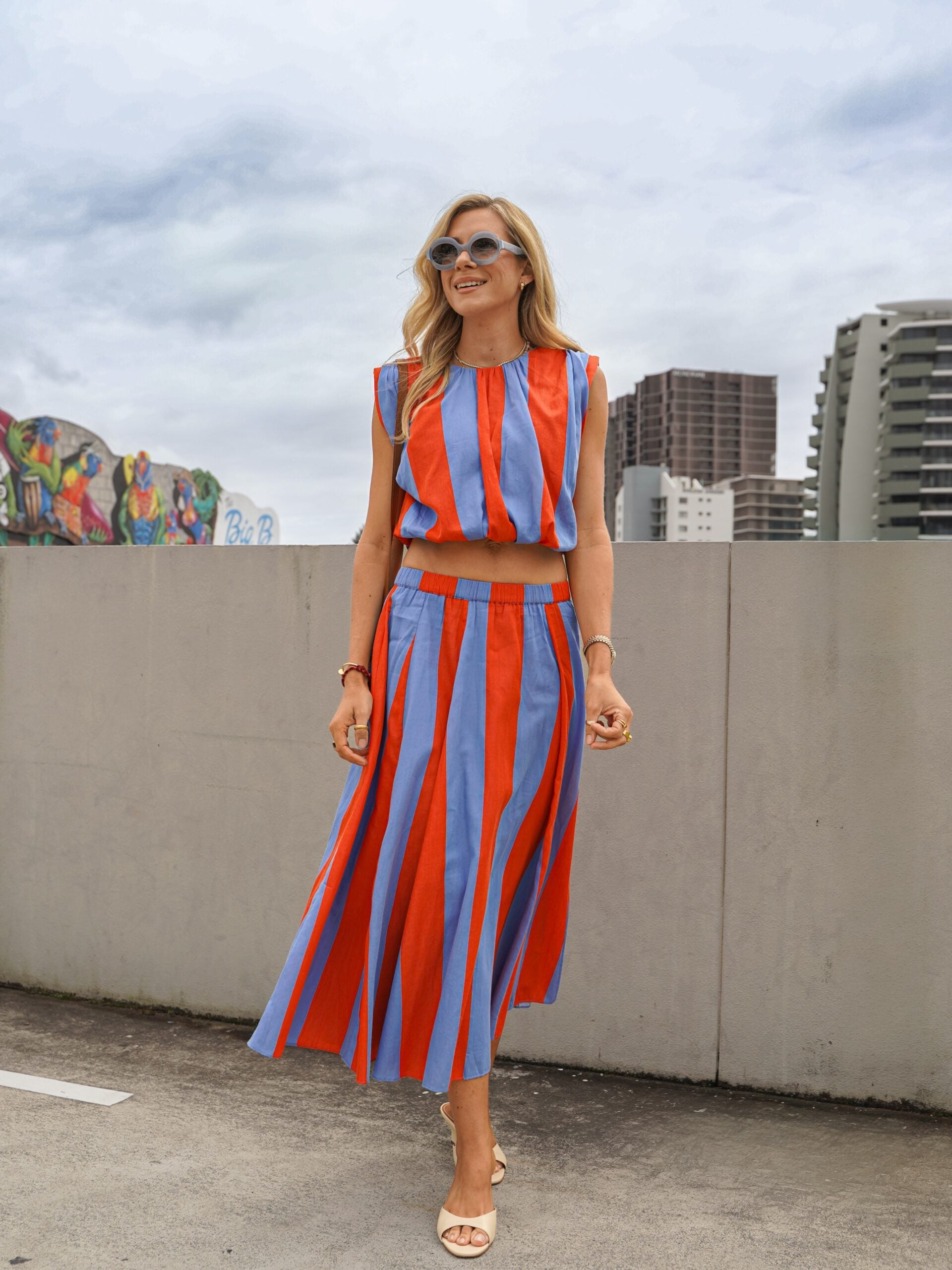
Vertical stripes can give an outfit a longer-looking line, especially on trousers or a shirt that hangs smoothly. But the fit and spacing of the stripes matter, too. A narrow stripe won’t automatically look better than a wider one.
Pinstripe trousers are an easy example. A vertically striped shirt can work well, too, particularly when the fabric falls smoothly.
Pay attention to how the stripes sit across your body. If the fabric is pulling, the lines may curve or spread apart.
Choose Prints That Work With Your Proportions
Small prints aren’t automatically more flattering, and large prints aren’t only for tall women.
If a print feels overwhelming, look at how much of the garment it covers. A dress with a few very large flowers can look quite different from one with a smaller, evenly spaced pattern.
Try comparing both prints in a full-length mirror. Pay attention to where the largest details fall, especially around your bust, waist, and hips.
Use Darker Colors Where You Want Less Attention
Black is often recommended for slimming outfits, but navy, charcoal, and dark brown can work just as well.
If you have fuller hips, try dark trousers with a lighter or patterned blouse. The lighter top will naturally attract more attention.
You can reverse the colors if you’d rather draw attention to your legs.
Don’t Be Afraid of Horizontal Stripes
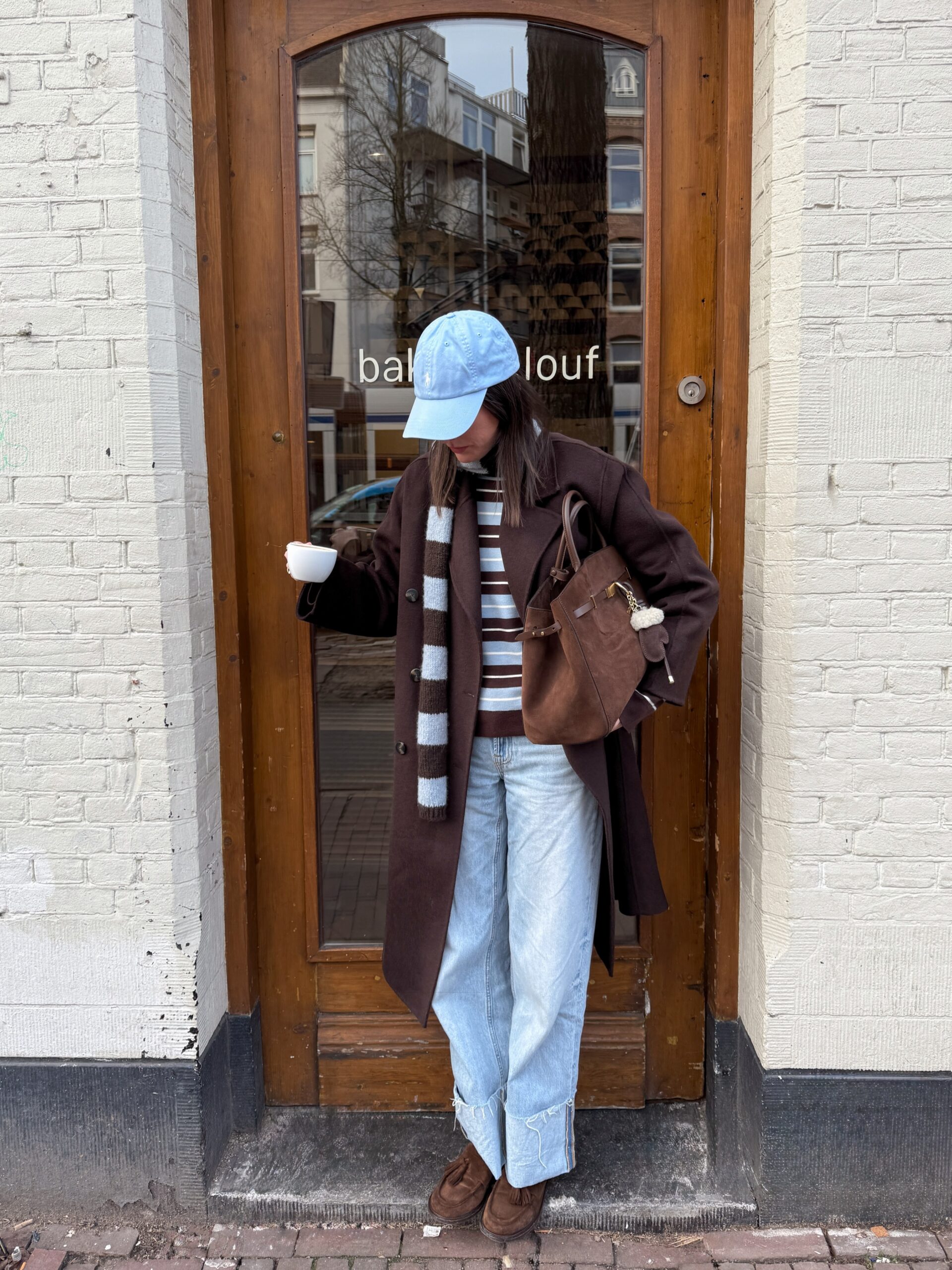
Horizontal stripes don’t automatically make you look wider. The width of the stripes, the fit of the garment, and where the pattern sits all matter.
A fine-striped Breton top can look lovely with dark straight-leg jeans. If you’re concerned about your bust, compare narrow stripes with very wide, high-contrast ones.
Also check how the stripes stretch across your chest. A top that’s too tight can distort the pattern and make it more noticeable.
5. Choose Jeans, Trousers, Dresses, and Skirts That Work for You
Check the Back Pockets on Your Jeans
If you’re looking for jeans that flatter your shape, take a look at the back pockets. Their size and position can change how your bottom looks.
Very small pockets can make fuller hips and bottoms appear larger. Pockets placed too low can also make your bottom look lower.
Try jeans with medium-sized pockets that sit fairly high and close to the center. Check the back view in the mirror before deciding.
Pay Attention to Pleats Around Your Tummy
Pleated trousers can be flattering, but check how the pleats sit when you’re wearing them.
If you carry weight around your tummy, deep pleats that open across your stomach may add extra volume. A flat-front pair or trousers with shallow pleats that stay closed might give you a smoother shape.
Also check the pockets. If they stick out at the sides, the trousers may be too tight around your hips.
Try Wrap Dresses
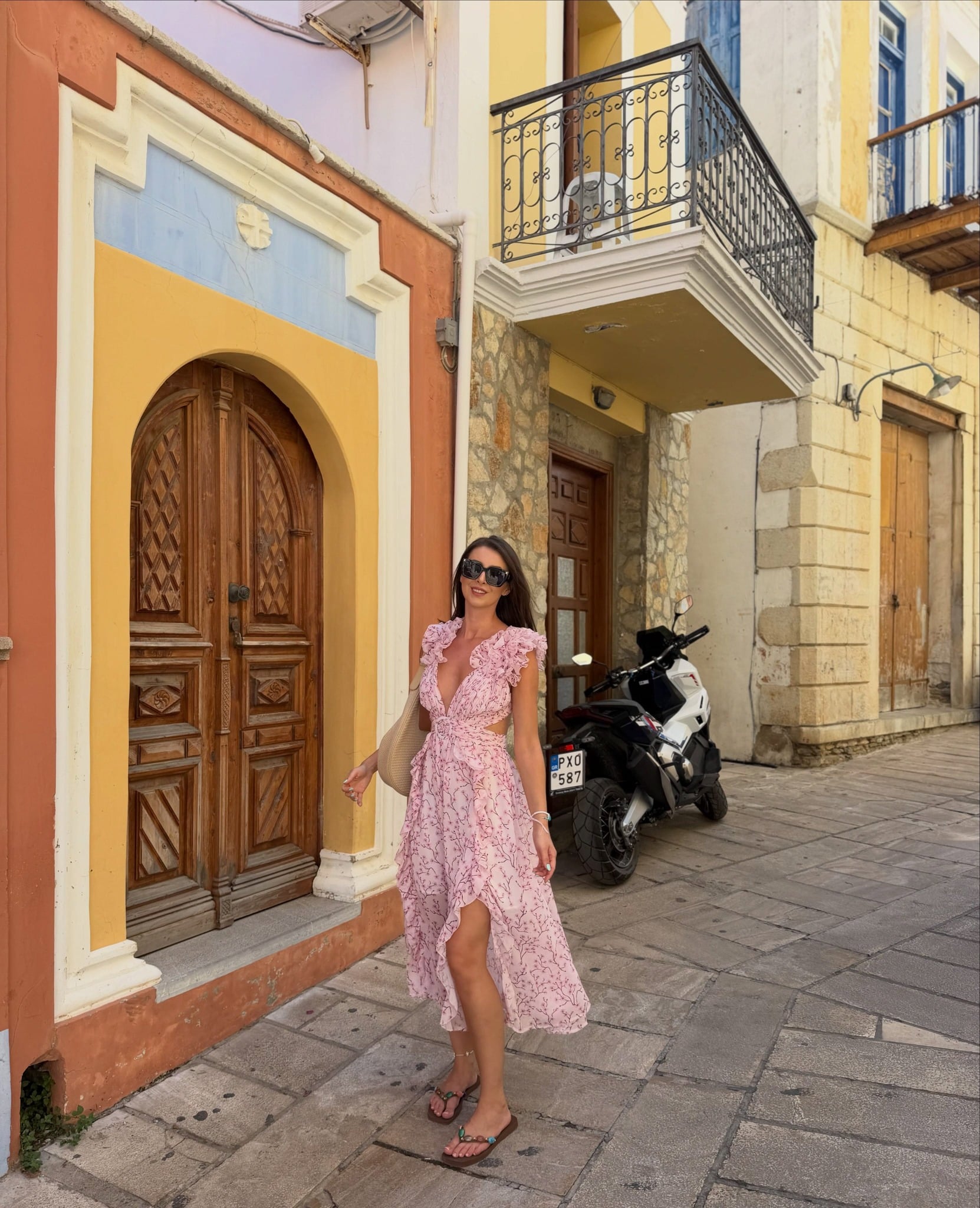
Wrap dresses are worth trying if you want a dress that gently defines your waist. The diagonal line across the front creates a lovely shape without needing a separate belt.
If you have a fuller bust, check that the neckline stays in place. A small snap or a camisole underneath can help if the dress opens too much.
For a fuller tummy, choose a wrap dress with enough fabric across the front so it doesn’t pull or cling.
Don’t Overlook A-Line Dresses and Skirts
An A-line skirt is fitted around the waist and gradually widens toward the hem. It can be especially flattering if you have wider hips because the fabric falls away from that area.
Try a knee-length A-line skirt with a fine-knit sweater and simple flats. If you prefer dresses, look for one that follows a similar shape.
Avoid overly stiff fabric if you don’t want the skirt to stand out too far from your hips.
Find a Skirt Length That Works With Your Shoes
The same skirt can look completely different depending on where it ends.
If you’re petite, a skirt that finishes just above or around your knees can make your legs appear longer. Midi skirts can work beautifully, too. Try one that ends below the widest part of your calf.
With a midi skirt, shoes that leave more of your foot visible, such as pointed flats or low-vamp pumps, can help your legs look longer.
Try Dresses and Skirts With a Slit
A slit can make a longer skirt feel less heavy and show a little more of your legs as you walk.
A straight midi skirt with a side slit is an easy option. You can wear it with a fitted knit and ankle boots for everyday outfits.
You don’t need a high slit. Even a small opening can make a difference, especially on a skirt made from thicker fabric.
Be Careful With Empire-Waist Dresses
Empire-waist dresses have a seam just below the bust, which can be helpful if you don’t want fabric fitted tightly around your tummy.
The amount of gathering matters, though. Too much fabric falling from that seam can make your middle look fuller.
Look for a dress that falls gently from below your bust and follows your body without ballooning outward.
6. Make Yourself Look Taller Without Wearing Heels
You don’t need high heels to make your legs look longer. The shape of your shoes and how they work with the rest of your outfit can make a difference.
Try Pointed-Toe Flats
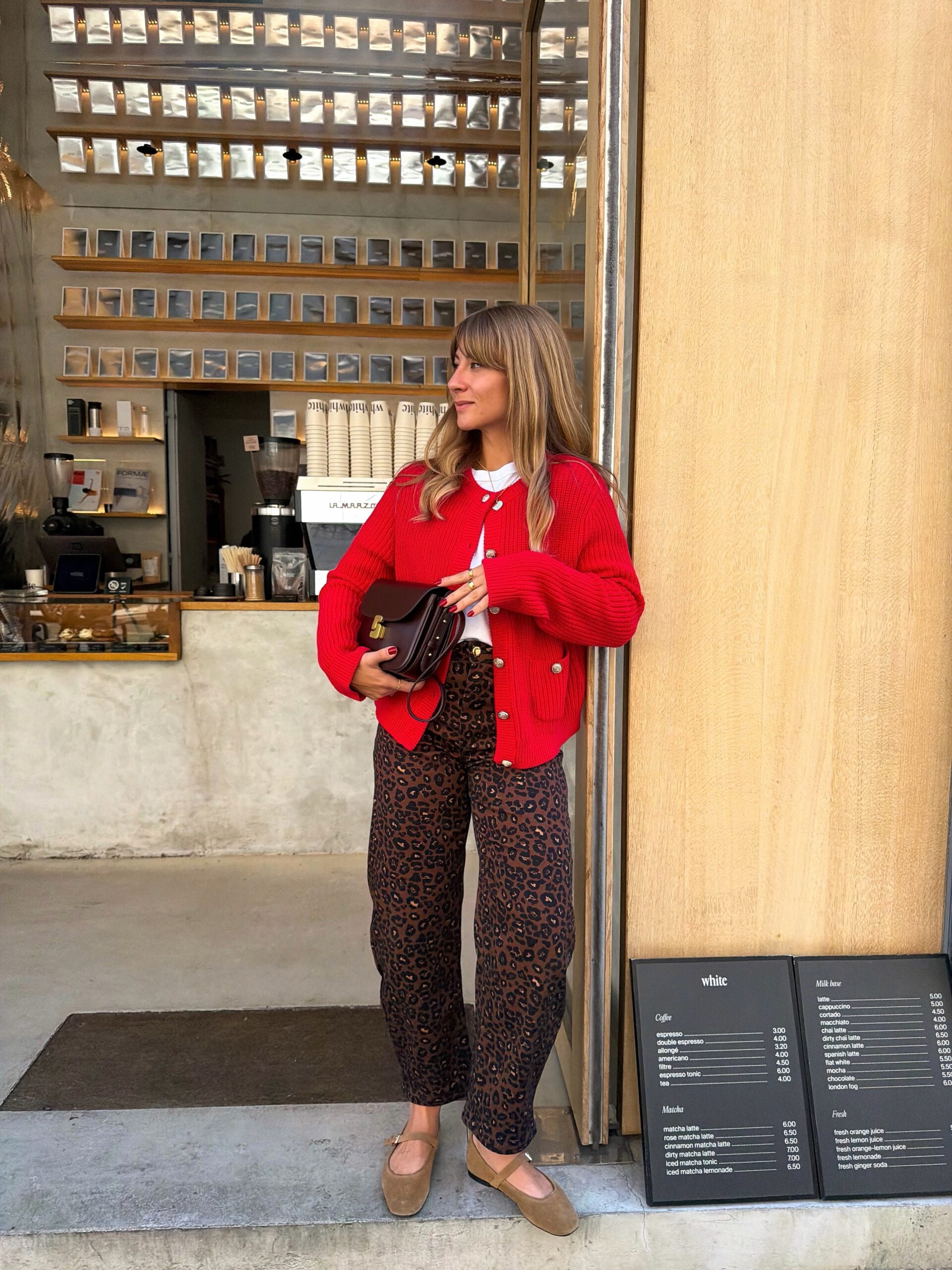
Pointed-toe flats are one of the easiest shoes to wear when you want to look taller without heels. The pointed shape makes your feet appear a little longer, which can help your legs look longer, too.
Try black pointed flats with tailored trousers or a pair of nude-colored flats with a knee-length dress.
If pointed shoes feel uncomfortable, almond-toe flats are a good alternative.
Choose Shoes That Blend With Your Skin Tone
When you’re wearing a dress or skirt with bare legs, shoes close to your skin tone can make your legs appear longer.
For example, beige flats work well with bare legs if they’re close to your natural coloring. Depending on your skin tone, caramel, tan, or deeper brown might be a better match.
You don’t need to find an exact shade. Just avoid a strong contrast at your feet if your goal is a longer-looking leg line.
Look for Flats That Show More of Your Foot
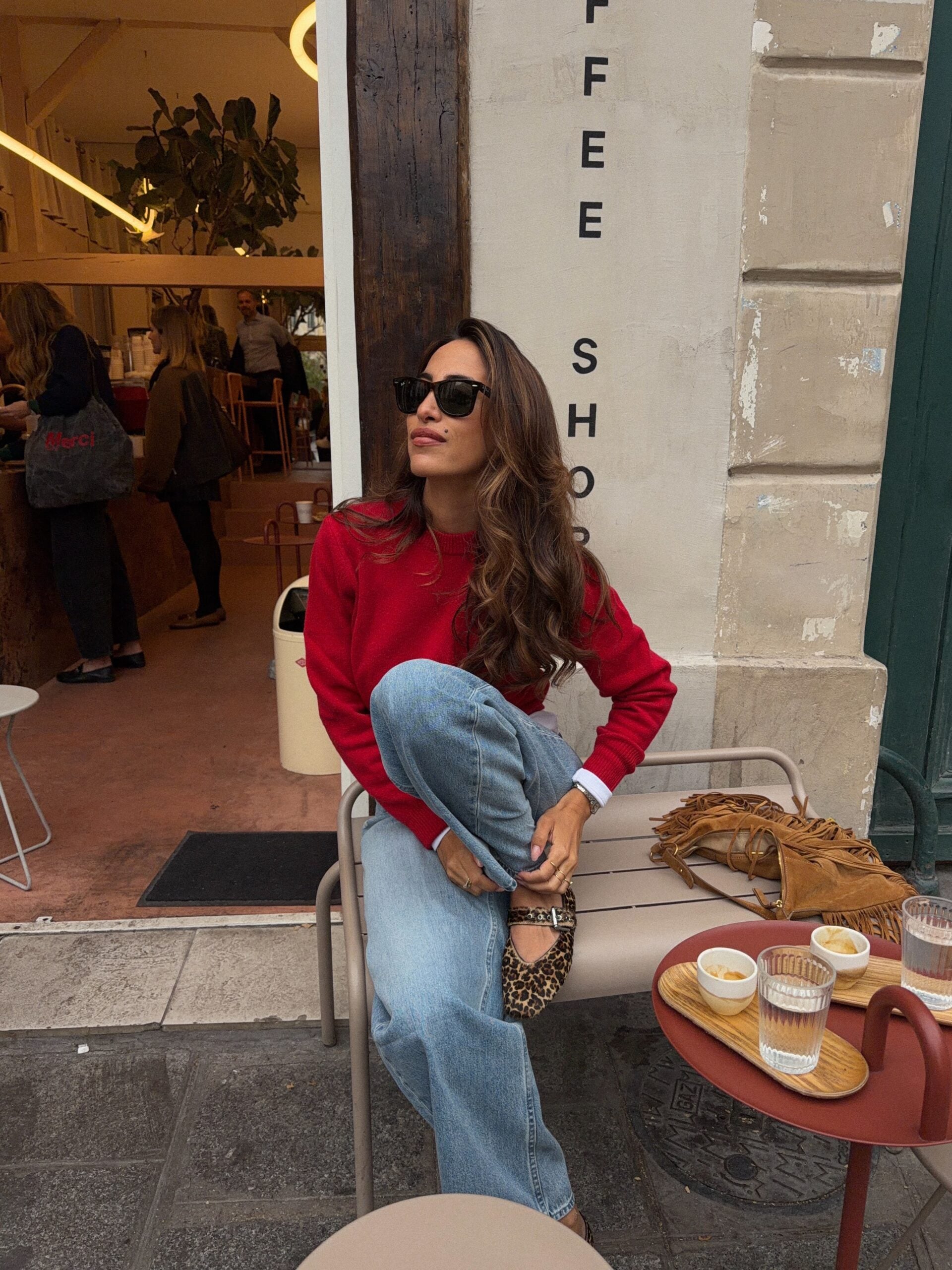
Some flats cover most of the top of your foot, which can make your legs appear shorter with skirts and dresses.
Try ballet flats or pointed shoes with a lower-cut opening. Showing a little more of the top of your foot can help, especially with midi skirts.
Be Careful With Ankle Straps
A thick ankle strap in a contrasting color can visually divide your leg right above your foot.
If you love Mary Janes or ankle-strap flats, try a thinner strap or a color close to your skin tone. You can also wear dark Mary Janes with matching tights for a more continuous line.
Style Ankle Boots With Your Trousers
Ankle boots can be some of the best shoes to make your legs look longer, especially when the trouser hem covers the top of the boot.
With cropped jeans, check the gap between the hem and the boots. A large strip of bare ankle between dark jeans and dark boots can make your legs appear shorter.
For skirts, black ankle boots with black tights are an easy combination to try in colder weather.
And if you’re trying to make black leggings work with brown boots, I have more ideas for how to wear black leggings with brown boots.
Choose Sneakers That Suit Your Outfit
You can absolutely wear sneakers and still create flattering proportions.
Slim, low-profile sneakers often work well with straight-leg jeans or ankle-length trousers. If you prefer chunky sneakers, pay attention to how they look with your trouser width. A very bulky shoe can make narrow cropped trousers look a little unbalanced.
Try a Small Heel If You Want a Little Extra Height
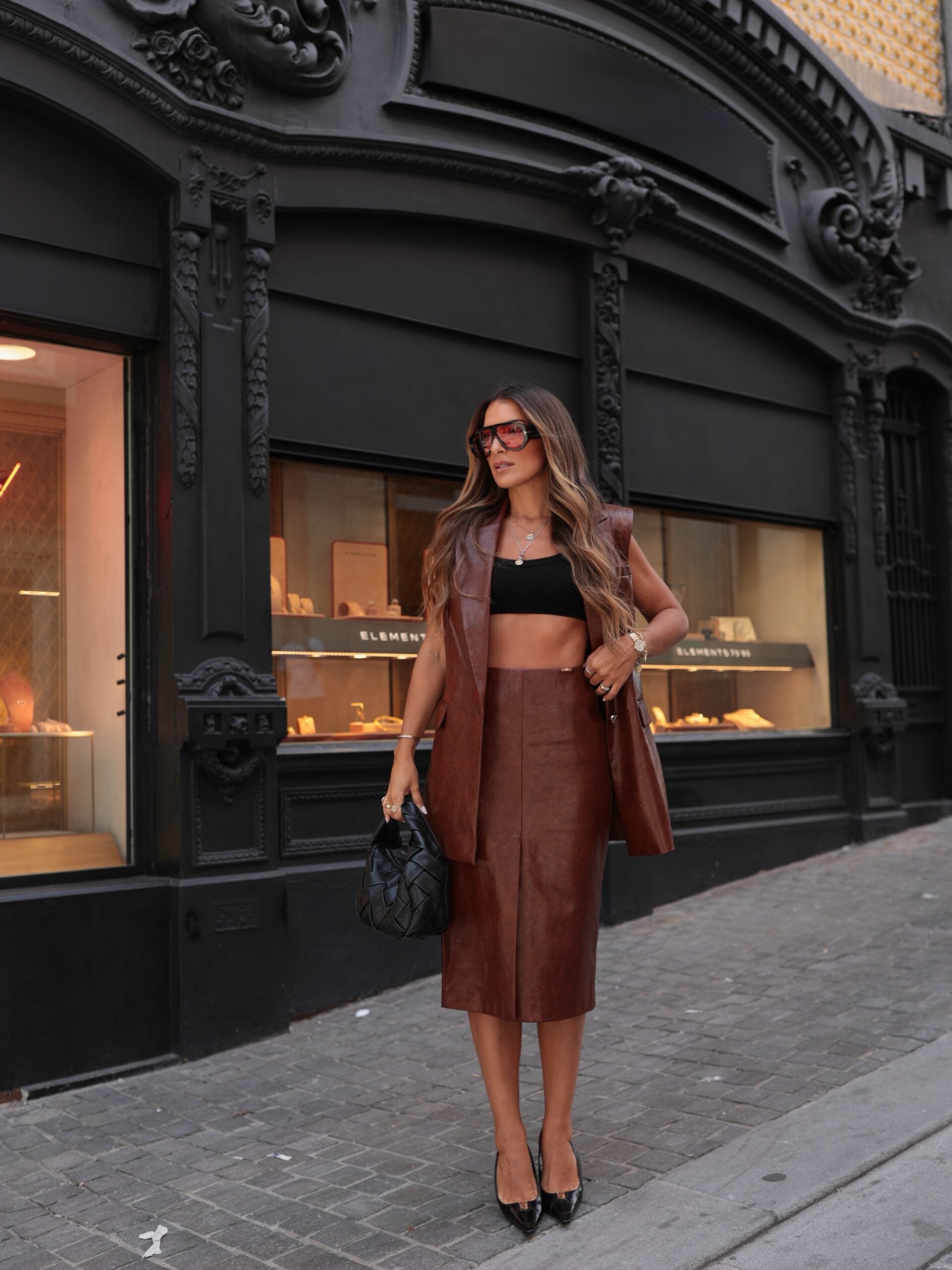
If you occasionally want some height without wearing high heels, look for shoes with a low block heel or a small wedge.
Even a one-inch heel can give you a little lift. A pair of low-heeled ankle boots is especially useful with bootcut jeans or longer trousers.
Choose a height you can comfortably walk in. There’s no point buying shoes that look beautiful but spend most of their time in your wardrobe.
7. Small Styling Details That Make a Difference
Pay Attention to the Size of Your Handbag
An oversized handbag can look quite large against a petite frame, especially if you’re wearing a simple, fitted outfit.
The right bag also depends on your body shape and where you carry it. If you’re unsure what works best, I’ve shared more tips on how to choose a handbag for your body type.
If you’re short, try a medium-sized shoulder bag or a smaller crossbody bag. You can still carry a larger tote, of course. Just see how its size works with your height and the clothes you’re wearing.
Check Where Your Crossbody Bag Sits
The length of your bag strap matters more than you might think.
If your crossbody bag hangs right at the widest part of your hips, it can draw attention to that area. Try shortening the strap so the bag sits a little higher, around your waist or upper hip.
With a bulky winter coat, you may need to adjust the strap again so the bag sits comfortably.
Try a Longer Necklace
A long necklace can create a vertical line down the front of a plain top.
A pendant necklace can add a vertical detail to a plain sweater or blouse. Try one that falls below your neckline without getting lost in the fabric.
If you have a fuller bust, check where the pendant sits. You may prefer it above the fullest part of your bust rather than hanging directly over it.
Be Careful With Bulky Scarves
A thick scarf wrapped several times around your neck can make your upper body look heavier, especially with a puffer jacket or oversized coat.
Try letting the ends hang down the front of your coat, or choose a softer scarf that doesn’t add quite so much volume around your shoulders.
For a dressier outfit, a lightweight scarf loosely draped around your neck can be lovely.
How to Look Taller and Slimmer for Your Body Shape
Before anything else, are you not sure which shape you have? Start with my guide on how to figure out your body shape.
If You’re Petite or Have Short Legs:
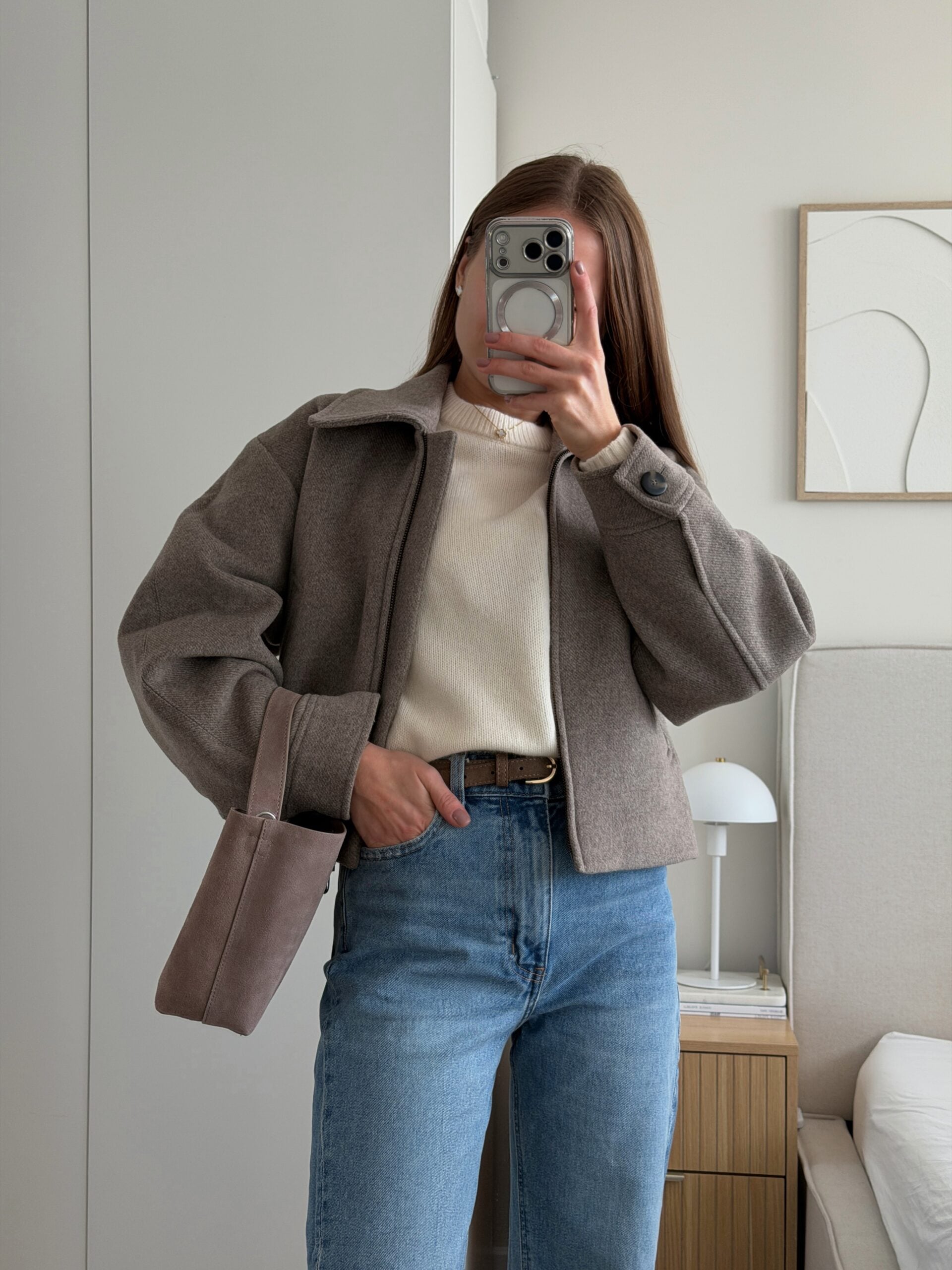
Petite sizing is worth trying, even if you don’t consider yourself particularly small. Petite clothes are designed with shorter proportions, so the knees of trousers, waist seams, and sleeves may sit in better places.
If regular-sized blazers always feel too long or dresses have waist seams that fall near your hips, try the petite version before paying for alterations.
If You Have a Short Torso:
A short torso can make some outfits feel crowded around your waist and chest.
Try a shirt with a few buttons open and trousers that sit around your natural waist. A slightly longer necklace can also create some space around your neckline.
If you love high-waisted jeans, you can still wear them. Just check that there’s enough room between the waistband and your bust for your top to sit comfortably.
If You Carry Weight Around Your Tummy:
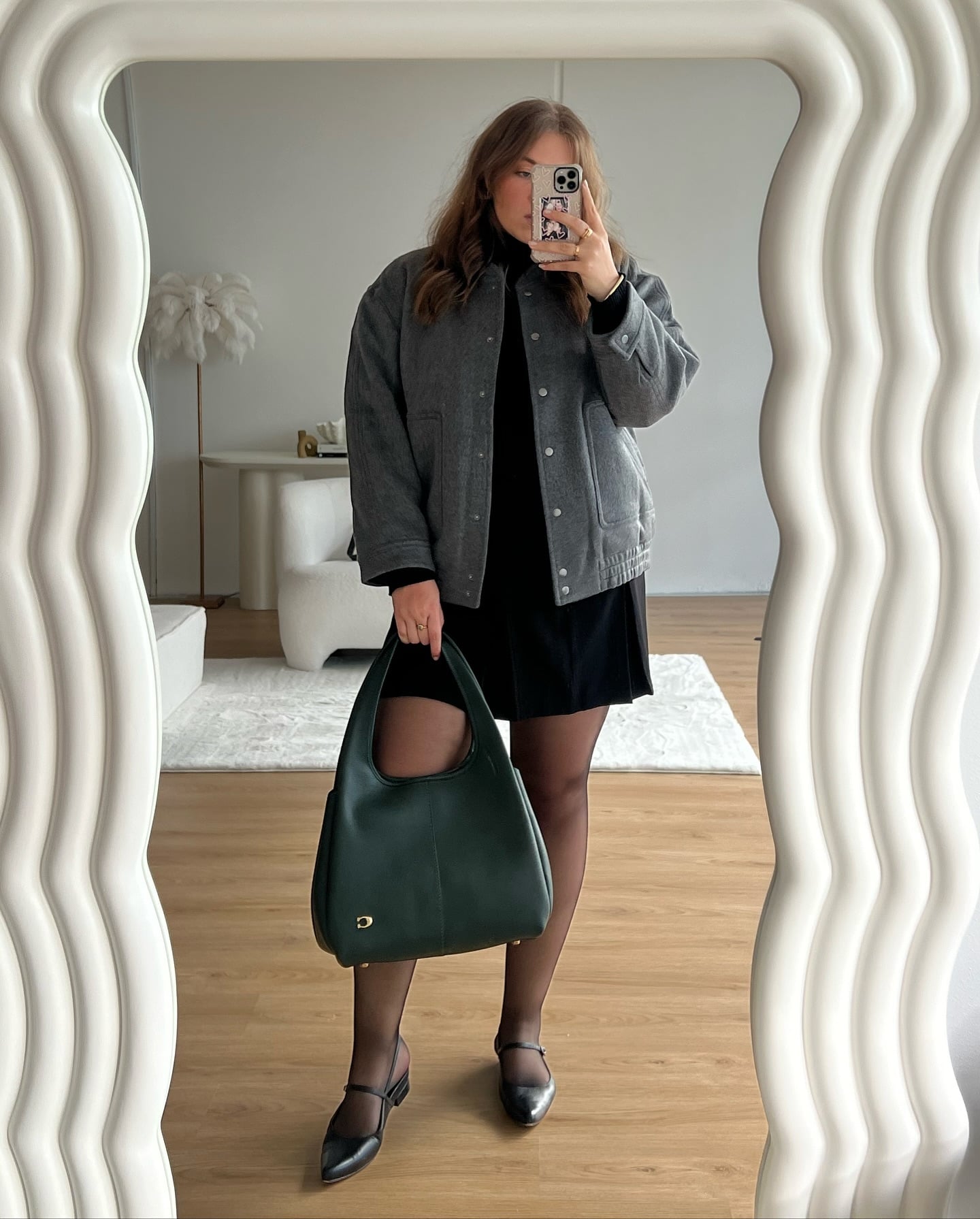
If you’re wondering how to look slimmer with a big tummy, start by checking how your clothes fall across your stomach.
A blouse with a little room through the middle can work beautifully with straight-leg trousers. Look for fabric that falls gently from your bust without gathering too heavily underneath it.
For dresses, try a softly shaped shift or a style with gentle ruching at the side. Side ruching can be especially helpful when you want a little more room around your tummy.
If You Have Wide Hips or a Pear-Shaped Figure:
A boat-neck top can look lovely on a pear-shaped figure because it draws the eye across your shoulders.
Try one with a simple A-line midi skirt or dark straight-leg jeans. A blouse with subtle shoulder detailing can work well, too.
If you’re choosing a fitted top, check that it has enough room at the hem to sit comfortably over your hips without riding up.
I’ve shared more outfit ideas for pear-shaped women if you’d like to see how different clothes work with fuller hips.
If You Have a Large Bust:
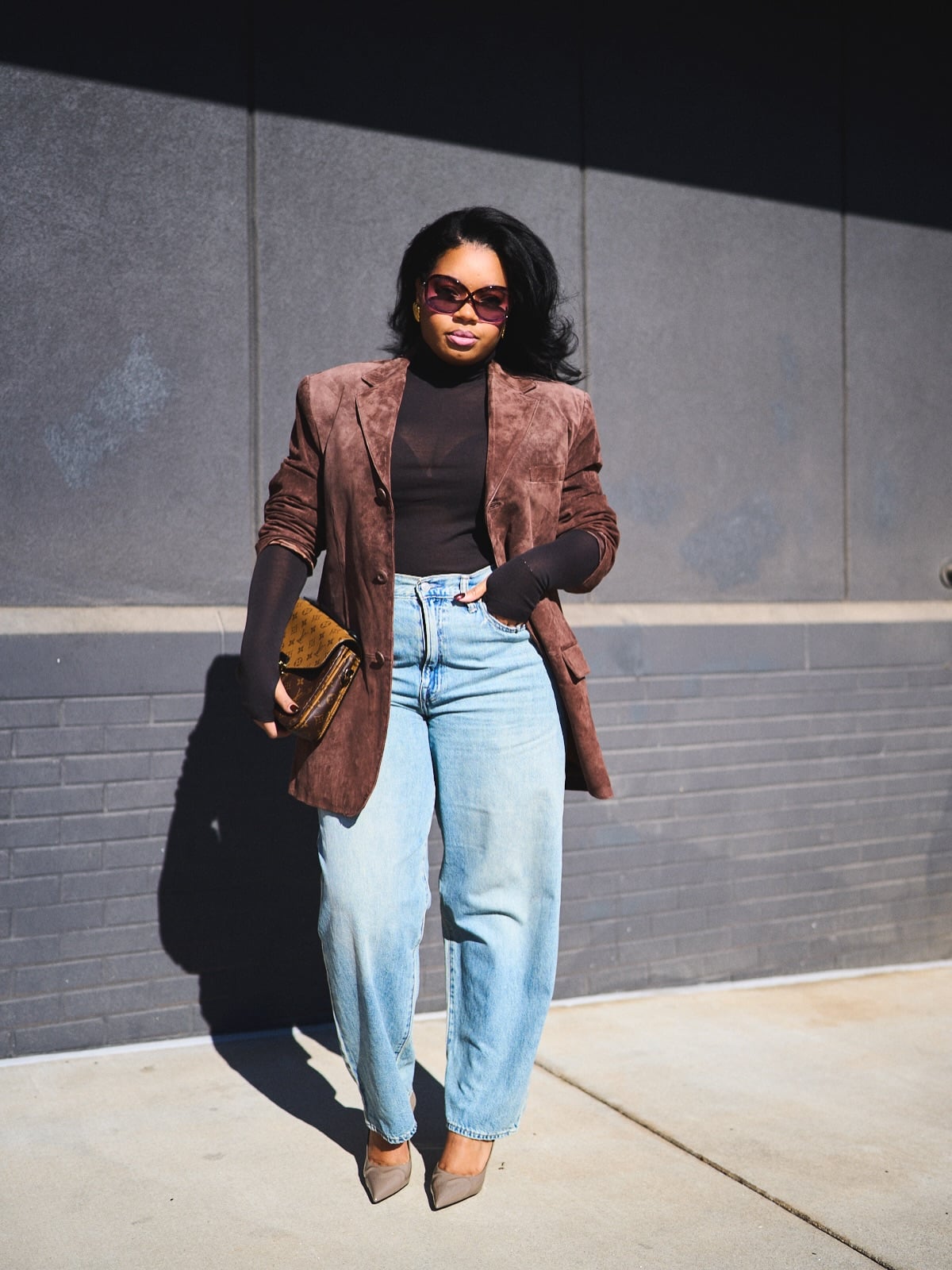
Button-down shirts can be tricky when you have a fuller bust. If the buttons gape across your chest, look for shirts with a hidden extra button or choose a size that fits your bust and have the waist adjusted if needed.
A wrap-style knit top can also be a lovely option. Look for one with enough coverage through the neckline and fabric that doesn’t pull across your chest.
If You’re Petite and Curvy
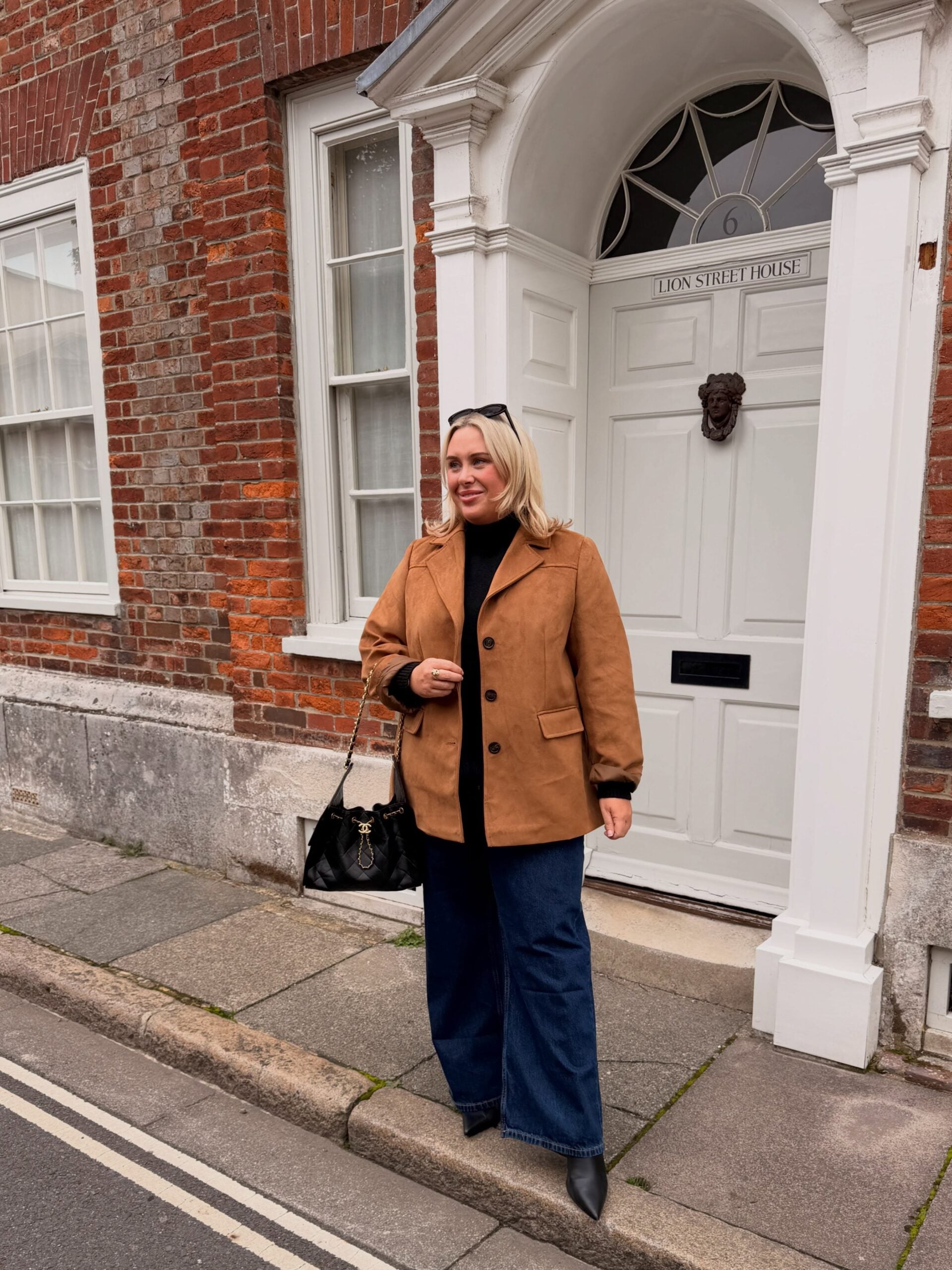
Finding petite curvy outfits can be frustrating when regular petite clothes fit your height but feel too narrow around your bust or hips.
Try petite trousers with a curvy fit, especially if you often have a gap at the back of your waistband. Curvy-cut jeans usually allow more room through the hips and thighs.
Finding trousers that fit can be especially frustrating. I’ve put together a guide to the best pants for petite curvy women with more advice on choosing the right cut.
For dresses, look for petite styles with a defined waist and enough room through the bust. The right proportions can save you from having to alter several parts of the same dress.
Final Thoughts
You don’t have to follow every tip in this guide. Start with a few that make sense for your body and the clothes you already own. Try a different way of tucking your top, experiment with trouser lengths, or see how changing your shoes affects the outfit.
Once you understand how fit, color, and proportions work together, it becomes much easier to put together outfits you feel good wearing.
