
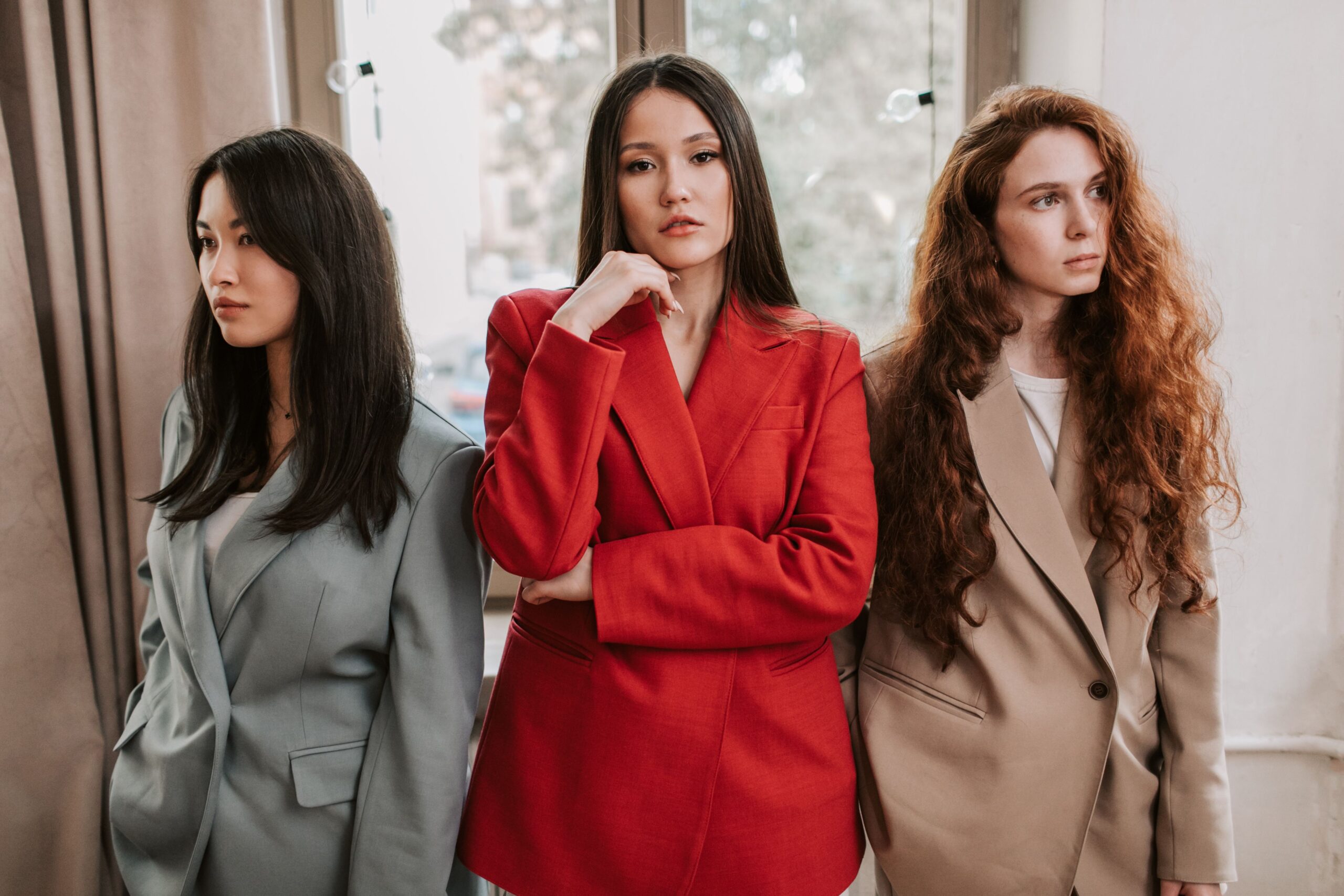
If you’re wondering how to wear a blazer for an interview, the easiest place to start is with the rest of the outfit.
The blazer already gives you structure, so what you wear underneath and on the bottom decides whether the look feels corporate, business casual, or too relaxed.
I wouldn’t overcomplicate it.
Tailored pants, a simple blouse, a skirt, or a clean dress can all work with a blazer.
Even dark jeans can make sense for some casual workplaces, but I wouldn’t choose them if you’re unsure about the dress code.
The best interview outfit is the one that looks right for the company and still feels comfortable enough that you can forget about your clothes once the interview starts.
Below, I’m sharing blazer interview outfits for women that are easy to recreate, plus a few small details that can make the whole look feel more professional.

What Should You Wear to a Job Interview?
The first thing I’d think about is the workplace itself.
You don’t need to dress the same way for every job interview. A bank or law office usually calls for something more traditional, while a relaxed creative company may give you much more freedom.
For a more formal workplace, a matching suit is always an easy option.
You can also wear a blazer with tailored trousers or a simple skirt and keep the top underneath very clean and understated. This is where I’d avoid anything too trendy or distracting and focus more on fit.
For a business casual interview, you can loosen things up a little.
If you’re not completely sure what counts as business casual, I have a full guide to business casual outfits for women that can help you get the dress code right.
For the interview itself, a blazer with trousers and a blouse or fine knit usually works really well. You can finish the outfit with loafers, flats, slingbacks, or a low heel.
You still look professional, but the outfit doesn’t feel as strict as a full suit.
If you’re interviewing somewhere casual or creative, you can bring in a little more personality. A blazer with polished separates works well, and dark jeans can sometimes make sense too.
I’d choose a clean dark wash without distressing and keep the rest of the outfit neat.
And if you genuinely can’t figure out the dress code, I’d go slightly more dressed up rather than risk looking too casual.
You can always soften a professional outfit with a less formal top or shoes, but it’s much harder to fix an outfit that already feels underdressed once you walk into the interview.
Blazer Interview Outfits for Women
Blazer + Button-Down Shirt + Dark Jeans
Dark jeans can work for an interview, but only when the workplace already leans casual. I’d save this outfit for a startup, creative company, or somewhere you know people don’t dress very formally.

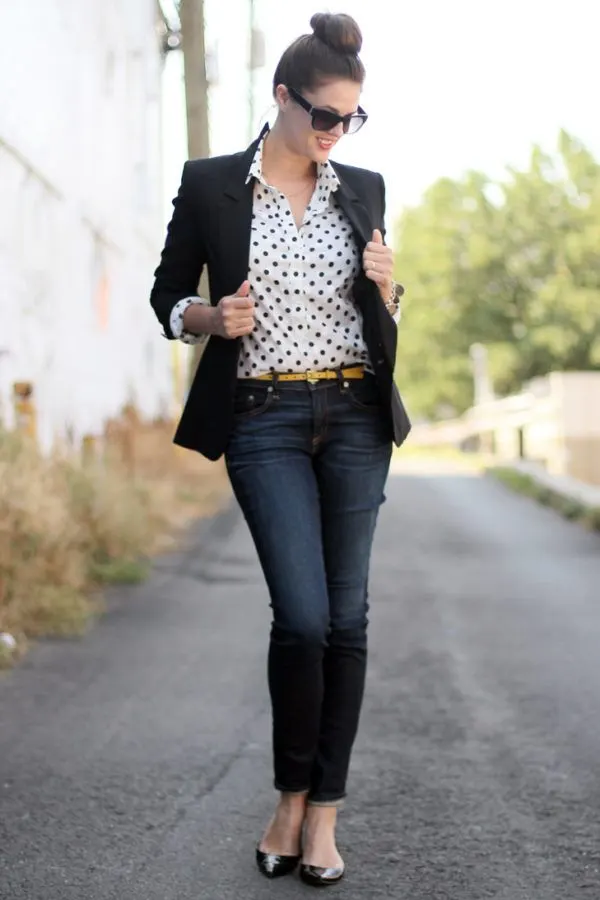
You can choose a clean dark wash without rips, fading, or heavy distressing. Then keep the shirt simple and let the blazer do most of the work.
A white, blue, or softly striped button-down is an easy choice.
If this is a combination you wear outside of interviews too, I have more ideas for wearing a blazer with a collared shirt.
Shoes matter here too. Loafers, simple flats, or a low heel will keep the jeans from making the outfit feel too relaxed.
If you’re unsure how casual the company really is, I’d swap the jeans for tailored trousers.
2. Black Blazer + Tailored Pants
If you have no idea how formal the interview will be, this is the kind of outfit I’d choose.
A black blazer and tailored pants sit right in that middle ground where you look professional without feeling like you’ve dressed for a very formal corporate office.
I especially like the black and cream combination here. The black top keeps everything simple under the blazer, while the lighter pants make the outfit feel less like a traditional suit.
You could also wear black or navy trousers if the company leans more formal.
I’d skip the sunglasses for the actual interview, of course, and keep the belt and jewelry simple.
Add loafers, slingbacks, or a low heel, and you’re done.

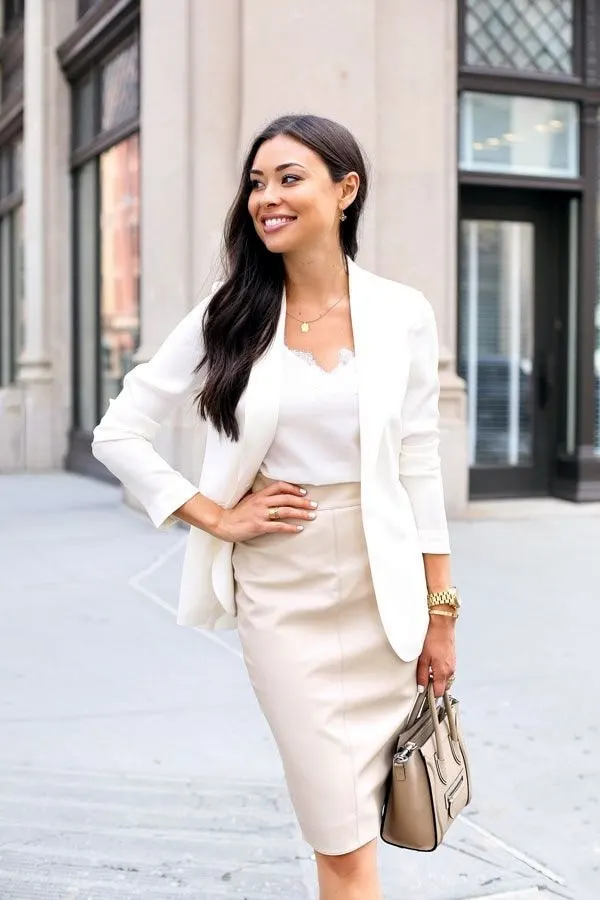
Blazer + Blouse + Pencil Skirt
A blazer with a pencil skirt is one of those interview outfits that still works when you want to look professional without wearing a full matching suit.
The top underneath should stay simple.
I’d go with a blouse, shell, or fine knit that sits neatly under the blazer and doesn’t need constant adjusting. That already makes the whole outfit feel more put together.

I also wouldn’t automatically reach for black.
Cream, beige, navy, soft gray, or a quiet blue can make a professional interview outfit for women feel a little softer while still looking right for a more formal workplace.
This is a good choice for a business professional interview outfit, especially when you want something classic but not too severe.
A black pencil skirt would work just as well here, and you’ll probably get much more wear out of it after the interview too. I have more black skirt outfit ideas if you want to see a few other ways to style one.
Matching Blazer + Trousers
A matching blazer and trousers are the option I’d choose when the interview feels important enough. You don’t want to second-guess whether your outfit looks professional enough.
It works especially well for corporate interviews, management roles, finance, law, or any workplace where people dress more formally.

The part I’d pay attention to is the cut.
A modern pantsuit should skim the body without pulling, and the trousers should fall cleanly instead of bunching around the shoes. That makes much more difference than choosing the “right” interview color.
You also don’t need to default to a stiff black suit.
Navy and charcoal feel traditional, while taupe, chocolate, soft gray, or cream can make the same blazer and trousers interview outfit feel more current.
I’d keep the top underneath very simple and let the suit carry the look.
This is also one of the best job interview outfits for women to have in their closet because they can wear both pieces separately later.
The blazer can go with jeans or a skirt, and the trousers can work with knits, shirts, or loafers for everyday work outfits.
Blazer + Wide-Leg Pants
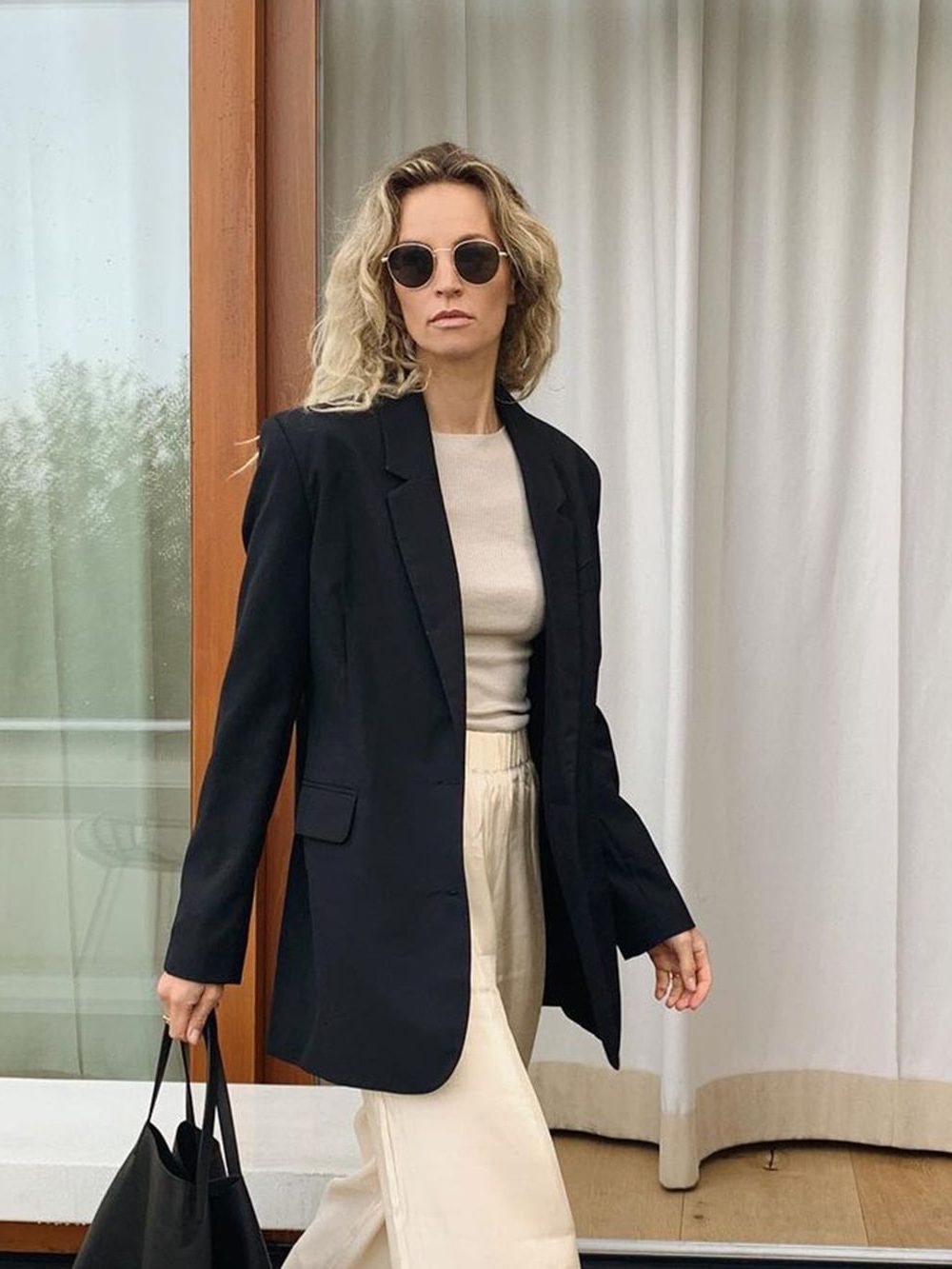
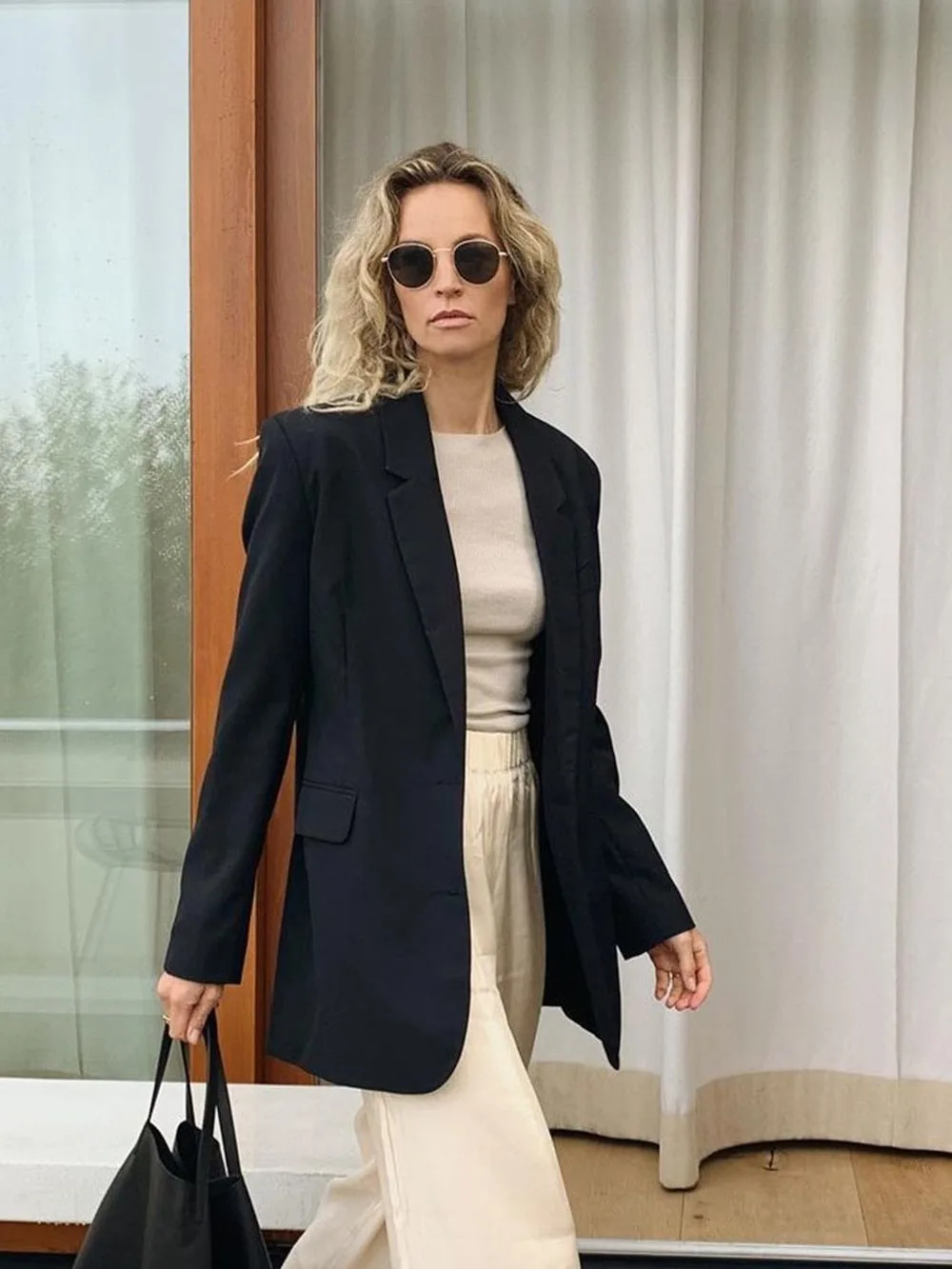
Wide-leg trousers can look great for an interview, but I’d pay more attention to proportion here than anything else.
The trousers already bring plenty of volume, so I wouldn’t add an oversized blouse or a very long, boxy blazer on top.
A simple fitted knit, shell, or neat blouse under the blazer keeps the outfit from swallowing you up.
The blazer length matters too.
I like one that finishes around the hip rather than extending too far over the widest part of the trousers. You want to keep some shape in the outfit, especially with a wider leg.
This kind of blazer and trousers interview outfit works especially well for a business casual or smart casual interview. For a more formal workplace, choose trousers with a cleaner drape and a structured blazer rather than anything too relaxed or slouchy.
Blazer + Turtleneck + Tailored Pants
A turtleneck makes so much sense when you’re planning a fall interview outfit and don’t want to rely on the usual blouse or button-down.
Just choose a fine-gauge knit rather than a thick sweater. It sits much better under a blazer and won’t leave you with all that extra fabric around the shoulders and arms.
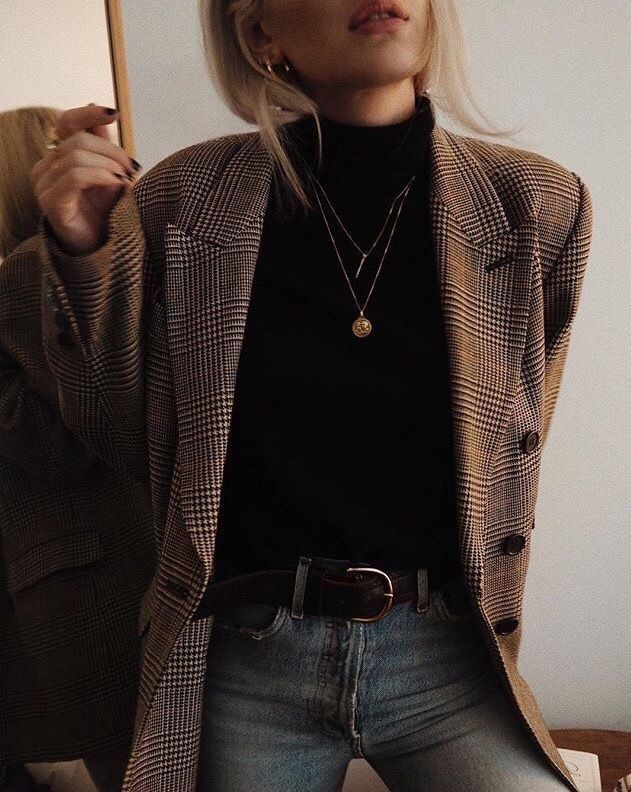
I’d also watch the fit of the blazer.
You need enough room to move comfortably once you add the knit underneath, but you don’t want to size up so much that the whole outfit loses its shape.
Add tailored pants, and you have a winter interview outfit that feels warm enough for the season without looking bulky.
I especially like this with a black, navy, chocolate, or cream turtleneck because you can easily work with a blazer you already own.
Blazer + Midi Skirt + Simple Blouse
A midi skirt is a really good option when you want a professional interview outfit that feels a little softer than trousers.
You should choose one with a clean shape that doesn’t cling too much or have a lot of extra volume, then add a simple blouse and a structured blazer.

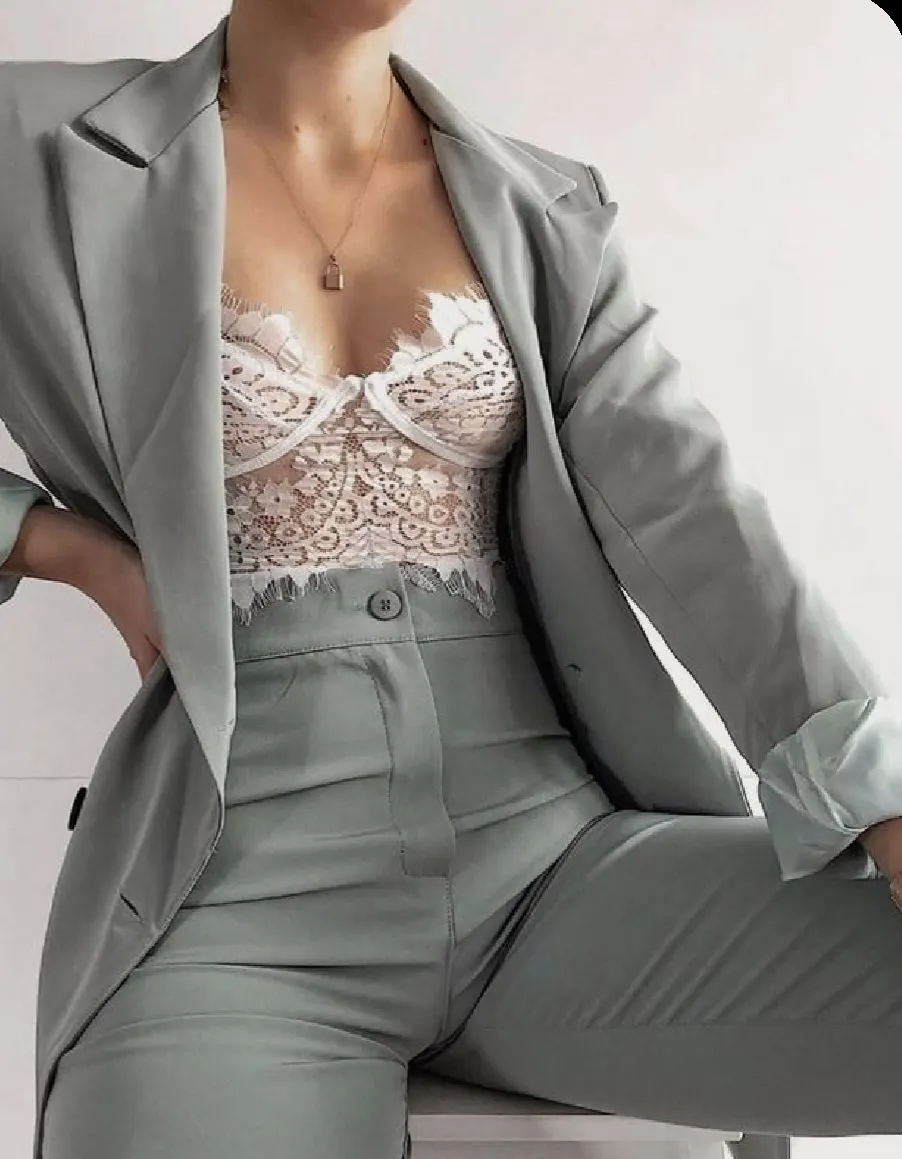
This works especially well for a business casual interview outfit for women because you can make it more or less formal without changing the whole look.
A smoother midi skirt with a tucked-in blouse feels more polished, while a softer skirt with loafers or flats can work for a less formal office.
Keep the blouse fairly simple here.
Once you already have the skirt and blazer creating shape, you don’t need a statement neckline or anything fussy underneath. A quiet top usually makes the whole job interview outfit for women feel more pulled together.
Blazer + Midi Dress
An interview outfit with a dress can be one of the easiest options because you already have most of the outfit sorted.
You can choose a midi dress with a simple neckline and a shape that lets the blazer sit smoothly on top. You should avoid anything too ruffled, overly fitted, or very flowy because they can start to fight with the blazer instead of working with it.
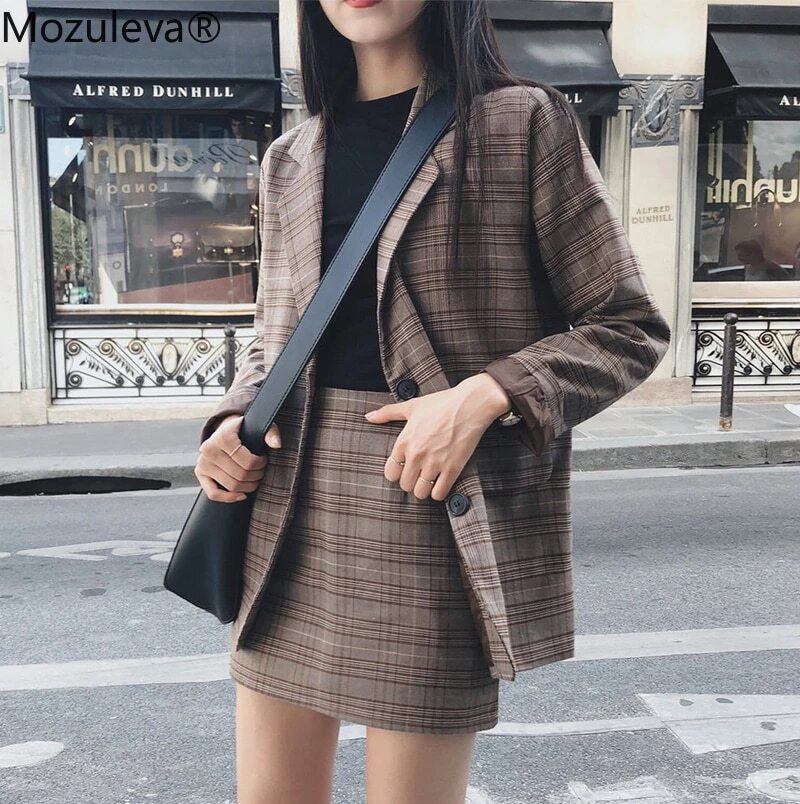
The blazer is what gives the dress a more professional feel, so the dress itself doesn’t have to look corporate.
A solid color or a very subtle print usually works best.
For a more formal interview, I recommend staying with navy, black, charcoal, cream, or another quiet shade. For a business casual interview, you can go a little softer with color.
You really want the proportions to feel balanced when you’re standing and sitting.
Add simple flats, loafers, slingbacks, or a low heel, and this becomes a very easy professional interview outfit without needing much else.
Can you wear jeans and a blazer to an interview?
Yes, you can wear jeans and a blazer to some interviews, but I wouldn’t make jeans your default choice. I’d only wear them when I already knew the company had a relaxed dress code and jeans wouldn’t look out of place there.
Go with a dark wash and skip anything ripped, faded, or distressed. The blazer will dress the jeans up, but the rest of the outfit needs to help too. You can add a simple shirt or blouse and shoes that feel a little more polished than your everyday pair.
For a corporate interview or a job in finance, law, or another more traditional workplace, you should wear tailored trousers instead.
You can keep the same blazer and top and immediately make the outfit more appropriate.
My rule here is simple: if you have to wonder whether the jeans are too casual, wear the trousers.
The Details That Make an Interview Outfit Look More Polished
You should start with shoes because I think this is where interview advice often gets unnecessarily strict.
You absolutely don’t need stilettos to look professional.
Loafers, ballet flats, slingbacks, low heels, and simple pumps can all work with a blazer interview outfit.
You should choose the pair you can actually walk in comfortably, and that makes sense with your trousers or skirt. You don’t want to arrive at the interview already thinking about how much your feet hurt.
Color doesn’t need to get complicated either.
Navy, black, charcoal, cream, camel, and softer neutrals make job interview outfits for women easy to put together because most of these shades already work well with each other.
But don’t take that to mean you have to remove every bit of color from your outfit.
A soft blue blouse, burgundy knit, or another color you normally wear can look perfectly professional. I’d just avoid making the color the first thing someone notices about you.
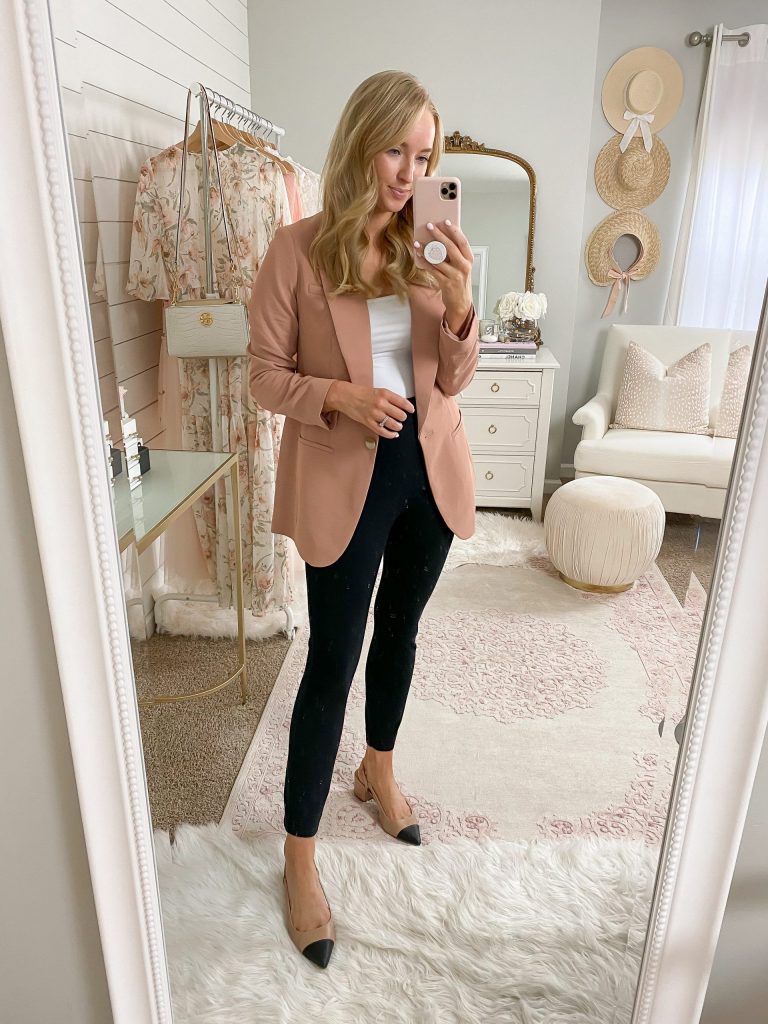

I wouldn’t add much with accessories.
A simple bag that fits what you need for the interview and a few pieces of jewelry you already feel comfortable wearing are enough.
This isn’t the day I’d try a new pair of shoes, a blouse that keeps slipping out of place, or earrings that suddenly feel much bigger once you put the whole outfit together.
Actually, I recommend you test your interview outfit the night before.
Wear the whole thing around your house.
Sit down in it.
Walk in the shoes.
Button the blazer.
Carry the bag.
You’ll notice very quickly if the trousers pull when you sit, the skirt rides up, the blazer feels tight across your shoulders, or the shoes aren’t nearly as comfortable as you thought.
It’s better to fix that the night before than to discover it ten minutes before your interview.
When you’re deciding between two interview outfits, choose the one that fits the workplace and requires the least fussing.
You shouldn’t be thinking about pulling down your top, fixing your skirt, or surviving your heels while you’re trying to answer questions.
