
Finding flattering tops sounds easy until you start trying them on.
You find one that clings to your stomach. You try another one, and it fits your waist but pulls across your bust. You size up, and now you have too much fabric everywhere. Or you like the fit, but the neckline makes your shoulders look wider, or the hem hits you in the worst possible place.
If this keeps happening, don’t assume you need to hide everything under a loose top.
Start by figuring out what you actually want to change.
If you want to draw attention away from your tummy, you can play with the fit, length, and drape of your top.
If you have a larger bust, you can use the neckline and waist to create better proportions.
You can also choose different sleeves to flatter bigger arms or use certain necklines and details to balance broad shoulders or wider hips.
That’s what I’ll help you do in this guide.
We’ll look at flattering tops for a bigger tummy, large and small busts, bigger arms, broad shoulders, short torsos, and wider hips.
You can go straight to the section that sounds like you and start there.
I regularly save blouses, T-shirts, sweaters, and other wardrobe staples I’d genuinely recommend in my Amazon Storefront. I hope it helps you find a few pieces you’ll enjoy wearing for years.
Start With the Right Size
Don’t automatically size up because you want a top to hide your tummy, arms, or bust. Extra fabric doesn’t always make a top more flattering. Sometimes it does the opposite and makes your whole upper body look bigger.
Instead, look at how the top actually fits. Check the shoulders first, then the bust and armholes. The fabric shouldn’t pull, dig into your arms, or create horizontal lines across your chest. At the same time, you don’t want so much extra fabric that you lose all your shape.
And don’t get too attached to the number on the tag.
Different brands have different sizing.
Pay Attention to Fabric and Drape
You can find the perfect cut and still hate how a top looks if the fabric doesn’t fall nicely on your body.
If you want a top to skim your tummy, back, or sides, look for fabric with enough weight and structure to hold its shape. You don’t need anything thick or stiff.
You just want the fabric to fall over your body instead of sticking to every curve.
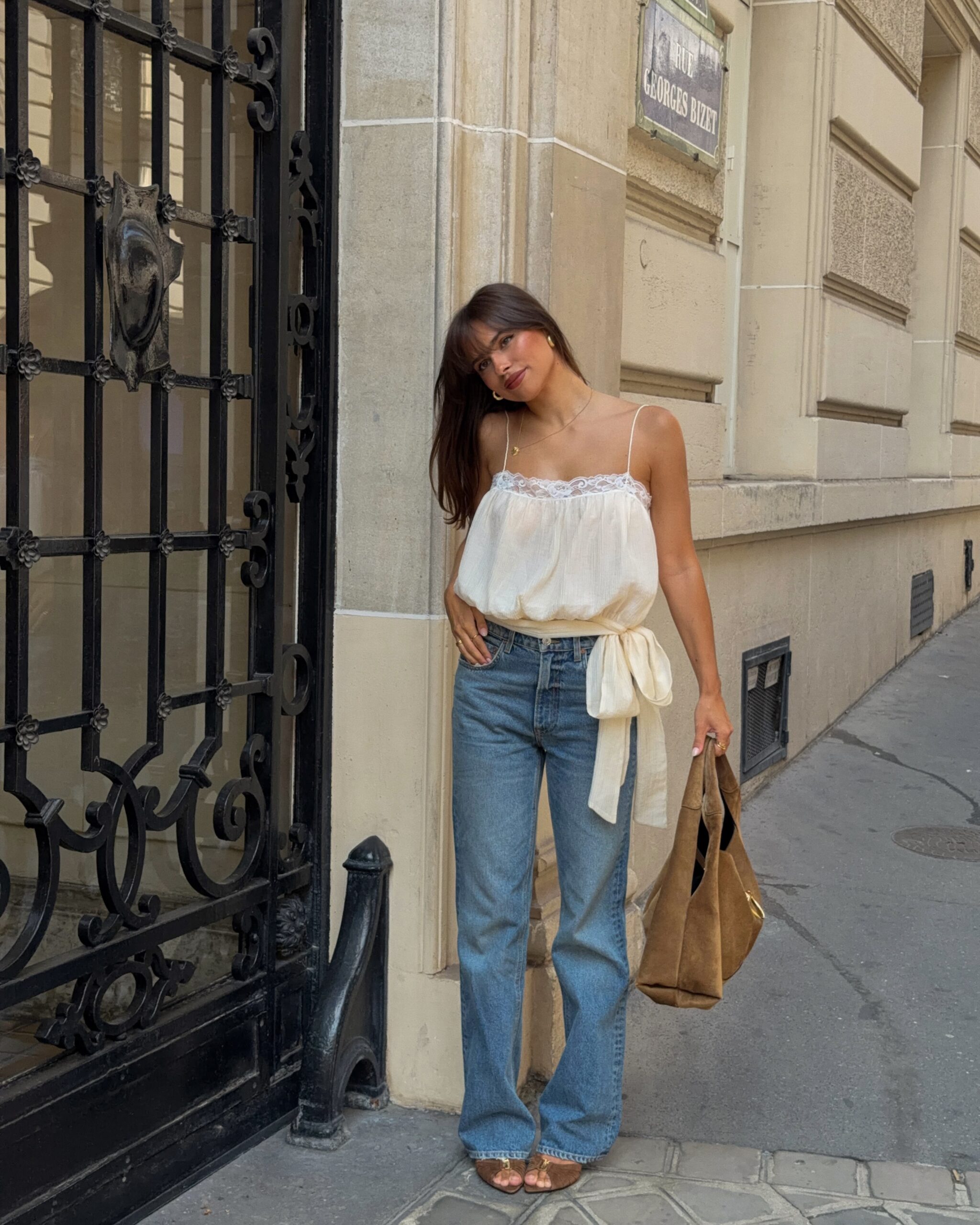
Be a little more careful with very thin fabrics.
They can show bra lines, waistbands, and every little fold underneath, especially when the top fits close to the body. If you love a lightweight fabric, look for a looser drape or a slightly more relaxed fit.
Shiny fabrics can also draw more attention to an area because they catch and reflect light. That doesn’t mean you have to avoid satin or anything with a little shine.
Just keep it in mind if you’re specifically trying to make your tummy, bust, or another area less noticeable.
When you try on a top, move around in it. Sit down, raise your arms, and look at it from the side and back. If the fabric keeps catching or clinging somewhere you don’t want it to, a different fabric or cut will probably work better.
Flattering Tops for a Big Belly, Tummy or Apple Shape
If your tummy is the area you usually struggle with, don’t assume you need something long and oversized to cover it.
The goal is to find a top that skims your stomach without clinging to it or adding so much extra fabric that your whole upper body looks bigger.
Choose Tops That Skim, Not Cling
You don’t need a huge top to hide your tummy. In fact, adding too much fabric can make your whole upper body look bigger and hide the shape you do have.
Instead, look for a top that skims over your stomach.
You want enough room so the fabric doesn’t stretch or cling across your tummy, but you should still see some shape through your shoulders and the rest of your body.
Watch out for very fitted tops that pull across your stomach or create horizontal lines when you move. But don’t automatically go to the opposite extreme and reach for the loosest top you can find.
When you’re trying one on, look at it from the side too. If the fabric falls naturally from your bust instead of sticking to your stomach or creating a big tent around it, you’re much closer to the fit you want.
Long Tops to Wear With Leggings
If you like wearing leggings, a slightly longer top can give you more coverage around your tummy without making the whole outfit look oversized. You don’t need one of those extra-long tunics that almost reach your knees.
Look for a top that falls somewhere around the upper to mid-thigh, depending on your height and how much coverage you want.
I especially like curved hems and split hems with leggings because they give you length without creating one heavy horizontal line across your body.
Relaxed button-down shirts and longer blouses work well too. Just make sure you have enough room through the stomach so the fabric falls naturally instead of catching on your tummy or waistband.
And if leggings are one of those things you wear all fall and winter, I have a full guide on how to wear faux leather leggings with more outfit ideas.
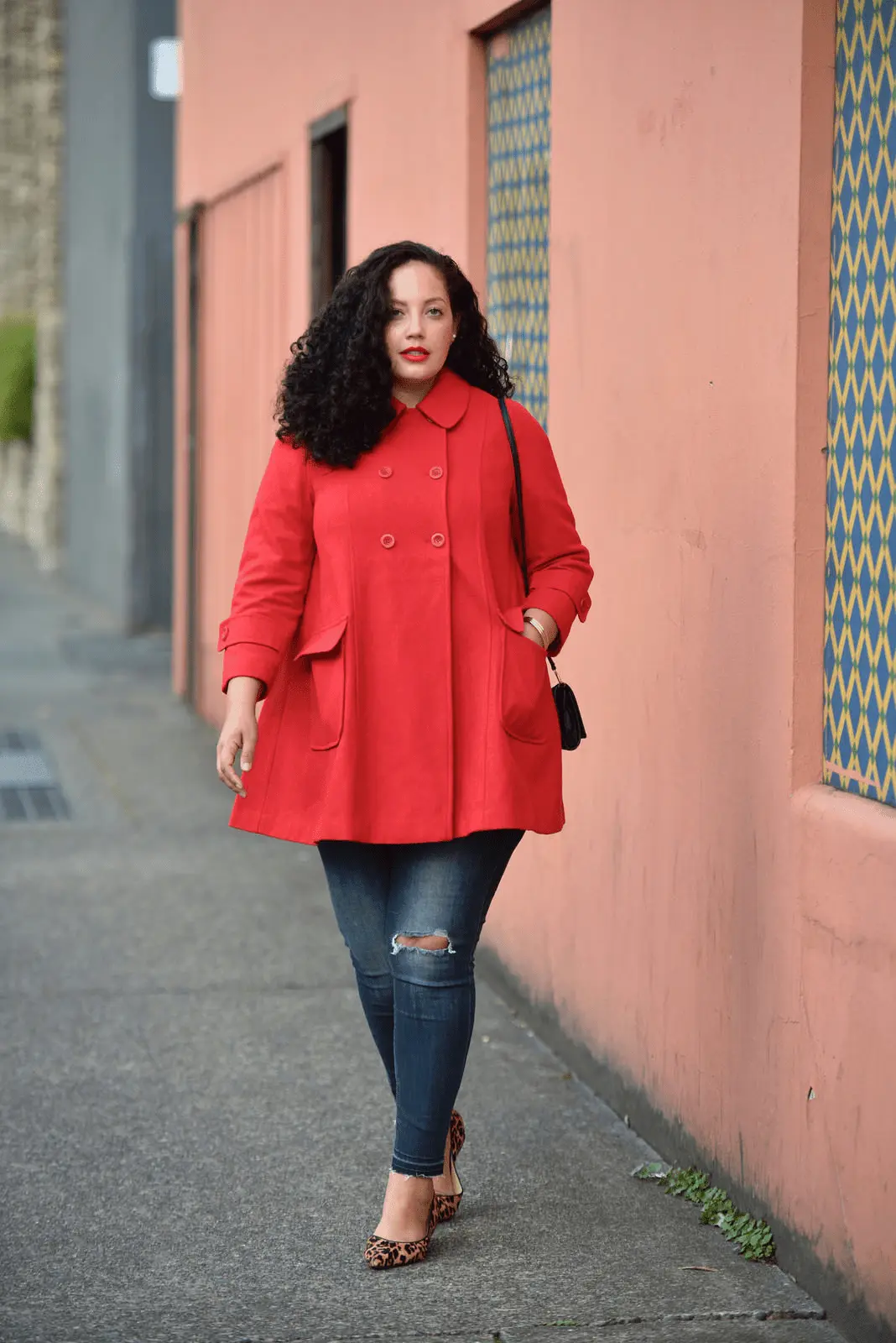
Try Peplum and A-Line Tops
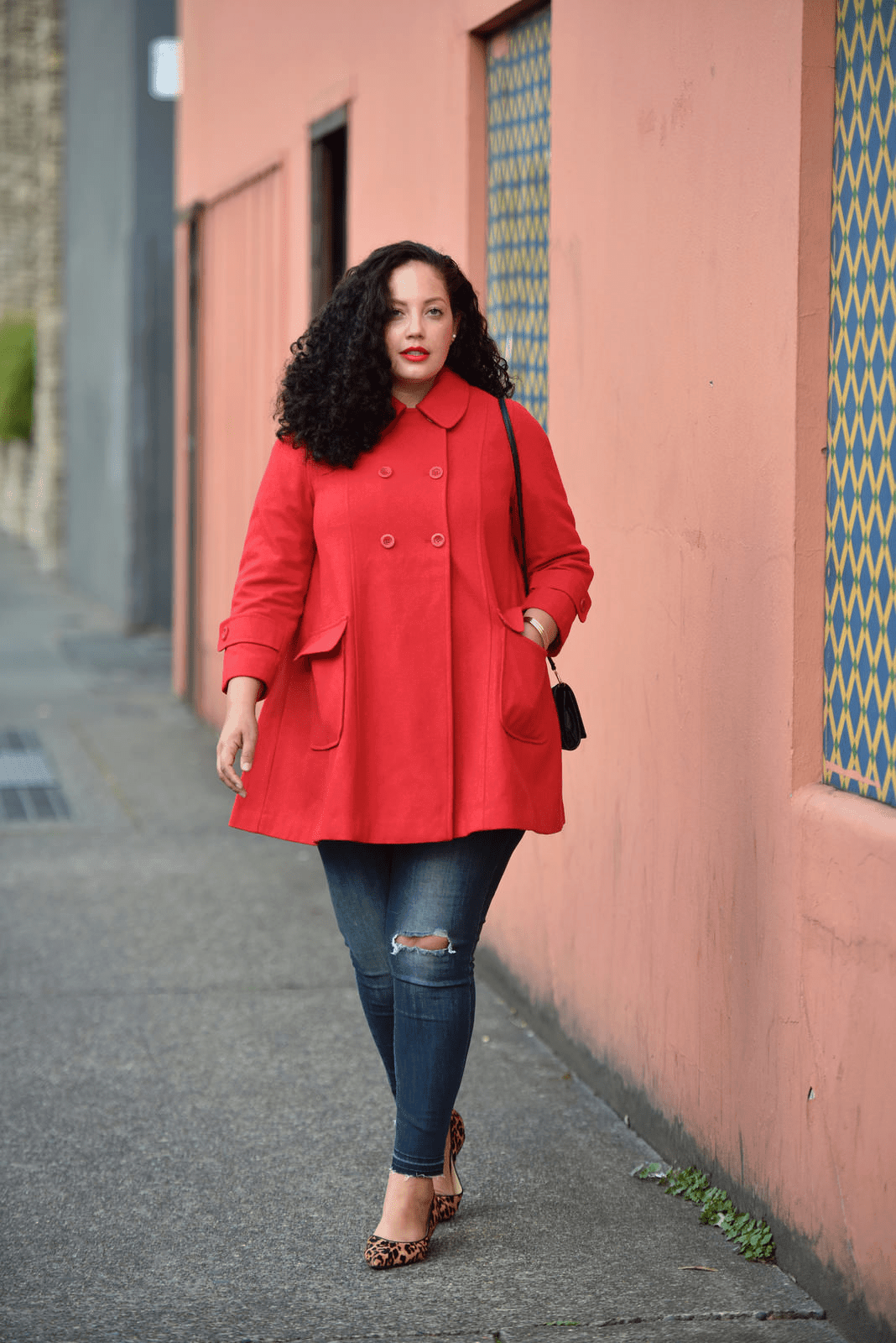
Peplum and A-line tops can work really well when you want more room around your stomach without wearing something completely oversized.
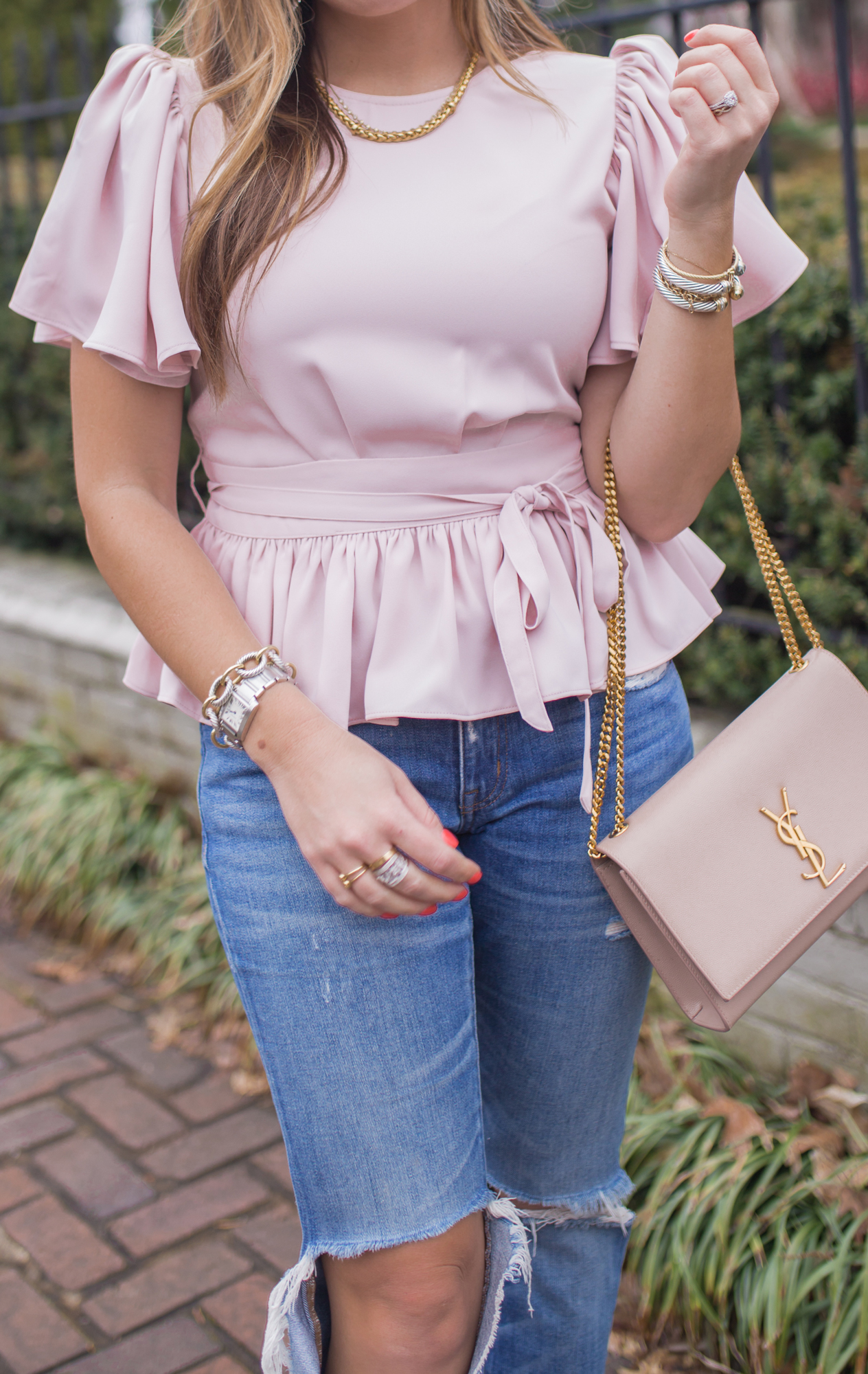
With a peplum top, pay attention to where the flare starts. Look for one that fits comfortably through your bust and begins to loosen around your waist or just above the fullest part of your tummy.
That change in shape gives the fabric somewhere to go instead of letting it cling to your stomach.
But I would choose a softer, more relaxed peplum over the very stiff, exaggerated versions. A big structured ruffle can add more volume around the exact area you’re trying to flatter.
A-line tops give you a similar effect without a defined peplum seam. They gradually get wider toward the hem, so you have more room around your tummy while the shoulders and upper part of the top still fit properly.
Whichever one you choose, look at the side view before you buy. You want the fabric to fall over your stomach, not stick out so far that the top creates more volume than you started with.
Do you wanna have the list of the best clothing stores for plus size women?
Look for Ruching in the Right Place
Ruching can be helpful when you don’t want a top to lie completely flat against your stomach.
I especially like side ruching or diagonal ruching because it creates a little movement through the fabric and gives you more room around the tummy.
Placement matters, though. You don’t need layers and layers of gathered fabric across your entire stomach. Too much ruching can add bulk and make the area look heavier instead.
Look for softer gathering that sits mostly along the side or moves diagonally across the tummy.
You still get the benefit of the draping without adding a lot of extra fabric.
Pay Attention to Where Your Top Ends
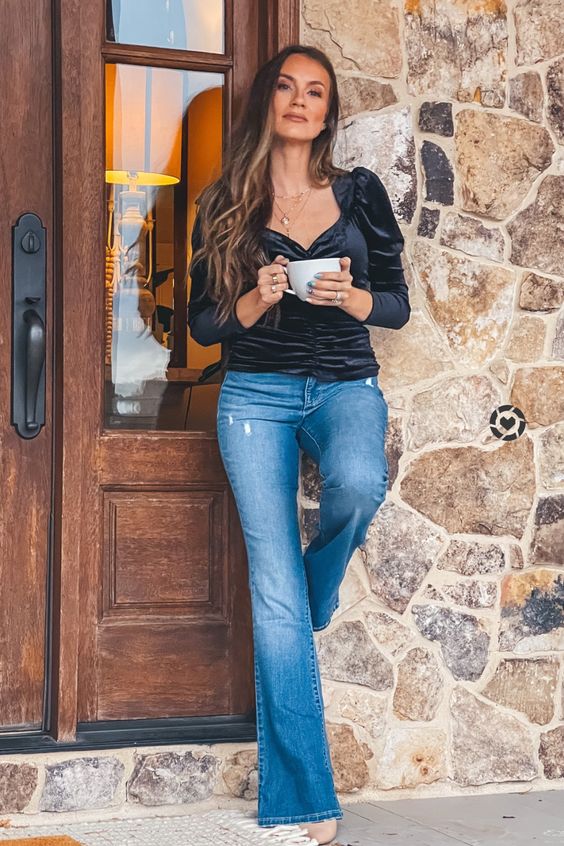
Sometimes the problem isn’t the top itself. It’s where the hem ends.
If a top stops right across the fullest part of your tummy, it can draw more attention to that area. Try a slightly shorter or longer length and see what happens. Even a few inches can change how the whole outfit looks.
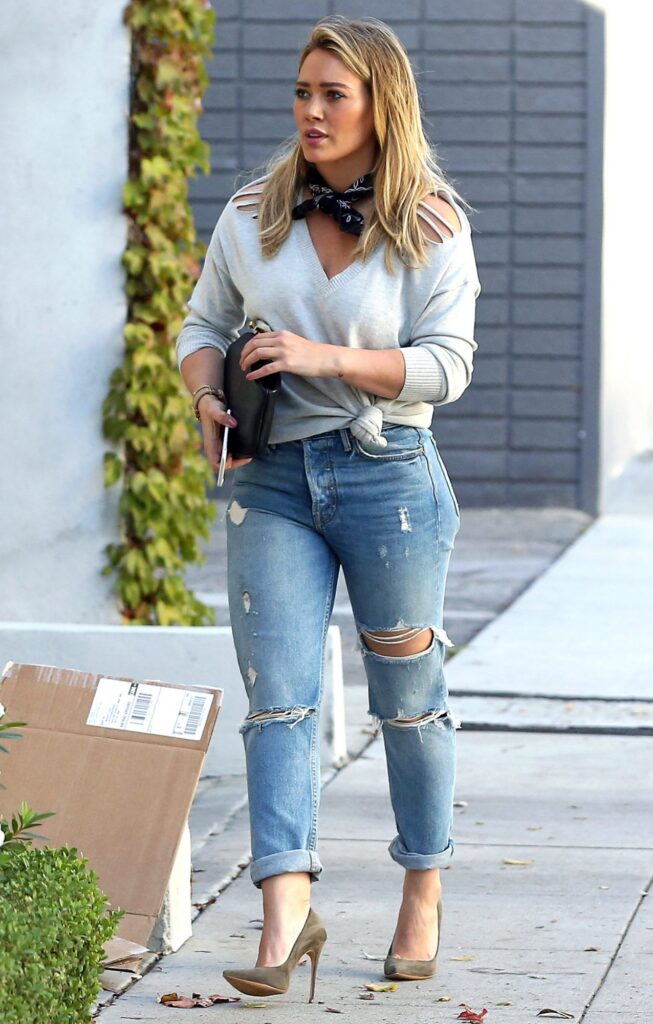
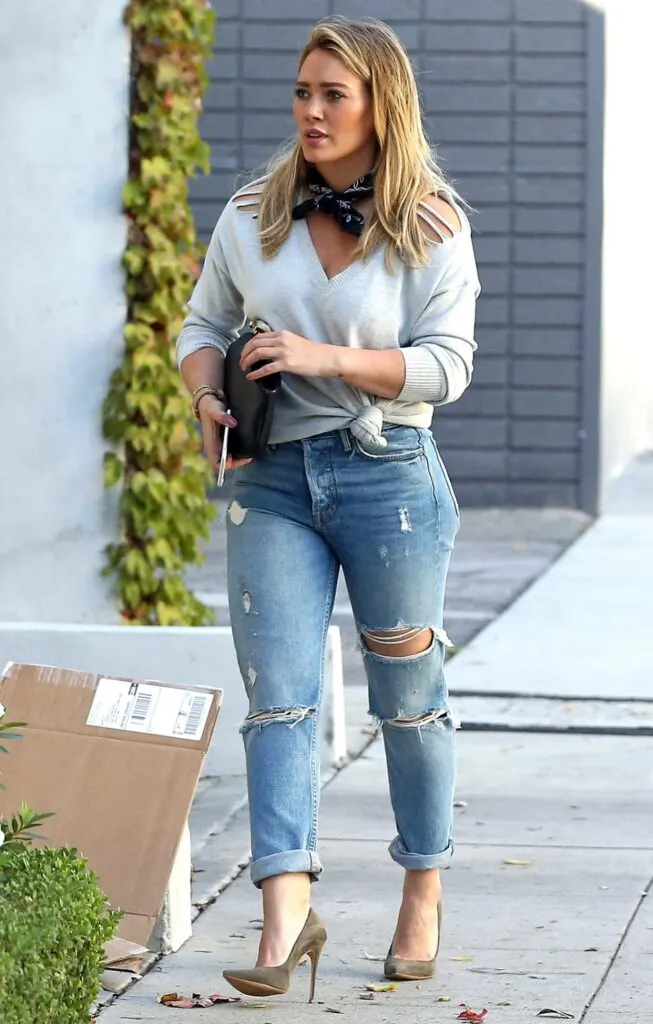
I also wouldn’t assume that longer is always better. A very long top can make your legs look shorter and throw off your proportions, especially if you’re petite.
Curved hems and side-split hems are worth trying, too. You still get some extra coverage, but they don’t create one straight line across your stomach or hips.
This is one of those things that’s much easier to see in the mirror than to explain with a rule.
When you’re trying on tops, compare a few different lengths with the same jeans or trousers. You’ll quickly notice where you prefer your tops to end.
What About a Lower Belly or Muffin Top?
If most of your tummy fullness sits lower down, pay attention to how the top fits around your waistband.
For a lower belly or muffin top, I would look for tops with a little extra room through the bottom half rather than sizing up everywhere. A softly draped blouse, an A-line top, or a top with subtle side ruching can give you that extra space while still fitting properly through your shoulders and bust.
The same advice helps with love handles. You don’t necessarily need a long top to cover them. Often, you just need a hem that doesn’t stop at the widest point and fabric that doesn’t pull tightly across your sides.
And then there are the days when it’s simply bloating. If your stomach changes throughout the day, stretchy waistbands and tops with some movement through the middle will probably feel much better than anything very fitted.
When you’re looking for tops to hide belly fat, don’t focus only on how much of your stomach the top covers. Look at how the fabric falls around it.
The most useful tops that don’t cling to your stomach still give you some shape instead of hiding your entire body under extra fabric.
Flattering Tops for Larger Arms
Large arms are one of the most common fit concerns women have, and the good news is that a few smart style choices make an enormous difference.
Use the Neckline to Balance Your Upper Body
When you’re looking for flattering tops for big arms, it’s easy to focus only on the sleeves. But take a look at the neckline too. It can change how your whole upper body looks.
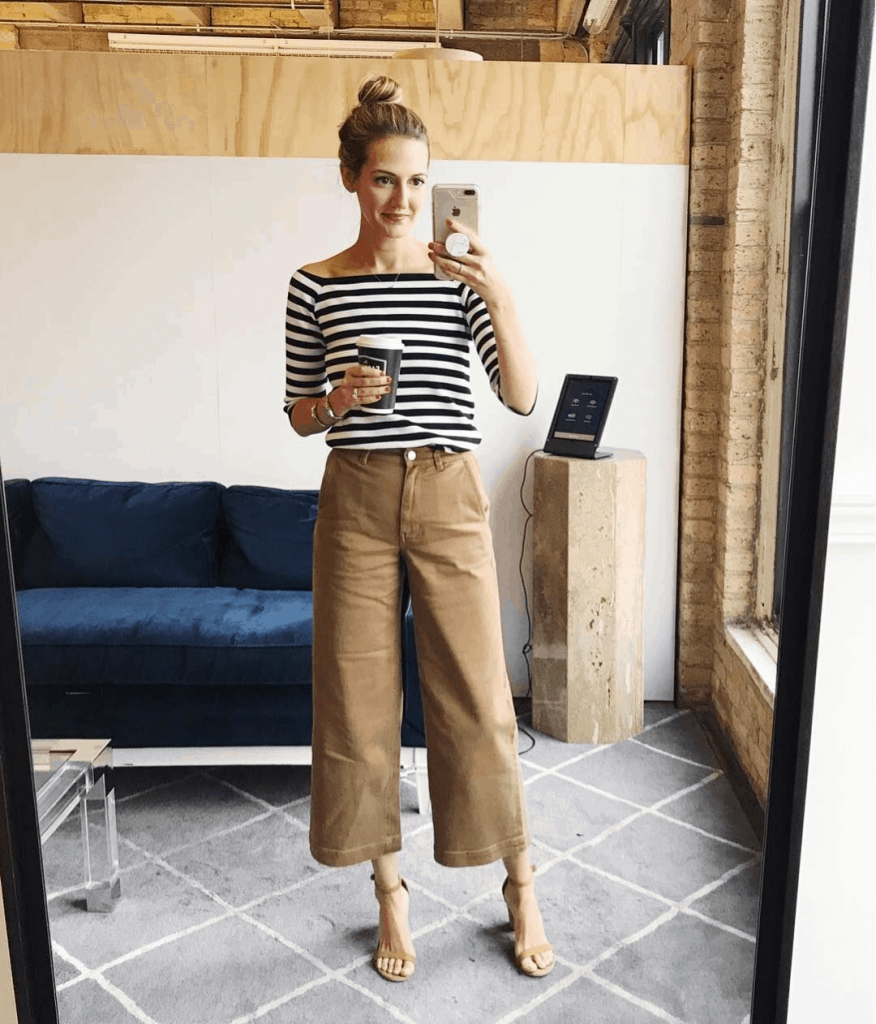
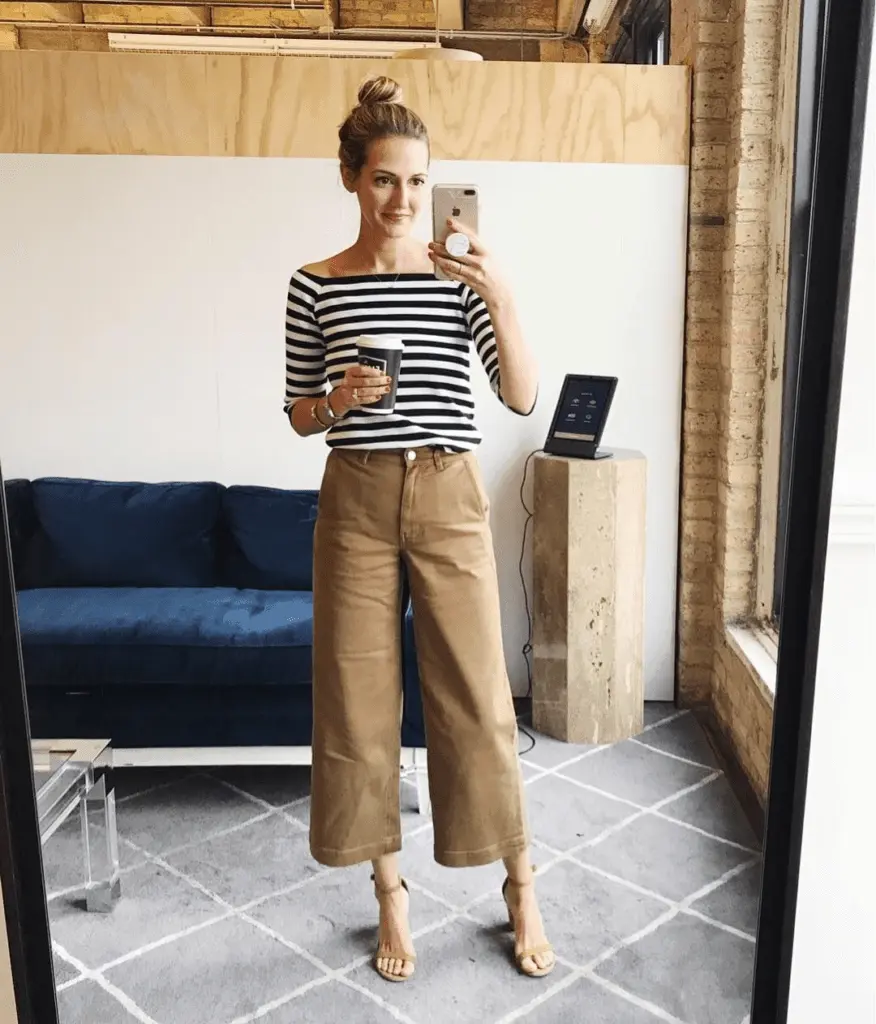
V-necks and scoop necks are good ones to try because they create more open space around your neck and chest. If you feel like some shirts make your upper body look too covered or heavy, simply changing the neckline can make a surprising difference.
An off-the-shoulder top is another option if you like showing your collarbone. It gives the eye somewhere else to go while still offering some coverage around the upper arms.
But you definitely don’t need to wear off-the-shoulder styles just because you have bigger arms.
You’ll find plenty of advice about the best shirts for big arms, telling you to cover them as much as possible.
I don’t think that’s the most helpful way to shop.
When you’re choosing tops for thick arms, look at the whole top first. A neckline you love, a comfortable armhole, and sleeves that don’t squeeze your upper arms will usually do much more for the overall fit than simply covering more skin.
Check Your Armholes Before You Buy
This is the most overlooked detail in fit, and it makes a huge difference.
When you try on a top, pay close attention to how the armhole sits.
If it’s tight, it compresses the upper arm and creates a bulge that makes the arm look significantly wider than it is.
Always look for tops with a generous, relaxed armhole cut; the arm should sit inside it comfortably with no squeezing, no bunching, and no fabric pulling.
Choose Sleeves That Work With Your Arm, Not Against It
Different sleeve styles create very different effects:
3/4-length sleeves end right at the narrowest point of your forearm, creating a natural illusion of a slimmer, longer arm. This is one of the simplest and most effective tricks in fashion.
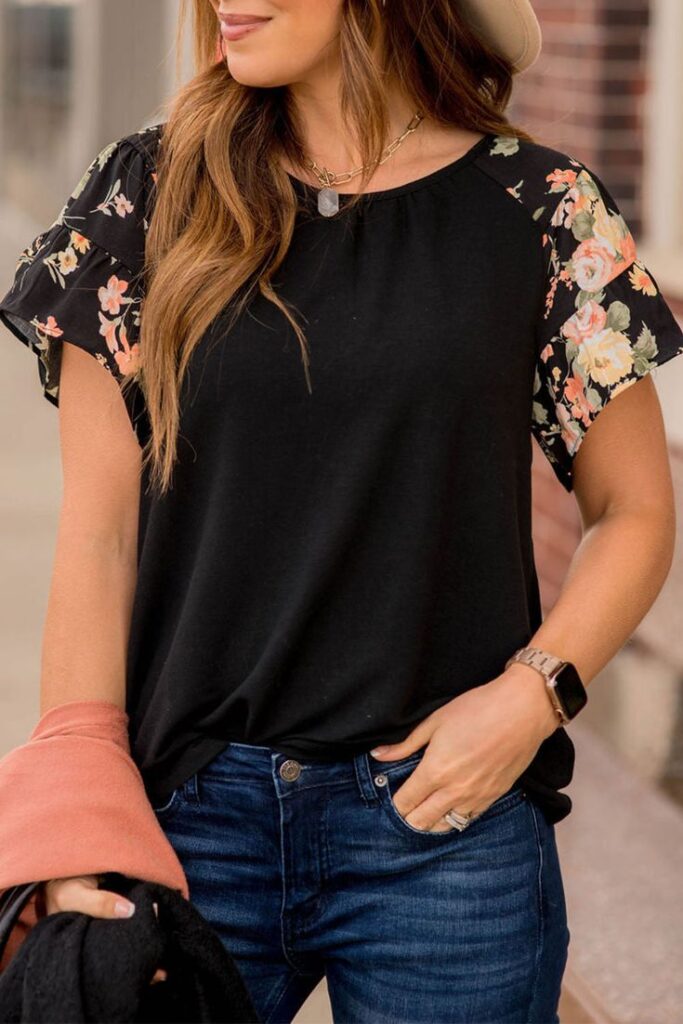
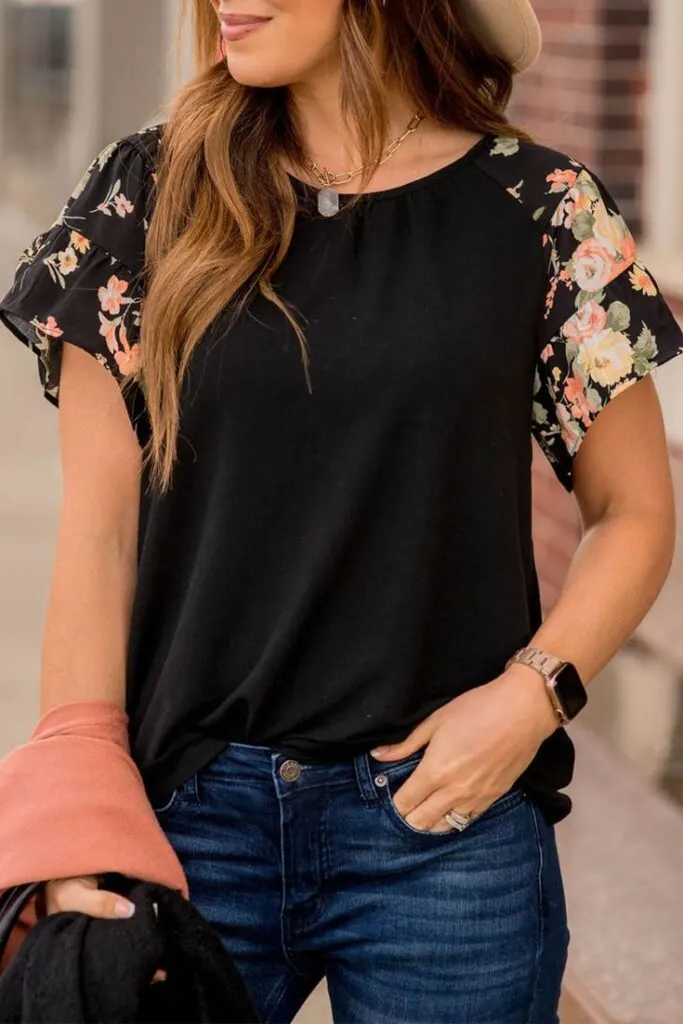
Flutter sleeves add movement and drape around the upper arm rather than hugging it, which softens the silhouette without adding bulk.
Lace sleeves cover the arm while staying visually light and open. They suggest a shape without revealing it, so you get coverage and style at the same time.
Dolman and batwing sleeves cut the arm in a generous, relaxed line from shoulder to wrist, which eliminates any tight or restrictive fit around the upper arm entirely.
What About Sleeveless Tops?
You don’t have to avoid sleeveless tops just because you have bigger arms.
You should look for wider straps and a cut that reaches closer to the edge of your shoulder. This usually shows less of the upper arm than a top that cuts inward toward the neck.
Also check the armholes.
They should sit comfortably without digging into your underarms or creating bulges around the sides. If you’re looking for sleeveless tops for big arms, these small fit details matter much more than simply choosing the top with the most coverage.
If you want to draw less attention to your upper arms, also look at where the details sit.
Bold prints, ruffles, embroidery, or other statement details concentrated on the sleeves naturally make that part of the top stand out more.
Use Layers as Your Secret Weapon
Layering is one of the most versatile tools you have.
An open cardigan, a structured blazer, a kimono, and a duster coat add coverage to the arms while creating a longer, leaner overall silhouette.
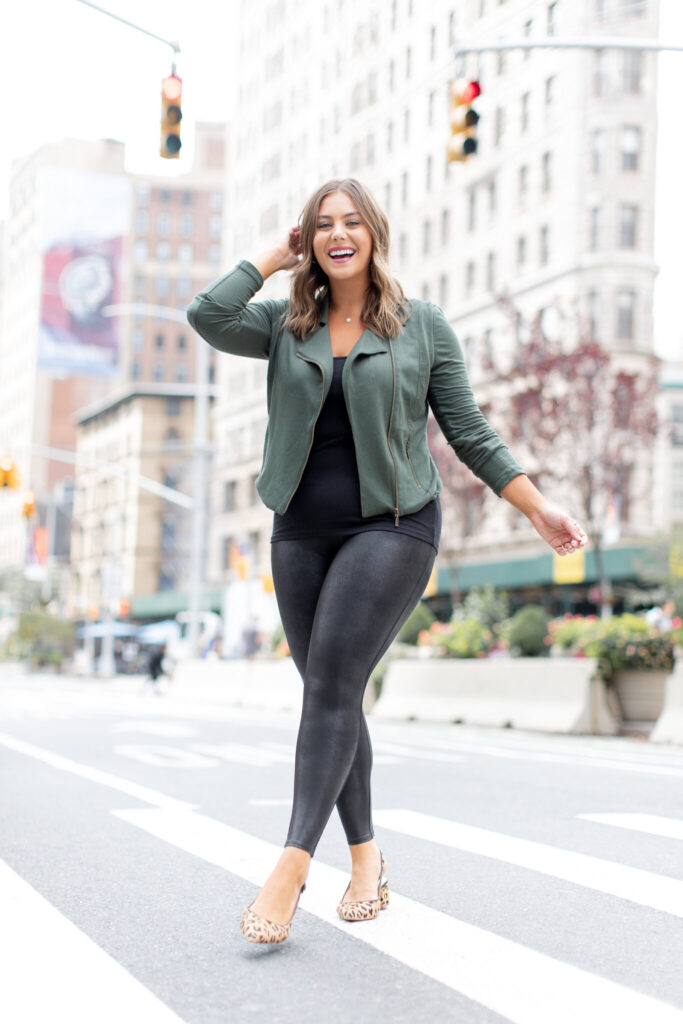
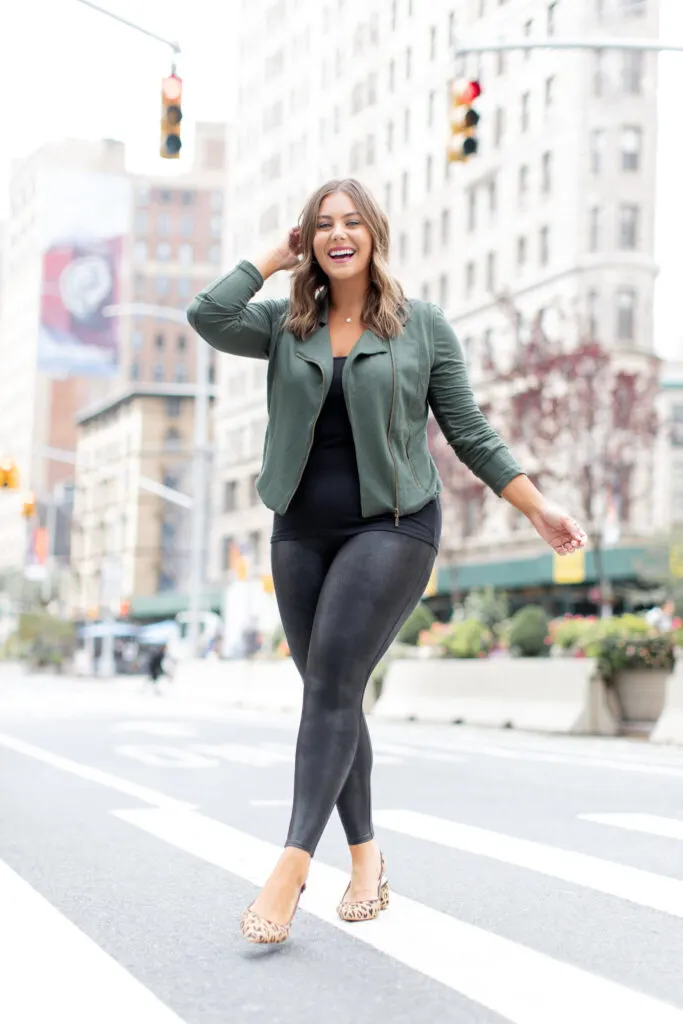
The key is to keep the layer open rather than buttoned or zipped, which allows it to fall in a straight vertical line down the body.
That vertical line is incredibly elongated.
For casual days, an oversized linen button-down worn open over a fitted top does the job perfectly.
For the office, a well-cut blazer covers everything, but you look sharp and polished.
Flattering Tops for a Bigger Bust
If you have a bigger bust, you probably know the fitting-room problem: a top fits perfectly through your waist but pulls across your chest, or a button-down looks great until the buttons start to gape.
Then you size up to get more room through the bust, and suddenly the shoulders, waist, or sleeves feel too big.
Instead of sizing up and hoping for the best, pay attention to the neckline, cut, seams, and where the top gives you extra room. Those details can make it much easier to find flattering tops for a large bust that actually fit the rest of your body too.
Get the Right Bra First
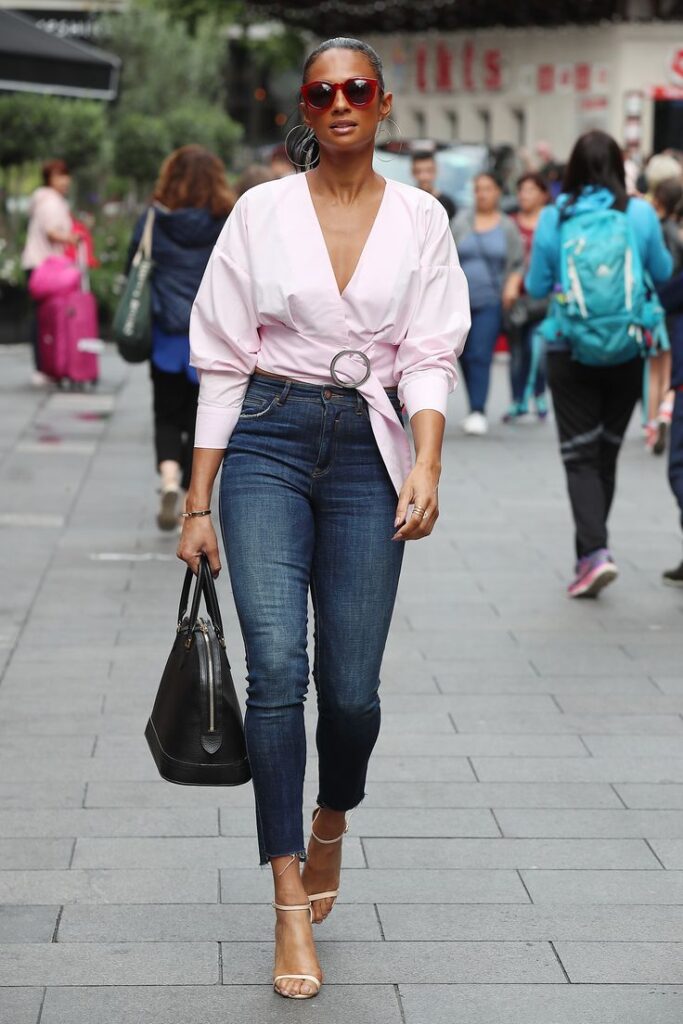
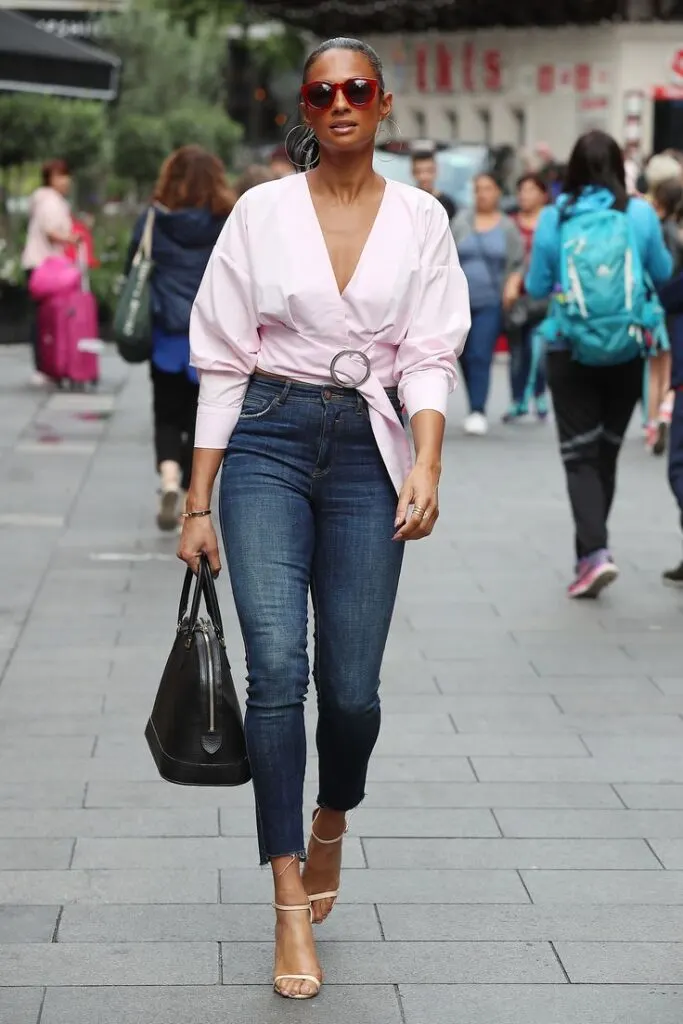
Before you judge how a top fits, make sure your bra fits well too. The right support can change where your bust sits and how the fabric falls across your chest, so a top that seemed awkward may suddenly fit much better. If your bra digs in, gaps, or doesn’t give you enough support, you’ll probably notice those fit problems through your clothes too.
Choose a Neckline That Works With Your Bust
If you want your bust to look a little less prominent, start by trying necklines that leave some open space around your chest.
V-necks, scoop necks, and U-necks can do this well because they break up the area between your neck and bust instead of covering it with one solid block of fabric.
Square necklines are worth trying too. They show more of your neck and collarbone, but the straighter shape gives you a different look from a V-neck. Try both and see which one works better with your proportions.
Cowl necks are a little trickier. A soft cowl with minimal fabric can look beautiful on a larger bust, but a deep cowl with lots of folds adds more volume across the chest. If you already struggle with tops feeling bulky there, I would be careful with that extra fabric.
You don’t have to avoid crew necks, high necklines, or turtlenecks either.
You just should know that they cover more of the chest and can make your bust look more prominent. If you like that look, wear it. If you’re trying to visually minimize a larger bust, an open neckline will probably give you more of the effect you’re looking for.
The same goes for details around the chest.
Large ruffles, patch pockets, bows, and heavy embellishments bring more attention and volume to that area. They’re not off-limits, but if your goal is to make your bust less noticeable, a simpler front will usually work better.
Define Your Waist — It Changes Everything
When you have a bigger bust, some tops fall straight down from the fullest part of your chest and make your whole upper body look wider. If that happens, look for a little more shape through the waist instead of automatically choosing a tighter top.
A top that gently follows your waist can show your proportions without clinging to your stomach.
Wrap and faux-wrap tops can work well for this, but so can simple blouses that taper slightly at the waist or have seams that give the top some shape.
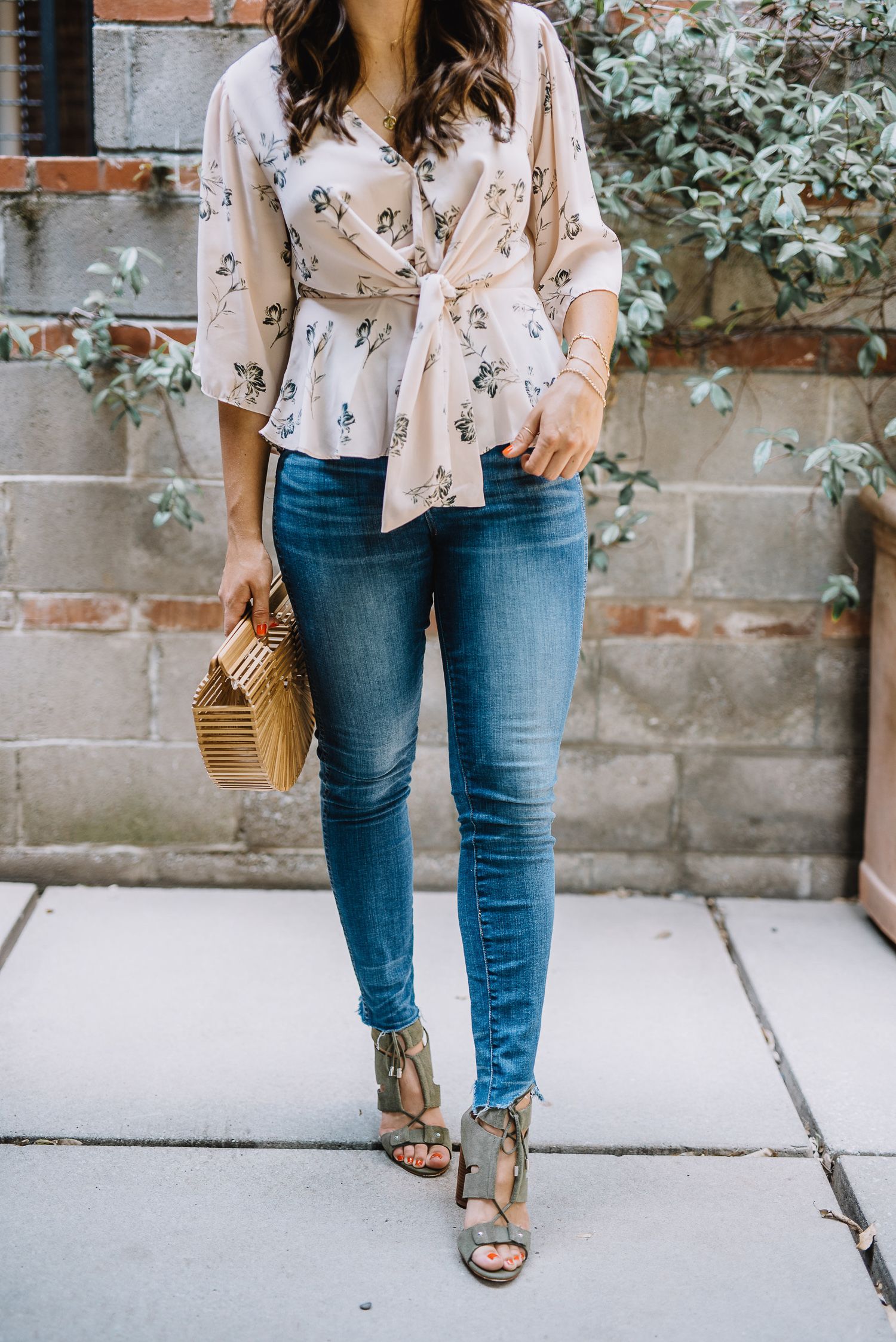
You don’t have to give up boxy or oversized tops either.
Just pay attention to the length and how much fabric you have below the bust. If a boxy top feels overwhelming, try a slightly shorter length or pair it with a more fitted bottom so you don’t lose all your shape.
And if you’re not sure whether a larger bust is the only thing affecting how your clothes fit, take a look at my body types guides. Understanding your overall proportions can make choosing tops much easier.
Fabric matters here too.
If a very thin or stretchy top keeps pulling across your bust, try one with a little more structure or weight. You still want the fabric to move with you, but it should have enough body to fall from your bust instead of stretching tightly across it.
Try a French Tuck If You Want More Shape
If your top fits nicely through the bust but feels a little shapeless around your waist, try loosely tucking just the front into your jeans or trousers. A French tuck lets you show some of your waist while keeping the sides and back of the top relaxed.
I especially like this trick with longer button-down shirts, relaxed blouses, and sweaters that have a little too much fabric to leave completely untucked.
But you don’t need to tuck your top just because you have a bigger bust.
If you also carry more weight around your tummy and the tuck makes you more aware of that area, leave it out. The point is simply to give you another way to adjust the proportions when a top feels too long or loose.
Flattering Tops for a Small Bust
If you have a smaller bust, you have quite a bit of freedom with tops.
You can wear details and shapes around the chest that women with a larger bust sometimes find harder to style. The trick is figuring out whether you want to add a little more shape or simply find tops that sit nicely on a smaller chest.
Try Square and Higher Necklines
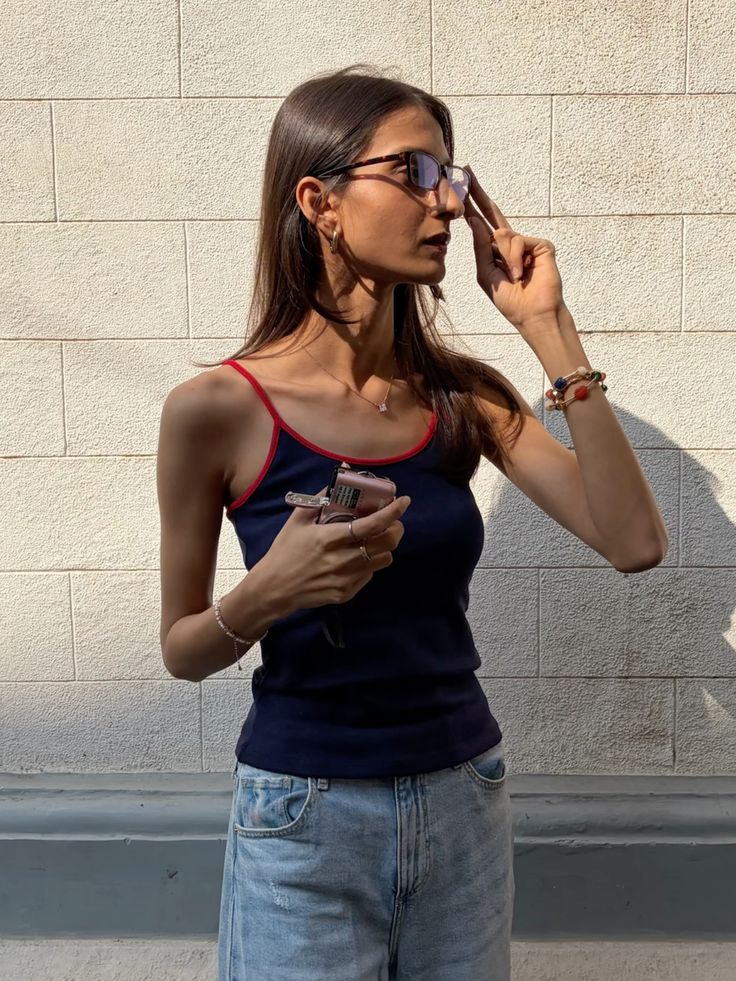
Square necklines look especially good on a smaller bust because they frame the chest and collarbone; They don’t need much volume to fill them out.
You can also try crew necks, mock necks, and other higher necklines if you like them. They give you a completely different option from the usual advice that tells everyone to wear a V-neck.
Use Texture and Details Where You Want Them
If you want to add a little more shape around your bust, look for gathering, ruching, pleats, ruffles, or other details across the chest. Textured fabrics, ribbing, crochet, and knits can create the same effect without making the top feel overly decorated.
You don’t need these details to make a small bust look good, though.
Think of them as options.
One of the nice things about small bust fashion is that you can often wear chest pockets, bows, and statement details without feeling like they add too much volume.
Try Wrap Tops, But Check the Fit
Wrap tops can look beautiful on a smaller bust because you can adjust the shape around your chest and waist.
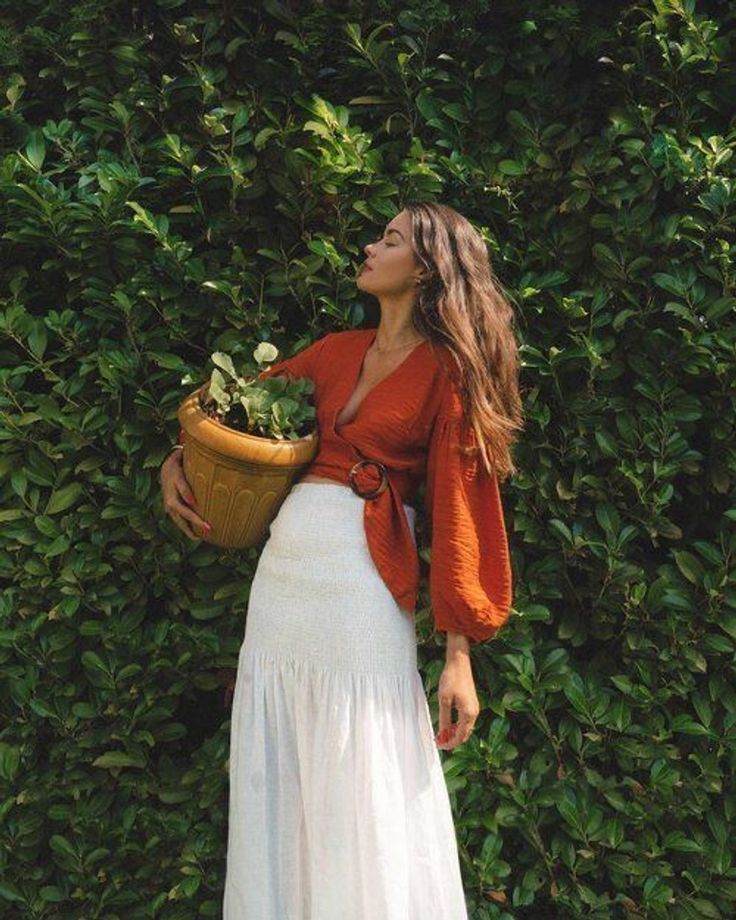
Faux-wrap tops can work too, but check that the neckline actually sits against your body. If you don’t have enough bust to fill out the cut, some wrap tops can gape when you bend or move.
Don’t Let an Oversized Top Swallow You
Oversized shirts, sweaters, and blouses can absolutely work as tops for a small bust, but watch how much fabric you’re adding.
If the shoulders drop too far, the sleeves feel enormous, and the top hangs straight down with no shape anywhere, you may feel like the top is wearing you.
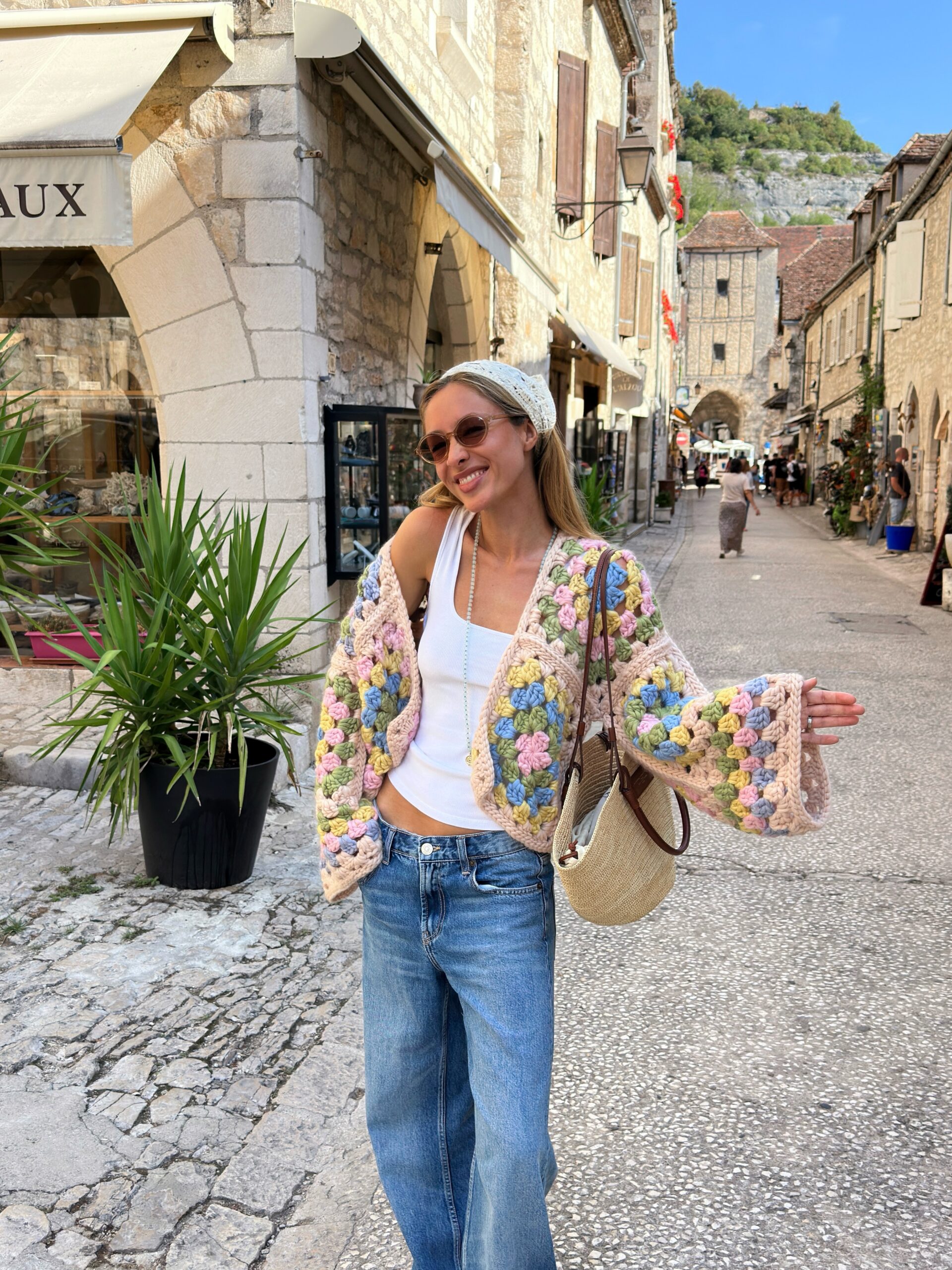
You don’t necessarily need a smaller size. Sometimes you just need an oversized style with better shoulder placement, a shorter hem, or less volume through the body.
When you’re shopping for flattering tops for a small bust, don’t feel like you need to create curves that aren’t there. Start with the fit you like, then use necklines, texture, gathering, and details when you want to change the proportions or add more interest.
Flattering Tops for Broad Shoulders
If you have broad shoulders, you may notice that some tops make your upper body look much wider than you expected.
Usually, one small detail causes it: the neckline stretches too far across your shoulders, the shoulder seam sits in the wrong place, or the sleeves add volume exactly where you already have it.
Start with the neckline.
V-necks and scoop necks are some of the best necklines for broad shoulders when you want to make your upper body look a little narrower. They bring the eye toward the center of your body instead of creating another horizontal line across your shoulders.
That doesn’t mean you have to avoid boat necks.
A boat neck runs outward toward the shoulders, so it can make them look broader. If you love your shoulders and want to show them off, that may be exactly what you want.
If you’re trying to soften their width, compare it with a V-neck or scoop neck, and you’ll probably see a noticeable difference.
Don’t Forget to Check the Shoulder Seam
When you’re looking for flattering tops for broad shoulders, check where the shoulder seam actually sits.
Ideally, a regular set-in sleeve should meet close to the edge of your shoulder. If it sits too far inward, the top may pull across your upper body. If it falls far past your shoulder, it can add width and make the whole top look bigger.
Raglan sleeves give you another option. Instead of creating a straight seam across the top of your shoulder, the seam runs diagonally from the neckline toward the underarm. I like this detail when a regular shoulder seam never seems to sit in the right place.
Be Picky About Sleeve Volume
Puff sleeves can be tricky because they add volume right around the shoulder. A large, structured puff will make broad shoulders stand out more, while a softer sleeve that gets fuller farther down the arm creates a completely different effect.
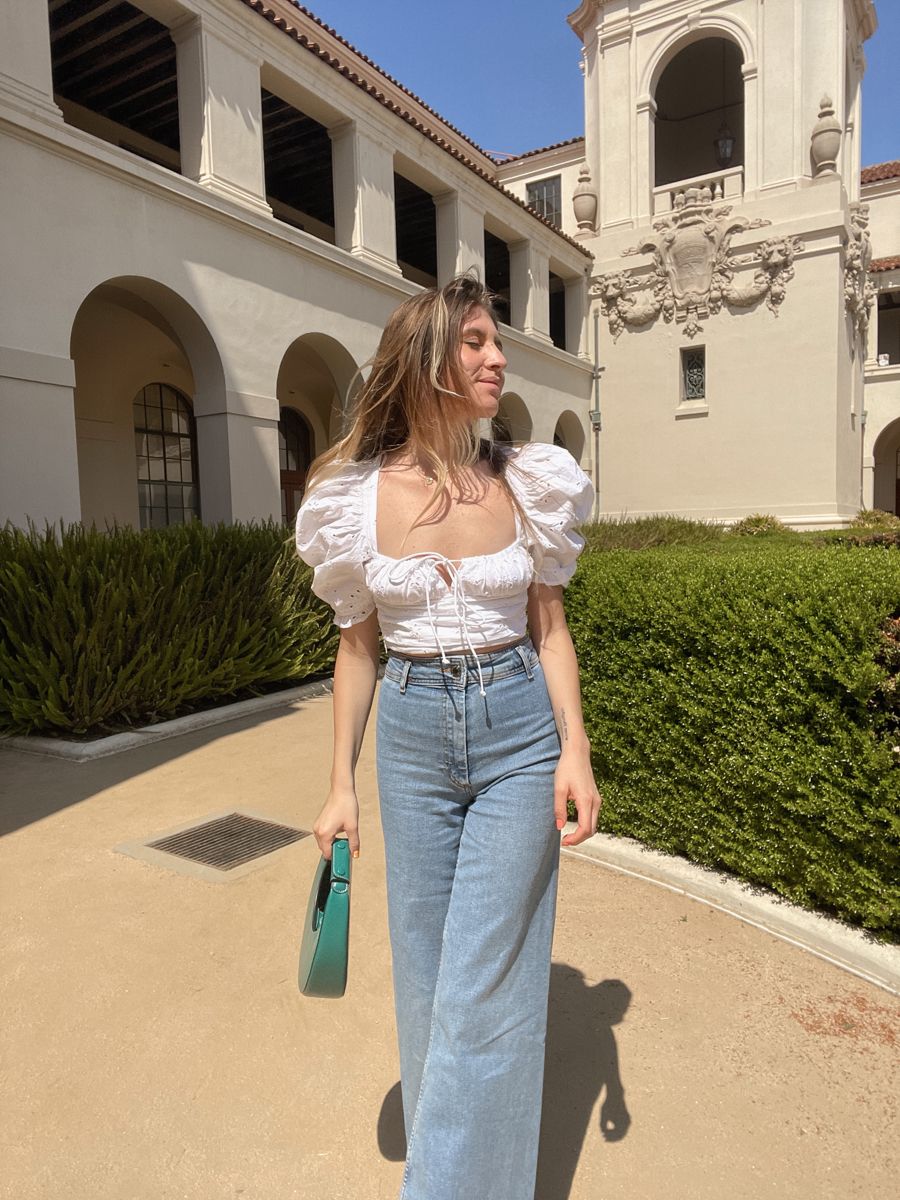
Again, you don’t need to ban puff sleeves from your wardrobe.
Just decide what you want them to do. If you’re trying to make your shoulders less prominent, I would choose less volume right at the shoulder and save the fullness for lower down the sleeve.
The same idea applies to ruffles, epaulettes, bows, and other shoulder embellishments. They naturally bring attention to that area. Wear them when you want your shoulders to stand out, not because a body-shape rule says you can or can’t.
Look at the Straps on Sleeveless Tops
With tank tops and other sleeveless tops for broad shoulders, strap width can change the proportions more than you might expect. Very thin straps create more contrast against a wider shoulder line, which can make your shoulders appear broader.
Try a medium or wider strap and see how it changes the balance. You don’t necessarily need the widest strap you can find. You just want enough visual weight so that the straps don’t look tiny in comparison with your shoulders.
Balance the Whole Outfit
This is probably the tip I would pay the most attention to.
Don’t choose a top without thinking about what you’re wearing on the bottom.
If your shoulders are wider than your hips and you want your proportions to look more balanced, give the bottom half of your outfit a little more presence. Wide-leg trousers, an A-line skirt, fuller jeans, or even a lighter or more noticeable bottom can help.
If your shoulders are noticeably wider than your hips, you may also have an inverted triangle body shape. I have a full guide to inverted triangle outfit ideas where I go much deeper into balancing those proportions with tops, bottoms, dresses, and complete outfits.
That’s why the best tops for broad shoulders aren’t one specific neckline or sleeve style. Look at what the top does to your shoulder line, then look at your entire outfit. Sometimes changing the pants or skirt does more for the proportions than changing the top.
And if you’re shopping for something dressier, I also have a guide to prom dresses for broad shoulders. A lot of the same ideas about necklines, straps, sleeves, and shoulder details apply when you’re choosing a dress.
Flattering Tops for a Short Torso
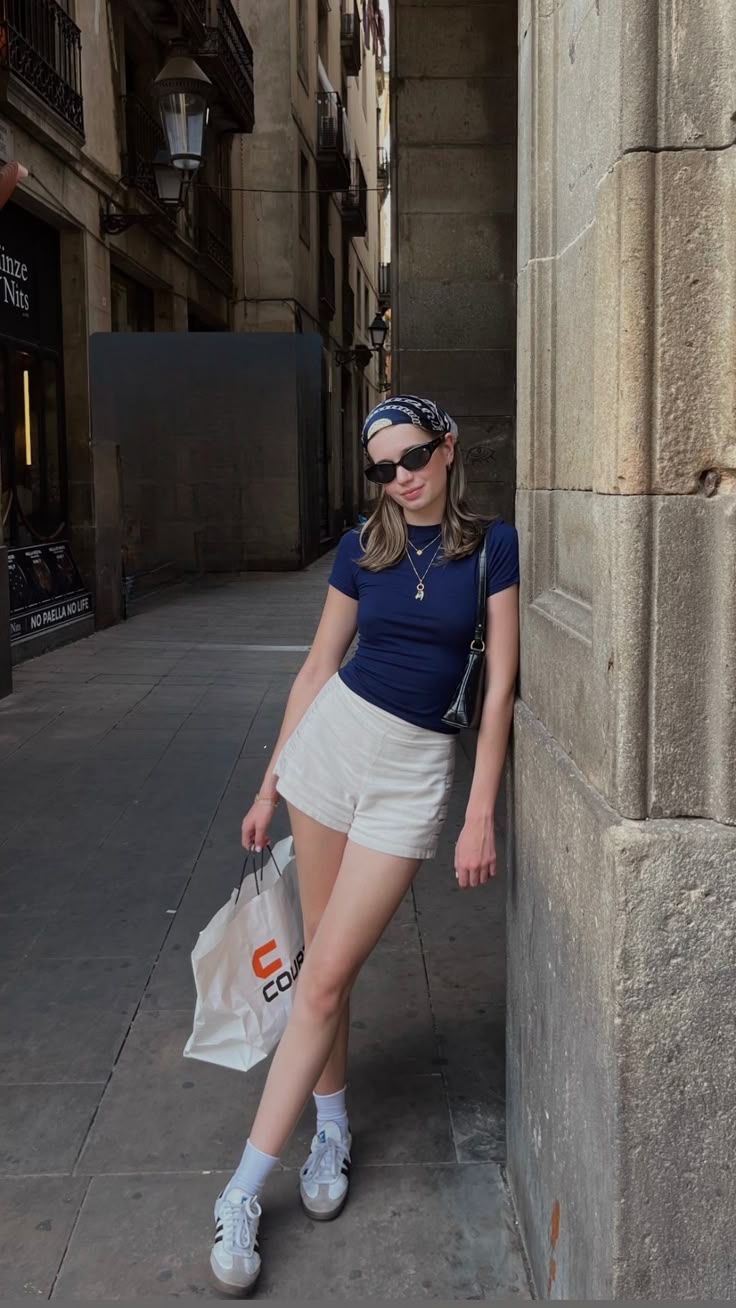
If you have a short torso, the length of your top can make a bigger difference than you might expect.
A top that falls too far below your hips can make your upper body look shorter and your legs look longer in a way that throws off your proportions.
Start by experimenting with where your tops end.
You may prefer a top that finishes around your hip bone instead of a long tunic or blouse.
Cropped doesn’t have to mean showing your stomach either. A top that meets the waistband of your jeans or trousers can give you that shorter proportion while keeping you completely covered.
Tucking can help, but don’t automatically tuck everything in. If you already wear high-waisted bottoms, a full tuck can bring your waistline even higher and make your torso look shorter.
Try leaving the top untucked or doing a loose French tuck and compare the difference.
Be careful with very oversized tops, too.
Too much fabric can bunch around your waist and take up the little vertical space you have. A relaxed fit can still work, but I would look for less length and volume.
Also check where the waist seam sits on fitted, wrap, and peplum tops. If it sits too high on you, the proportions may feel off even when the size fits.
Finally, try opening up the neckline.
A V-neck, scoop neck, or open button-down creates more vertical space through your upper body, which can help when you want your torso to look a little longer.
Flattering Tops for Wide Hips or a Pear Shape
If your hips are wider than your shoulders, pay attention to where your top ends before you worry about anything else. A hem that stops directly across the widest part of your hips creates a strong horizontal line there, which can make that area stand out even more.
If that’s not the look you want, try a top that ends slightly above the widest part of your hips or falls past it. You don’t necessarily need a long tunic. Sometimes changing the hem by just a few inches makes the whole outfit look more balanced.
This is also why I wouldn’t automatically recommend loose, long tops for pear shaped women. If a blouse fits loosely through the waist and then catches at the hips, it can actually draw more attention to them. A top that fits closer through your upper body and ends in the right place may work much better.
You can also bring a little more interest to your upper body.
Scoop, square, and wider necklines can help balance wider hips, and this is one body shape where some shoulder and sleeve detail can work in your favor. Try a soft puff sleeve, a flutter sleeve, or a little structure around the shoulders and see how it changes your proportions.
When you’re shopping for the best tops for a pear shape, look at the entire outfit rather than judging the shirt by itself. The same top can look completely different with straight-leg jeans, wide-leg trousers, or an A-line skirt.
And if you recognize yourself in this description, I have a full guide to dressing a pear body shape where I go much deeper than just shirts for pear shape and show you how to work with your proportions throughout the whole outfit.
Before You Buy Your Next Top
You definitely don’t need to remember every tip in this guide the next time you go shopping. Start with the area that usually gives you the most trouble, then pay attention to the fit details that matter for your body.
Sometimes the difference really is as small as a better sleeve, a slightly different neckline, or moving the hem up a few inches.
And if you’d rather see some actual examples, I’ve put together a list of flattering tops on Amazon using the same ideas we talked about here. You can see my flattering tops picks here.
