


How to layer clothes for winter without looking bulky starts with choosing the right pieces to wear together. A thin thermal top, warm sweater, and coat can keep you comfortable without making your outfit feel too heavy.
But there are a few things to watch out for. A chunky sweater might look great on its own but barely fit under your coat. And sometimes the layers look cute together, but they aren’t warm enough once you step outside.
I’ll show you how to choose winter layers that work together, keep the extra bulk under control, and still look good when you take your coat off.
I’ve also included 26 winter layering outfit ideas you can use for inspiration.
How To Layer Clothes For Winter

The easiest way to layer clothes for winter is to start with three layers: a thin base layer, something warm in the middle, and a coat or jacket that protects you from the weather.
You won’t always need all three, especially on milder days. But understanding what each layer does makes it much easier to get dressed when temperatures drop.
1. Start With a Thin Base Layer
Your base layer is whatever sits closest to your skin. It should fit comfortably under your other clothes without bunching up or making your sweater feel tight.
For everyday winter outfits, a fitted long-sleeve top, bodysuit, or thin turtleneck can work well. If you’re spending a lot of time outside in freezing temperatures, consider a thermal top made from merino wool or a moisture-wicking synthetic fabric. These materials help manage sweat, which is important because damp clothing can make you feel colder.
You can also choose your base layer according to what you’re wearing over it. A thin turtleneck looks cute under a V-neck sweater or cardigan, while a fitted crewneck top stays hidden beneath most sweaters.
2. Add a Warm Middle Layer
Cardigans and sweater vests are also useful for winter layering. You can easily take a cardigan off indoors, while a sweater vest adds warmth around your body without putting another pair of sleeves under your coat.
Wool sweaters, cashmere knits, cardigans, fleece jackets, and insulated vests are all good options. Which one you choose depends on how cold it is and what you’re planning to wear on top.
For example, a fine-knit wool sweater works beautifully under a tailored coat because it adds warmth without taking up too much room. If you’re wearing a roomy puffer jacket, you might have enough space for a thicker sweater or fleece.
One thing to check is how your middle layer fits inside your coat. If your sweater sleeves bunch up around your arms or you can barely close the coat, the combination probably isn’t going to be comfortable all day.
I also like the idea of using cardigans and sweater vests for winter layering because they’re easy to combine with other pieces. A cardigan can come off when you get indoors, while a sweater vest keeps your torso warmer without adding another pair of sleeves under your jacket.
3. Choose Your Outer Layer Based on the Weather
Your coat is the first thing people notice about your winter outfit, but it also needs to protect you from whatever the weather is doing.
A wool coat is a great choice for everyday winter outfits, especially when you want something that looks good with jeans, trousers, or dresses. Just remember that wool coats vary in thickness, lining, and warmth.
For colder days, an insulated puffer jacket or parka may be more practical. And when it’s raining or snowing, pay attention to whether your outerwear is actually water-resistant or waterproof. A regular wool coat won’t offer the same protection as a jacket designed for wet weather.
If you’re dealing with cold, rainy weather, I also have some rainy day outfit ideas that show how to put together practical outfits without giving up your usual style.
Also, think about what you’ll be wearing underneath when choosing your coat size. A coat that fits nicely over a T-shirt might feel completely different with a sweater and cardigan underneath.
Before heading out, try moving your arms and buttoning or zipping the coat. If everything feels squeezed together, you’ll probably be more comfortable changing one of the layers.
A trench coat can also work for milder winter days, especially when you have room for a warm sweater underneath. If you already own one, my guide on how to wear a trench coat in winter has more ideas for layering it and putting together outfits.
4. Make Sure Your Layers Work Indoors, Too
Think about where you’re actually going before getting dressed.
If you’re walking around outside for hours, you’ll need a different combination than if you’re driving to work and spending most of the day in a heated office.
For example, a thin turtleneck, cardigan, and wool coat can be a practical combination for a normal winter day. You can remove the coat indoors and still have a complete outfit. If the room gets warmer, you can take off the cardigan as well.
Try to avoid wearing so many warm layers that you start sweating indoors. It’s much easier to stay comfortable when at least one layer can be removed without ruining the outfit.
You don’t need to pile on every warm piece you own. Start with what the weather requires, make sure everything fits comfortably, and then use the styling tips below to make your layers look good together.
How to Layer Winter Clothes Without Looking Bulky
You don’t need to give up chunky sweaters or oversized coats to avoid looking bulky. The key is knowing where your clothes add volume and choosing pieces that fit comfortably over one another.
Here are some styling tricks that make the biggest difference.
1. Choose Thin, Warm Fabrics
Before adding another thick sweater, pay attention to what your clothes are made of.
A fine-knit merino wool sweater can provide warmth without taking up as much space as a chunky knit. A fine-knit cashmere sweater can work well too, especially when you don’t have much room underneath your coat.
You can also wear a thin thermal top underneath your regular sweater. A fitted thermal can add warmth without changing how your sweater looks.
For example, try a fitted thermal top, a fine-knit wool sweater, and a long coat. This combination works especially well when you want a polished winter outfit without feeling restricted by several thick layers.
2. Balance Oversized Pieces With the Rest of Your Outfit
If you’re wearing an oversized puffer jacket or chunky sweater, think about the shape of the other pieces.
Leggings or straight-leg jeans can look great with a roomy puffer because they create a more streamlined lower half. A chunky sweater also works well with tailored trousers that fall neatly over your shoes.
You can wear oversized coats with wide-leg trousers, too. Just pay attention to how the fabrics fall. A long, straight coat with flowing trousers can create a beautiful winter outfit, especially when the pieces don’t bunch up around your hips.
Sometimes swapping a chunky sweater for a thinner knit is enough. But if you love wearing oversized sweaters, I have more outfit ideas and tips for styling them without looking shapeless in my guide to oversized sweater outfits.
3. Pay Attention to Where Your Layers End
The lengths of your sweater, jacket, and coat can make a big difference in how bulky your outfit looks.
A button-down shirt peeking out underneath a sweater can look really cute, but pay attention to how much of the shirt shows. If the shirt is too long or stiff, it can bunch around your hips instead of falling neatly below the sweater.
The same goes for jackets. A cropped jacket over a longer fitted top can look great because you can clearly see where each layer ends.
If you’re wearing a long coat, try it with a sweater that falls smoothly over your trousers. You don’t always need to tuck the sweater in. Sometimes choosing a shorter sweater or one with a softer, less bulky hem works better.
4. Avoid Too Much Bulk Around Your Shoulders and Arms
This is one of the first places where winter layers start to feel uncomfortable.
A chunky sweater with wide sleeves might look lovely on its own, but those sleeves can get bunched up inside a fitted wool coat. The result is often a stiff-looking upper body, and moving your arms becomes annoying.
Try wearing a thinner sweater under structured coats and save your thick knits for roomier jackets.
The same applies when you’re layering a button-down shirt under a sweater. A thick, stiff shirt can bunch around your arms and waist, so try a softer, lightweight shirt that sits smoothly underneath the knit.
Sweater vests are also worth trying. You can wear one over a fitted turtleneck or button-down shirt and still have room for a blazer or coat.
And if you love an oversized sweater, choose a coat with enough room in the shoulders and sleeves to accommodate it. There’s no reason to give up your favorite chunky knits.
5. Mix Thick and Smooth Textures

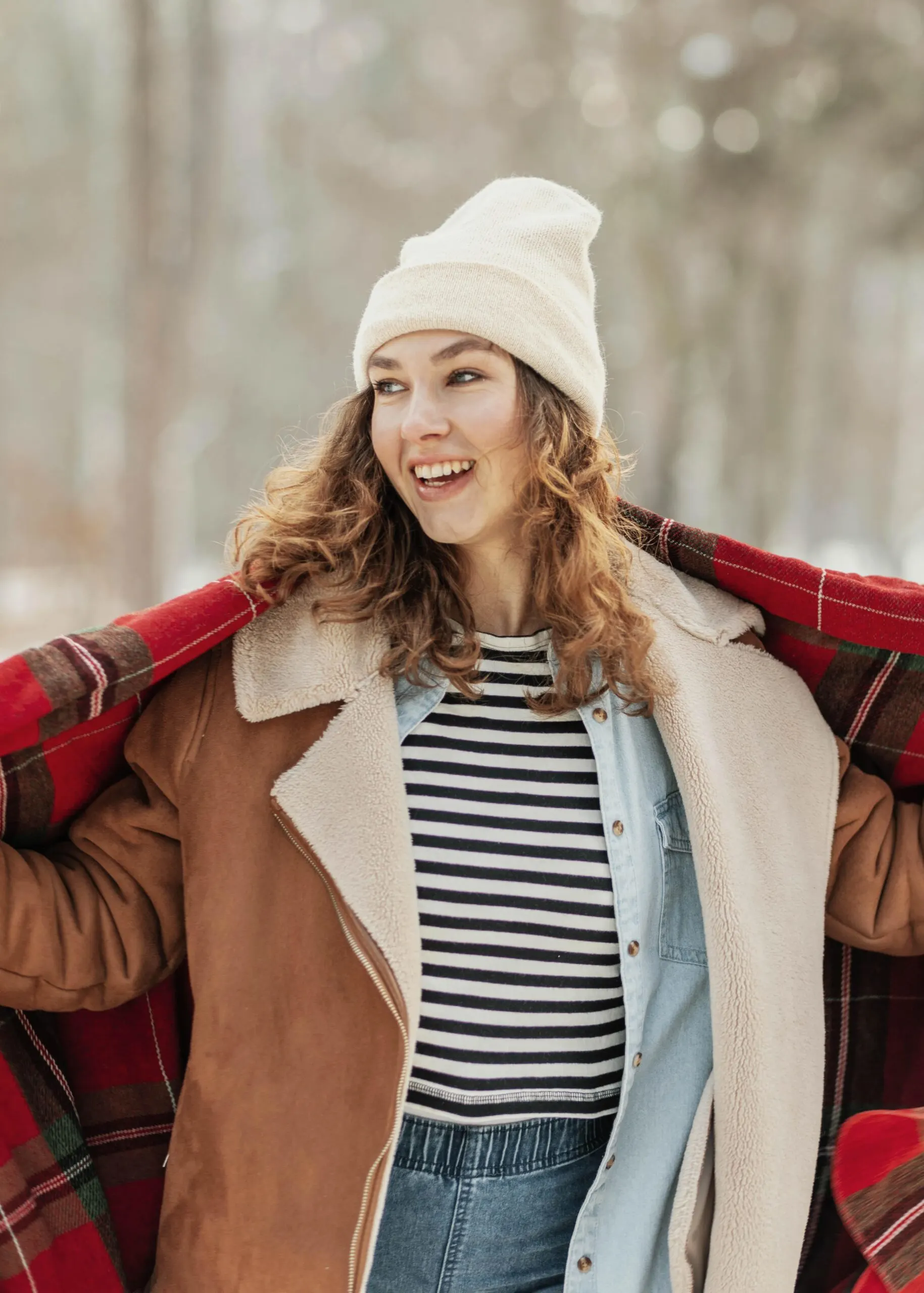
You can make winter layers look more balanced by paying attention to their textures.
If you’re wearing a fluffy faux fur coat, try a smooth turtleneck or fine-knit sweater underneath. The difference in texture makes the coat stand out, and you avoid adding too much volume around your upper body.
A leather jacket over a soft knit is another nice combination. I like how a leather jacket looks over a soft knit, especially when the sweater isn’t so thick that it makes the jacket feel tight.
You can also wear two textured pieces together. Just look at how much volume they create. A chunky cable-knit sweater and teddy coat, for example, will usually need more room than a fine-knit top and the same coat.
6. Use Color to Make Your Layers Look More Connected
When you’re wearing several different pieces, color can help the outfit look less busy.
One easy trick is to wear similar shades underneath your coat. Black jeans with a black sweater create a continuous line, even when you add a contrasting coat on top. You can do the same with cream, gray, brown, or navy.
Wearing similar colors together can also make your outfit look longer. I explain more tricks like this in my guide on how to look taller and slimmer.
You don’t have to wear one color from head to toe. Try a cream sweater with beige trousers and a camel coat. The slightly different shades add interest while keeping the overall outfit soft and coordinated.
If you prefer more color, repeat one shade somewhere else in your outfit. For example, a burgundy scarf can pick up the color of your sweater, even if you’re wearing a gray coat.
7. Be Careful With Chunky Scarves
If you’re already wearing a thick turtleneck and a heavy coat, an oversized scarf can make everything feel crowded around your neck. Try a thinner wool scarf or let the ends fall down the front of your coat.
Chunky scarves usually work better with coats that have simpler necklines. And if your coat collar keeps pushing the scarf toward your face, try a smaller scarf or a different way of wrapping it.
26 Winter Layering Outfit Ideas
Here are 26 winter layering outfit ideas to give you some inspiration for putting these tips into practice. You’ll find casual looks with jeans and sweaters, dressier combinations with skirts, and outfits you can wear to work. Pay attention to how the different pieces work together, and feel free to adjust the layers depending on how cold it is where you live.
If you’re visiting New York in December, you might also like my NYC Christmas outfit ideas. I’ve included warm outfits you can wear for sightseeing without feeling like you’ve packed your entire winter wardrobe.
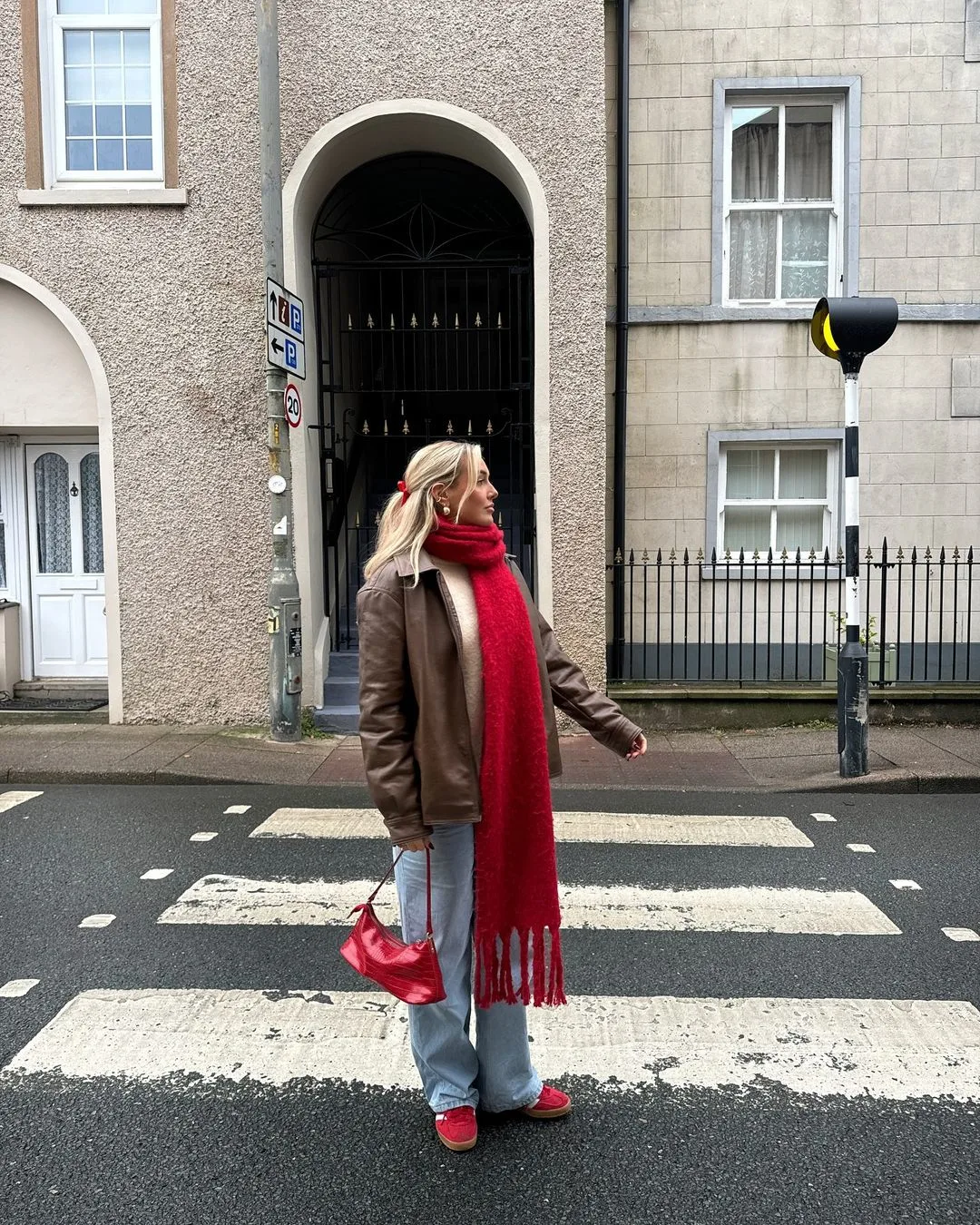
1. Jeans + knit sweater + leather coat + a scarf
A leather coat works well with a knit sweater because it adds some structure to the softer fabric underneath. If your coat has fitted sleeves, choose a finer knit so the sweater doesn’t bunch up around your arms. A wool scarf can add extra warmth without needing another thick layer.

2. White jeans + UGGs + oversized sweater + fleece coat
With an oversized sweater and fleece coat, make sure there’s enough room for both layers to sit comfortably without bunching. White jeans keep the outfit looking lighter, especially when the other pieces are thick and cozy. UGGs work well for a casual day, but switch to weatherproof boots if it’s wet or slushy outside.


3. Blue jeans + fur coat + cap
A baseball cap and blue jeans make a faux fur coat feel much more casual, so you can wear it during the day without feeling overdressed. Since the coat already adds plenty of volume, a simple fitted top or fine-knit sweater underneath usually works best.


4. Sweatpants + fur coat
Sweatpants can look surprisingly good with a faux fur coat, especially when you choose a pair that falls neatly instead of bunching around the ankles. Keep the top simple and let the coat do most of the work. This is an easy way to make a comfortable winter outfit feel a little more dressed up.


5. Black jeans + oversized sweater + faux leather jacket
An oversized sweater under a faux leather jacket can get uncomfortable quickly if the sleeves are too thick. Choose a jacket with a relaxed fit, or swap the sweater for a thinner knit. Black jeans help keep the outfit looking streamlined when the upper half has more volume.


6. Flared jeans + UGGs + buttoned cardigan + wool coat
A buttoned cardigan works like a sweater here, so you don’t need another thick knit underneath your coat. With flared jeans, check how the hem falls over your UGGs so the fabric doesn’t bunch at the bottom. A longer wool coat can help balance the wider shape of the jeans.


7. Leggings + socks + UGGs + sweater + puffer jacket + a scarf
Leggings work especially well with a roomy puffer jacket because they balance the extra volume on top. Let your warm socks show above your UGGs, but avoid bunching several thick layers around your ankles. If you’re wearing a chunky scarf, a less bulky sweater will feel more comfortable underneath the jacket.


8. Blue jeans +sneakers + pink sweater + pink coat
Wearing a pink sweater under a matching pink coat makes the layers look connected, even if the shades aren’t exactly the same. Blue jeans and sneakers keep the outfit casual and stop the pink from feeling too dressy. This is a cute way to add color to your winter wardrobe without mixing lots of different shades.


Chic Winter Layering Outfits With Sweaters and Coats
9. Wide leg pants + knit sweater + faux fur coat + a scarf + hat
Wide-leg pants and a faux fur coat both add volume, so pay attention to how the sweater fits between them. A smooth, thinner knit can help the coat sit better around your shoulders. If you’re adding a scarf, choose one that doesn’t crowd the coat’s neckline.


10. White Faux Fur Coat + Thermal Leggings + Snow Boots
A fluffy white faux fur coat adds plenty of volume, so fitted leggings help balance the outfit. The gray scarf breaks up the all-white look, while the matching hat and insulated snow boots make this a practical combination for snowy winter days. Just make sure the boots are waterproof and have good traction.


11. Knit sweater + teddy jacket + bucket hat
A teddy jacket already has plenty of texture, so a smooth knit sweater underneath will usually feel less bulky than a chunky cable knit. The bucket hat gives the outfit a more casual feel. For colder days, make sure the jacket leaves enough room for a proper warm layer underneath.


12. Wide pants + top + bomber jacket + sweater
If you’re wearing a bomber jacket over a sweater, check that the sweater doesn’t bunch around the jacket’s fitted waistband. A shorter sweater or a fine knit usually sits more neatly underneath. Wide-leg pants work nicely with the bomber’s shorter shape.


13. Cropped pants + teddy sweater + teddy coat
Layering a teddy sweater under a teddy coat creates a lot of texture, so the fit matters here. Make sure the coat is roomy enough that the sweater doesn’t feel squeezed around your arms. With cropped pants, cover any exposed ankles with longer socks or suitable boots when it’s very cold.


14. Black jeans + black sweater + sherpa coat + a scarf + hat
A black sweater and black jeans create a simple base that works really well underneath a textured sherpa coat. You can add a scarf and hat without making the outfit look too busy, especially if you keep the accessories in similar colors. Choose a scarf that sits comfortably around the coat’s collar.


15. Baggy pants + turtleneck + leather jacket + wool scarf
A fitted turtleneck is a good choice with baggy pants because it keeps the upper half of the outfit from looking too oversized. The leather jacket adds structure, while the wool scarf gives you extra warmth around the neck. If the weather is freezing, make sure the jacket has enough insulation for the conditions.


Winter Layering Outfits With Skirts and Dresses
16. Pleated skirt + high boots + button-down shirt + sweater + a long coat
A button-down shirt under a sweater adds another layer without needing a chunky knit. Choose a lightweight shirt so it doesn’t bunch around your waist, especially with a pleated skirt. Tall boots and a long coat give your legs more coverage, which makes this combination easier to wear in colder weather.


17. Tights + heels + socks + mini skirt + oversized sweater
An oversized sweater works nicely with a mini skirt because the shorter skirt balances the extra volume on top. Wearing socks over tights adds an interesting detail around your shoes, but be careful that the socks don’t make your heels too tight. Save this combination for milder winter days or occasions when you won’t spend much time outside.


18. Mini skirt + turtleneck + leather coat
A fitted turtleneck is easy to layer under a leather coat because it doesn’t add much bulk around your shoulders. With a mini skirt, thermal tights and tall boots are worth adding when the temperature drops. A longer leather coat will also give you more coverage than a cropped jacket.


19. Turtleneck + midi dress + blazer
A thin turtleneck underneath a midi dress is a good way to keep wearing sleeveless or short-sleeved dresses in winter. Just make sure the turtleneck sits smoothly underneath the dress, especially around the arms. A blazer finishes the outfit for work, although you’ll probably need a proper coat for freezing temperatures.


20. Pencil skirt + shirt + denim jacket
A denim jacket makes a pencil skirt feel more casual, while the button-down shirt keeps the outfit smart enough for a relaxed office. Since denim jackets aren’t usually very warm, this combination works better for mild winter days. You can add a longer coat over it when you need more protection from the cold.


21. Sweater dress + belt + leather trench coat
A leather trench works well over a sweater dress because its structured shape balances the softness of the knit. If your dress is thick, make sure the belt doesn’t create bunching around your waist underneath the coat. For colder days, add thermal tights and boots that cover more of your legs.


Winter Layering Outfits for Work and Smart-Casual Days
22. Leather pants + button-down shirt + knit sweater
A button-down shirt underneath a knit sweater is an easy way to make leather pants look more appropriate for a smart-casual office. Choose a shirt with lightweight fabric so the collar, cuffs, and hem sit neatly underneath the sweater. A longer wool coat would work well over this combination on colder days.
You could also swap the sweater for a blazer when you want something more structured. I have a separate guide on how to wear a blazer with a collared shirt if you want to try that combination.


23. Knit sweater + oversized blazer + tights
An oversized blazer gives you more room to wear a sweater underneath without making your shoulders feel too tight. If you’re wearing the blazer as a dress, make sure it’s long enough to give you the coverage you want with tights. You’ll need an additional coat if you’re spending much time outdoors in freezing weather.


24. Wide-leg pants + belt + tunic top + a vest + leather jacket
With this many layers, pay attention to where the tunic and vest end so they don’t bunch underneath the leather jacket. A thinner vest is usually easier to layer than a chunky one, especially if the jacket has fitted sleeves. The wide-leg pants give the outfit a relaxed shape without needing extra volume around your shoulders.


25. Two-piece + solid top + tights
A matching two-piece outfit makes layering easier because the main pieces already work together. You can add a fitted top underneath for extra coverage and choose thermal tights if the set includes a skirt or shorts. For cold winter days, finish with a proper coat rather than relying on the extra top alone.


26. Button down shirt + mom jeans + plaid coat + loafers
A plaid coat adds enough pattern to make a simple button-down shirt and mom jeans look more interesting. Keep the shirt and other accessories in colors that already appear in the coat if you want the outfit to feel coordinated. Loafers are fine for milder winter weather, but switch to warmer shoes when it’s wet or freezing outside.


What to Wear Under Your Clothes When It’s Really Cold
When it’s really cold outside, adding something warm underneath your regular clothes can make a big difference. You don’t always need another thick sweater or a heavier coat.
The trick is choosing hidden layers that don’t change how your outfit fits. Here’s what you can wear under sweaters, jeans, trousers, skirts, and coats when you need extra warmth.
Under Sweaters and Tops
A thin thermal top is one of the most useful things you can have in your winter wardrobe. Look for one that fits close to your body and has smooth seams, so it doesn’t bunch up underneath your sweater.
Merino wool is a good option because it helps keep you warm and manages moisture. Synthetic thermal fabrics work well too, especially if you’ll be walking a lot or going between cold outdoor temperatures and heated buildings.
If you’re planning to walk outside for a long time, be careful with cotton tops as your base layer. Cotton can hold onto sweat, which may leave you feeling colder once you stop moving. Merino wool or moisture-wicking synthetic thermals are usually more practical for that kind of day.
Pay attention to the neckline when choosing your base layer. A crewneck thermal top can stay hidden under a high-neck sweater, while a scoop-neck or V-neck version works better when you don’t want anything showing underneath.
If you’re wearing a button-down shirt, try a very thin thermal top or camisole underneath. Just make sure the extra layer doesn’t make the shirt pull around the buttons.
Under Jeans and Trousers
Cold air can make its way through denim pretty easily, especially if you’re standing outside for a long time.
Thin thermal leggings or long underwear can help. They work particularly well under straight-leg jeans, relaxed trousers, and wide-leg pants because there’s usually enough room for an extra layer.
If you prefer skinny jeans, look for lightweight thermal leggings with flat seams. Try everything on together before going out. If your jeans start pulling around the knees or thighs, the extra layer is probably too thick.
Under dress pants, choose thin, smooth thermal leggings that won’t bunch up or show through the fabric.
You can also look for fleece-lined trousers or jeans if you regularly spend time outside in very cold weather. That way, you get extra insulation without having to wear two separate pairs of pants.
Under Skirts and Dresses
You don’t have to stop wearing skirts and dresses just because it’s freezing outside.
Thermal tights are one of the easiest ways to add warmth. Look for fleece-lined or insulated versions for colder days, and pay attention to the thickness if you’re wearing a fitted dress.
If you’re wearing a fitted sweater dress, look for thermal tights with a smooth waistband and flat seams. Thick waistbands and seams can sometimes show through stretchy knit fabric.
You can also wear a thin thermal top underneath a dress, depending on the neckline and sleeve style. A fitted turtleneck underneath a sleeveless dress can look like part of the outfit, while a lower-neck thermal top can stay hidden.
Knee-high boots are another useful addition because they cover more of your legs. Pair them with thermal tights and warm socks for extra coverage.
For very cold or windy days, consider a longer coat that covers most of your skirt or dress. A short jacket may leave too much of your lower body exposed, even when you’re wearing warm tights.
Under Coats and Jackets
If your favorite wool coat isn’t quite warm enough, you may be able to add insulation underneath it.
A lightweight quilted vest or thin insulated jacket can work as a middle layer, especially under a roomy coat. Choose something that fits close enough to sit comfortably beneath the outerwear.
Sleeveless vests are particularly useful when your coat has narrow sleeves. They add warmth around your torso without making your arms feel crowded.
For freezing temperatures, an insulated winter coat designed for the conditions may be a better choice than trying to make a lightweight fashion coat work with several extra layers.
Don’t Forget Warm Socks and Boots
Wool-blend socks are a good choice because they help manage moisture while adding warmth. You can wear thinner wool socks with everyday ankle boots and thicker ones with roomier winter boots.
Make sure your boots still fit comfortably with the socks on. If your toes feel squeezed together, thicker socks may actually make your feet feel colder by restricting circulation.
For snowy or wet weather, choose water-resistant or waterproof boots with suitable traction. Regular leather fashion boots may look great, but they aren’t always practical for icy sidewalks or slushy streets.
And if your ankles are exposed between your trousers and boots, try longer socks. It’s such a small change, but it can make a noticeable difference when cold air gets in.
Final Thoughts
You don’t need lots of thick clothes to stay warm in winter. Start with a good base layer, choose sweaters that fit comfortably under your coat, and adjust your layers depending on where you’re going. Once you figure out which pieces work well together, getting dressed on cold mornings becomes much easier.
